How to Get Commercial Cleaning Contracts: Find Bids and Win More Clients

Key takeaways:
If you’re looking to secure more commercial cleaning contracts and grow your cleaning business, these strategies will help you find, bid on, and win valuable clients.
- Understand the value and types of commercial contracts. Commercial cleaning contracts offer recurring and higher-value work for spaces like offices, schools, banks, and apartments, providing more predictable income compared to one-off jobs.
- Use multiple channels to find contract opportunities. Identify leads through RFP/bid websites, government portals, property managers, networking groups, and direct outreach to ensure a steady pipeline of potential clients.
- Master the bidding process with tailored, professional proposals. Conduct thorough walkthroughs, outline clear services, and provide detailed, competitive quotes—responding quickly increases your chance of winning contracts.
- Avoid common bidding mistakes. Don’t underbid, skip walkthroughs, or send generic proposals. Define exactly what is included, provide all required documentation, and follow up after submitting your bid.
- Focus on long-term business success. Build a strong brand, identify your ideal clients, market your services effectively, set transparent pricing, and provide exceptional service to foster repeat business, renewals, and word-of-mouth referrals.
For more business insights delivered straight to your inbox, sign up for the Jobber Newsletter. Sign up here.
Want steady income and a full cleaning schedule? Landing recurring commercial cleaning contracts is one of the fastest ways to grow your business and keep your cash flow predictable.
In this guide, you’ll learn exactly what commercial contract cleaning is, how to land different types of contracts, how to bid on jobs, and what it takes to win customers—even in areas with tough competition.
Everything you need to know about cleaning business contracts:
-
What is a commercial cleaning contract?
-
How to get commercial cleaning contracts
-
How to get different types of cleaning contracts
-
Where to find commercial cleaning contracts
-
How to bid cleaning contracts
-
Common mistakes when bidding on cleaning contracts
-
Best practices to land more cleaning business
What is a commercial cleaning contract?
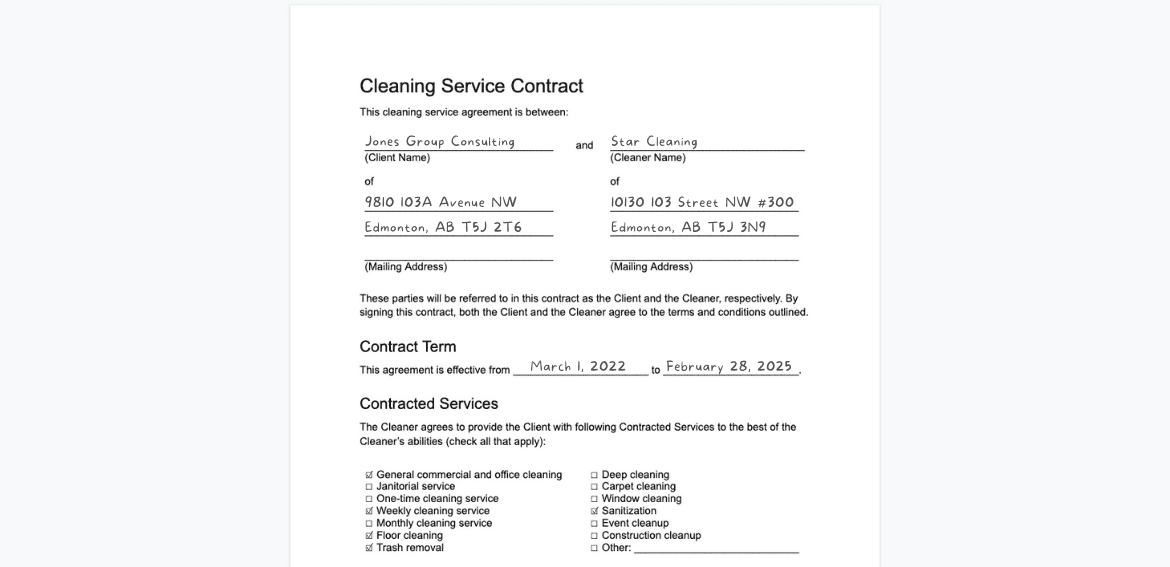
A cleaning contract is an ongoing agreement to provide commercial cleaning services for a client. These clients can be offices, banks, schools, apartment buildings, or any other space that operates as part of a business. It’s a key part of running a successful cleaning business.
Here’s an example of what a business or office cleaning service contract looks like:
How to get commercial cleaning contracts
Commercial cleaning is similar to cleaning offices and business spaces, but it usually involves larger buildings and more complex environments.
This can include everything from office buildings and retail stores to warehouses and construction sites. Often, this means higher job value and more consistent work per contract.
While you might learn about these opportunities through your network, they’re also often listed on request for proposal (RFP) sites like Merx.
Different industries come with different expectations, schedules, and contract values. Here’s a quick breakdown of what to expect and how to get cleaning contracts:
| Contract type | Average value | Cleaning frequency | How to find |
|---|---|---|---|
| Office cleaning contracts | $500–$3,000/month | Weekly, bi-weekly, or daily | Cold outreach, property managers, referrals |
| Medical/dental cleaning contracts | $1,000–$5,000/month | Daily or multiple times per week | Direct outreach, networking, local listings |
| School cleaning contracts | $2,000–$6,000+/month | Daily or nightly | Government bids, school district RFPs |
| Retail store cleaning contracts | $500–$2,000/month | Daily or weekly | Property managers, retail chains, referrals |
| Industrial cleaning contracts | $1,000–$5,000+/month | Weekly or custom schedule | Bid sites, direct outreach, facility managers |
| Bank cleaning contracts | $300–$1,500/month | Weekly or bi-weekly | Cold outreach, local networking |
| Religious institution cleaning contracts | $300–$2,000+ per month | Weekly or multiple times per week | Direct outreach, community connections, referrals |
Because commercial clients often hire for longer-term contracts with their organization, they’re more likely to narrow their search to well-established cleaning brands.
You can prepare yourself for these high-value janitorial contracts and opportunities by:
- Refreshing your branding so you stand out professionally
- Fine-tuning your sales process to convert leads more efficiently
- Offering premium services like deep cleans or specialty add-ons
- Using a cleaning proposal template to send polished, professional quotes
Commercial contracts are especially valuable because they provide recurring monthly revenue, higher per-job earnings, and longer agreements. As a cleaning business owner, this gives you more predictable income and reduces the need to constantly find new clients.
READ MORE: Successful cleaning business stories
How to get different types of cleaning contracts
To build your business, you can get cleaning contracts with several types of commercial clients. Here’s a quick overview of how to get cleaning business contracts with each type of client:
How to get cleaning contracts with offices
To get an office cleaning contract, first identify an office or a commercial building in your service area that you’re interested in cleaning.
Then call or email the office, ask to speak with the property manager or office manager, and book a time to discuss the cleaning duties that could be included in your office cleaning service.
After the conversation:
- Send a professional proposal outlining your services and pricing.
- Add office cleaning as a service on your website (if it’s not already there).
- Follow up with a friendly email to answer questions and keep the conversation going.
How to get Airbnb cleaning contracts
Airbnb and other short-term rental properties often have very demanding cleaning needs. Turnover is high—residents stay for a short amount of time, and then the property needs to be flipped quickly for the next guest.
The good news is, this high turnover presents lucrative business opportunities for cleaners who are willing to move fast and work diligently. There are two ways to reach out for these contracts and get Airbnb cleaning jobs:
- Get in touch with the Airbnb host or property owner directly.
- Reach out to the property management team or company that oversees the property (or even a group of properties).
Whenever you reach out to an Airbnb property owner, share about your business and pitch a competitive service package and rate. According to one Reddit thread, cleaners often charge $250–$550 for a 3-hour cleaning service after guests check out.
The more you can differentiate your Airbnb cleaning service from competitors, the better chance you have to win the work.
To get matched with more short-term rental hosts, consider joining a platform like Turno. This platform connects cleaners with Airbnb property owners looking for reliable, on-demand help.
READ MORE: How to get clients for a cleaning business
How to get cleaning contracts for banks
To get bank cleaning contracts, start by researching local bank branches in your area and identifying who’s in charge of the property. In most cases, you’ll get connected to the branch manager or facilities coordinator.
Reach out by phone or email with a professional introduction. Request a meeting to walk through the space, discuss security protocols, and outline how your cleaning services can meet the bank’s hygiene and confidentiality standards.
Since you’ll be working in a somewhat protected space, be prepared for additional background checks or security screenings at the bank’s request
How to get government cleaning contracts
Government cleaning contracts can be some of the most stable and high-value opportunities available. At the same time, they come with a more structured bidding process and stricter requirements than private-sector jobs.
Here’s how to get started:
- Register on SAM.gov and set up bid alerts. Create a profile on SAM.gov, which is required to bid on federal contracts. Once registered, search for cleaning-related opportunities. Set alerts so you’re notified when new contracts are posted. Complete your profile, including your NAICS codes (like janitorial services), so agencies can find you.
- Understand state and local procurement differences. Federal contracts are listed on SAM.gov. However, state, county, and city contracts are usually posted on separate procurement websites. Local contracts are often easier to win when you’re starting out, since they may have less competition and smaller scopes.
- Explore SBA set-aside programs for small businesses. The U.S. Small Business Administration offers set-aside programs that reserve certain contracts for small businesses. This includes women-owned, veteran-owned, and disadvantaged businesses.
- Meet common requirements upfront. Most government contracts require proof of business insurance, including general liability (often with higher minimums), workers’ compensation coverage, and bonding for larger jobs. You’ll also need certain safety protocols or certifications. Having these in place before you bid makes your proposal much more competitive.
- Know what to expect from contract size and terms. Government cleaning contracts often range from a few thousand dollars per month for small municipal buildings to five- or six-figure annual contracts for larger facilities. Many agreements run for 1–3 years with renewal options.
Pro Tip: Start with local government contracts to build experience and references. Then, use those wins to compete for larger state and federal opportunities.
How to get cleaning contracts with apartments
Apartment cleaning contracts can be a steady source of recurring work, especially for move-in/move-out cleanings and common area maintenance. The key is building relationships with the people who manage the properties.
Here’s how to land apartment cleaning contracts:
- Connect with property managers and leasing offices. Reach out directly to apartment complexes in your area. Introduce your cleaning services, share a simple rate sheet, and follow up.
- Focus on turnover cleanings. Many properties need fast, reliable cleaners between tenants. Point out that you can handle quick turnarounds and flexible schedules.
- Offer bundled services. Position yourself as a winning bidder by including common area cleaning (e.g., hallways, gyms, offices) as well as apartment units.
- Register with property management companies. Larger companies often manage multiple properties and use preferred vendor lists. Getting approved can lead to repeat work across locations.
- Use local networking. Attend real estate meetups, connect with landlords, and join local business groups to find smaller apartment owners and property investors.
- Provide consistent quality. In apartment settings, reliability matters just as much as price. When you show up on time and deliver consistent results, you can quickly turn one property into multiple contracts.
Apartment contracts are often won through relationships and reliability, not just pricing. Once you prove yourself with one property, it’s common to get referrals to others in the same network.
Where to find commercial cleaning contracts
Finding commercial cleaning contracts comes down to showing up in the right places consistently. If you’re asking, “How can I get cleaning contracts in my area?,” the answer is to use a mix of channels rather than relying on just one source.
Here are the main ways to find commercial cleaning contracts:
- RFP and bid websites: Many companies post cleaning opportunities through Request for Proposal (RFP) platforms, where you can review job details and submit formal bids. Start with sites like BidNet, DemandStar, and SAM.gov. These are ideal for larger, recurring contracts, but expect more competition.
- Government and local portals: Cities, counties, and school districts regularly outsource cleaning services for public buildings. Check local procurement pages and government portals like SAM.gov to find long-term contract opportunities.
- Property managers and commercial landlords: Building relationships with property managers can lead to consistent, ongoing work across multiple properties. Reach out to commercial real estate firms, facility managers, and leasing offices to introduce your services.
- Networking groups and local connections: Many contracts come from referrals. Attend events through organizations like your local Chamber of Commerce to build trust with local business owners and decision-makers.
- Online platforms and marketplaces: Facebook groups and sites like Thumbtack, Angi can help you land smaller jobs that turn into recurring contracts.
- Cold outreach: Reach out directly to offices, medical buildings, and retail spaces in your area. A short email or in-person introduction with an offer for a free walkthrough can open doors to contracts that aren’t publicly advertised.
Here’s a realistic cold outreach example to show how successful cleaners land commercial contracts:
Subject: Quick question about your building’s cleaning
Hi [Name],
I’m a local commercial cleaning provider and noticed your building at [Location]. I wanted to see if you’re currently reviewing vendors or open to a backup option.
We specialize in [office/medical/retail] cleaning and recently helped a similar property reduce complaints while keeping costs predictable.
If you’re open to it, I’d be happy to:
- Stop by for a quick walkthrough
- Provide a no-pressure quote
- Or share a sample scope for comparison
Would next week be a good time to connect?Thanks,
[Your Name]
Build a simple routine by checking bid sites weekly, connecting with property managers regularly, and staying active in your local network. This approach helps you create a steady pipeline of commercial cleaning contracts.
How to bid cleaning contracts
When you bid on cleaning contracts, you’re responsible for showing value, understanding the client’s needs, and presenting a clear, professional proposal.
If you’re competing against five other cleaning companies for a $2,000-per-month office contract, a detailed proposal can be the difference between winning and losing.
Jobber’s quoting tools make it easier to create professional, itemized estimates that show clients exactly what they’re paying for. Once a quote is approved, convert it into a scheduled job and use automated follow-ups to remind clients when they haven’t responded yet.
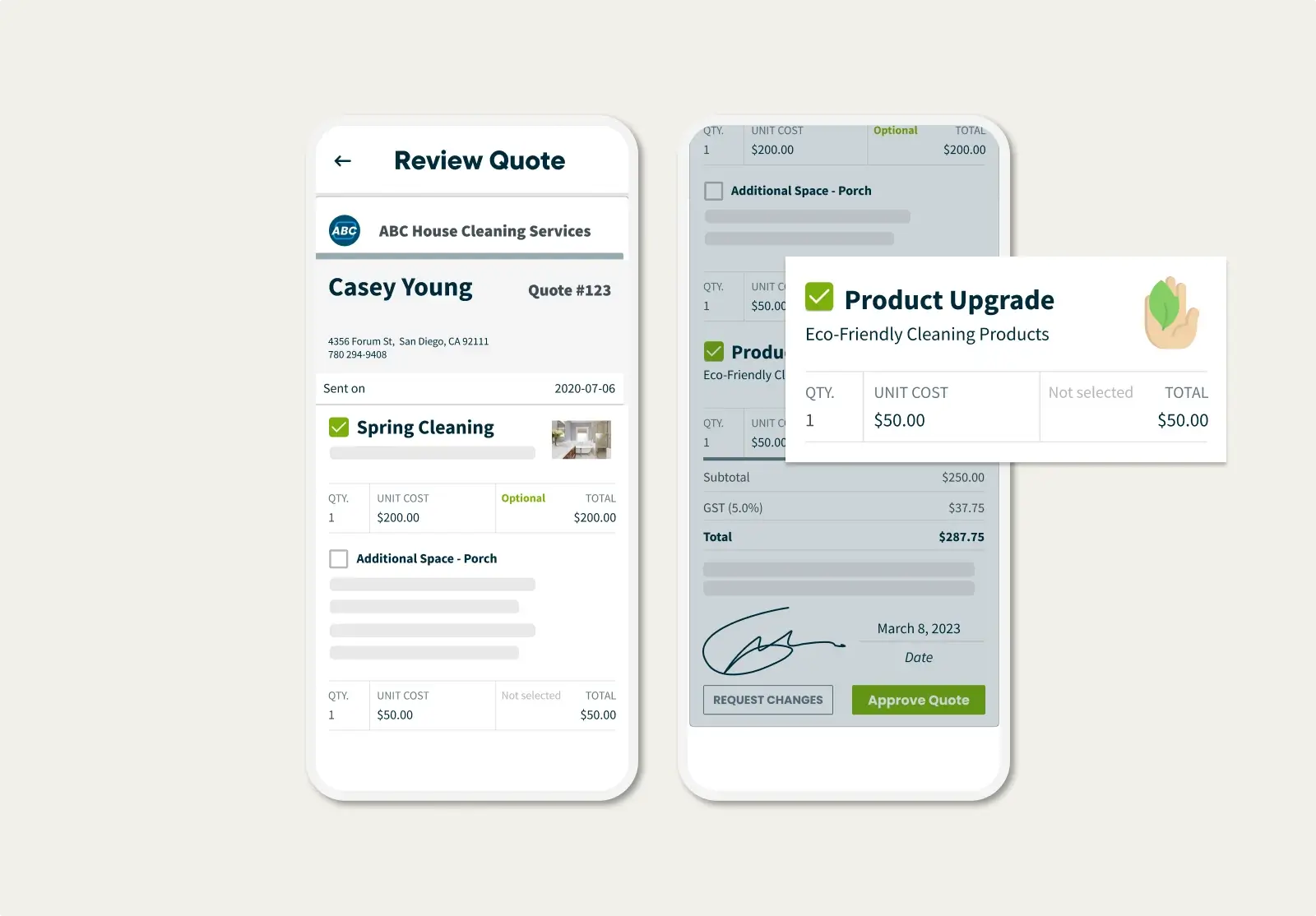
Here’s how to approach the quoting process step by step:
1. Create a cleaning contract proposal
Your pricing is set, and you’re ready to write a proposal. When you’re learning how to bid commercial cleaning jobs, this is where everything comes together.
Your proposal should clearly outline your services, experience, and what makes your commercial cleaning business stand out. Include important details like:
- Company overview, business license, and history
- Relevant team bios and experience
- List of commercial cleaning services and tasks
- What sets you apart from competitors (e.g., cleaning products, experience)
- Cleaning schedule and completion time
You can also attach your quote directly to the proposal. If the commercial cleaning client posted an RFP, make sure to review it closely and include everything they’ve requested.
Need a head start? Use this free cleaning proposal template to quickly put together a professional, client-ready document.
2. Send your cleaning contract bid for client review
Always send a bid within two days of doing the walkthrough (or by the RFP closing date). Most teams spend around 23–25 hours preparing a single RFP response, and many complete proposals in under 48 hours.
Responding faster gives you a clear competitive edge and shows the client you’re serious about the partnership.
It’s also appropriate to send a polite quote follow-up email if the client doesn’t respond within a week, or after the RFP decision date has passed.
3. Sign the contract to begin work
Once the quote is approved and the contract is signed, you’re all set to start cleaning!
A newer cleaning business might land about one in five jobs at first, improving to closer to one in three as they build references and refine their pricing. That lines up with typical sales win rates, which are around 28% for all proposed work.
Pro Tip: If the client didn’t choose your bid, send a nice email asking for feedback on your proposal. They might be able to tell you what you could do differently next time.
Example walkthrough checklist for scoping a commercial cleaning job
Before you price a new job, do a thorough walkthrough of the space. This helps you avoid underbidding and ensures your quote reflects the actual work required.
Use this checklist as a starting point:
- Square footage and layout: Note the total size, number of rooms, and how the space is divided (e.g., offices, open areas, restrooms, kitchens).
- Flooring types: List areas of carpet, tile, hardwood, or specialty flooring. This is important since each requires different cleaning methods and time.
- High-traffic areas: Look for entryways, hallways, and shared spaces that will need more frequent attention.
- Restrooms and breakrooms: Count fixtures, like toilets and sinks, and assess cleanliness expectations and supply needs.
- Special requirements: Check for medical-grade cleaning, industrial equipment, or sensitive areas that require extra care or compliance.
- Frequency expectations: Confirm how often the client wants service (i.e., daily, weekly, nightly) and any peak times.
- Access and timing: Determine when you can clean, such as after hours or on weekends, along with any security or key access requirements.
- Supplies and equipment: Clarify whether you or the client will provide cleaning supplies, products, paper goods, and equipment.
- Current condition: Take notes about buildup, stains, or problem areas that may require a deep clean upfront.
Documenting these details during your first walkthrough makes it easier to create accurate quotes and avoid surprises down the line.
Common mistakes when bidding on cleaning contracts
Bidding on cleaning contracts is competitive, and even small mistakes can cost you the job. In some cases, they can lead to winning a contract that isn’t actually profitable. Avoid these common missteps:
- Underbidding just to win the contract: If your pricing doesn’t cover labor, supplies, and overhead, you’ll lose money over time.
- Skipping a thorough walkthrough: Pricing without seeing the space in person can lead to missed details, underestimated time, and unexpected costs.
- Sending generic proposals: Clients can tell when a bid isn’t tailored to their facility. A clear, customized proposal shows you understand their needs and sets you apart from competitors.
- Forgetting to define scope exclusions: Clearly state what’s not included in your cleaning services. Otherwise, clients may expect extra services at no additional cost.
- Not following up after submitting a bid: Many companies win contracts because they stay in touch. Send a quick follow-up after the bid’s closing deadline to stay top of mind and show your interest.
- Submitting incomplete bids: Clients may reject your proposal right away if key documents or credentials are missing. Include all required items such as general liability insurance, licenses, and certifications every time.
- Not planning for longer payment terms: Commercial clients often pay on net 30, 60, or even 90-day terms. If you don’t account for that in your cash flow, it can create gaps between completing the work and getting paid.
A commercial cleaner needs to have a good relationship with their banker.
They have to have a line of credit, because when it comes to residential versus commercial—commercial is not going to pay right away. Sometimes it’s 30, 60 or even 90 days. So you need to make sure that you can pay your team and take care of expenses.
Remember—a strong bid is about clarity, professionalism, and showing the client you can deliver exactly what they need.
Best practices to land more cleaning business
Getting consistent cleaning contracts takes more than just great service. It also requires savvy marketing, clear communication, and a good reputation. We’ve rounded up a few proven ways to attract more great clients and book more work.
1. Establish a strong brand
Strong business branding helps your cleaning company stand out, build trust with potential clients, and stay top of mind in your community.
Even if you’ve been in business for a while, having professional branding and a recognizable cleaning company name can make a big difference in how you’re perceived.
Invest in these proven ways to establish or strengthen your brand:
- Add your business name and logo to all uniforms, invoices, and marketing materials. You can even wrap your vehicle.
- Set up a simple, professional website where clients can learn about your services.
- Create social media profiles on Facebook and Instagram to share updates, reviews, and before-and-after photos.
- Use branded business cards and service proposals to leave a lasting impression and help potential clients contact you later.
The stronger and more consistent your presence is, the more likely customers are to think of you first when they need cleaning services.
2. Identify your ideal customer or market
To make sure you’re attracting the right clients, you’ll need to pinpoint who and where you want to serve. Gain clarity in this step by asking questions like:
- Do I have an ideal type of contract (residential or commercial)?
- How far am I willing to travel to serve cleaning clients?
- Do I want to secure quick, one-time jobs or lengthier contract agreements?
Once you’ve set some customer and job parameters, decide which types of cleaning services will best serve your ideal clients.
For example, you can specialize in residential cleaning services if you live in a town with highly populated neighborhoods. Or, you could offer move-out cleaning services in places with high tenant turnover.
Lastly, think about what sets you apart from other cleaning companies. What perks and benefits will attract your ideal client? This will be the unique selling point you use in your future marketing efforts.
3. Market your cleaning services to prospective clients
Try these tips to promote your cleaning business and market your services to businesses or homeowners that need to contract cleaners:
- Encourage word of mouth referrals, and ask your immediate friends and family to help spread the word about your new business. Then, network with local real estate agents, property managers, office managers, and other business owners in your community. One of them might be a prospective customer, so get your elevator pitch ready.
- Use lead generation home service websites (such as Angi or Yelp) to gather contact information from potential leads. These sites help connect you with prospective customers actively looking for cleaners in their areas.
- Set up a Facebook Business page for your cleaning service. If you’re not comfortable launching a full-scale website, Facebook gets you in the door. Ask your network to like and follow for updates, and include contact information to help customers reach you.
- Consider running a few cleaning ad campaigns to raise awareness for your business. There are many options available based on your comfort level and budget, including print, digital, social media, and even local radio ads.
- Ask satisfied customers for testimonials and positive reviews. You should also create a loyalty program that rewards client referrals with a discount or other incentive.
Pro Tip: Not sure how to get clients for your cleaning business? Start small by building relationships with local businesses, then work your way up to the bigger clients over time. The more value you offer, the better buzz you’ll get.
4. Set transparent cleaning contract pricing
Before future customers sign a contract with your company, they’ll expect an honest and realistic look at your service costs. Save time during the contract signing phase by having a general idea of what you charge and how your estimating process works.
If you’re new to pricing, here are a few steps to help you set prices easily:
- Walkthroughs. Schedule a time with the client to inspect the space together and talk about needs and expectations. Ask questions that will help you plan your schedule and services, like when you’ll visit, special focus areas, and budget.
- Calculate the cleaning area. Square footage pricing is the most common way to calculate commercial cleaning prices, but a flat rate might be better for residential spaces.
- Calculate the price per job. Pick your rate, then multiply it by the cleaning area’s square footage to get your price per cleaning job. For example, the standard rate for commercial contract pricing is roughly $0.05–$0.20 per square foot.
- Price the contract term. Multiply the price per job by the number of times you’ll provide services during the contract term. For example, if you’ll be cleaning twice a week for a year, multiply your two weekly visits by 52 weeks. This will be the final quoted amount for the contract. (To see your weekly or monthly fee, just divide the final amount by the number of weeks or months in the term.)
- Decide on special incentives. It’s optional, but you might want to offer discount pricing or other incentives to reward your client for signing a longer-term contract.
Remember, this is just your basic pricing structure. Every cleaning job is different, so adjust based on what pricing method you’re using and what services each client needs.
Word of mouth is the most powerful option, especially for high-end clients because birds of a feather flock together
High-end clients have friends and family, and those are the people who don’t mind paying more for the service they want. You’re only going to get that if you provide exceptional service.
5. Create professional quotes
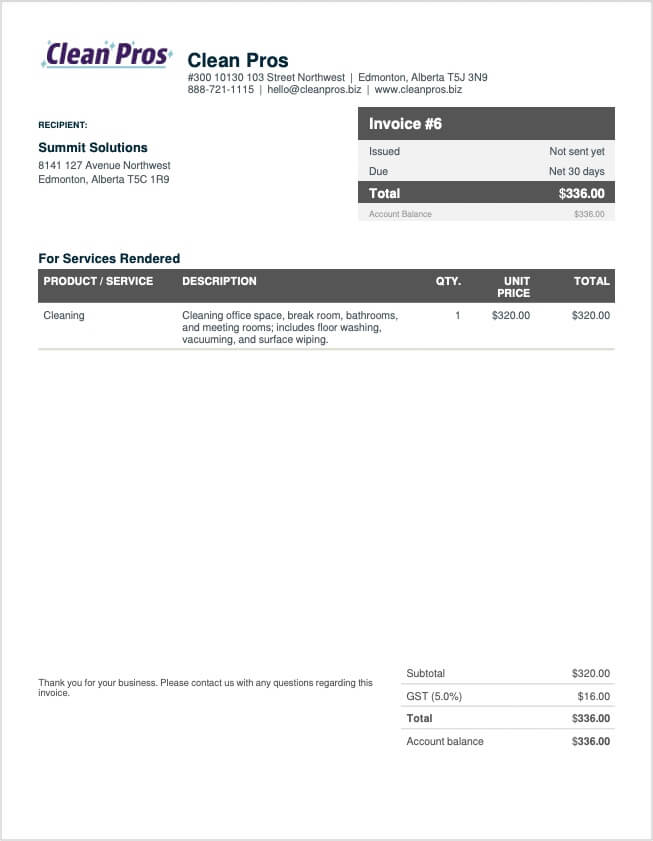
Now that you have all the general pricing information you need, create an official quote using cleaning business quoting software. Your quote tells clients what your services will cost, and it should include:
- Business name and contact information for yourself and your client
- Quote number and send date
- Service line items with their associated costs
- Your payment terms and conditions (including deposit amount, start date, payment timelines, and any other important details that could affect the service)
Here’s an example of what your cleaning quote might look like:
6. Provide exceptional service to clients
Once your new cleaning contract is signed and active, it’s time to start working. To keep your clients happy, approach each cleaning task with a non-negotiable commitment to customer service.
To stay organized on the job, you can use professional house cleaning checklists. These templates can prevent you from missing any steps in your process.
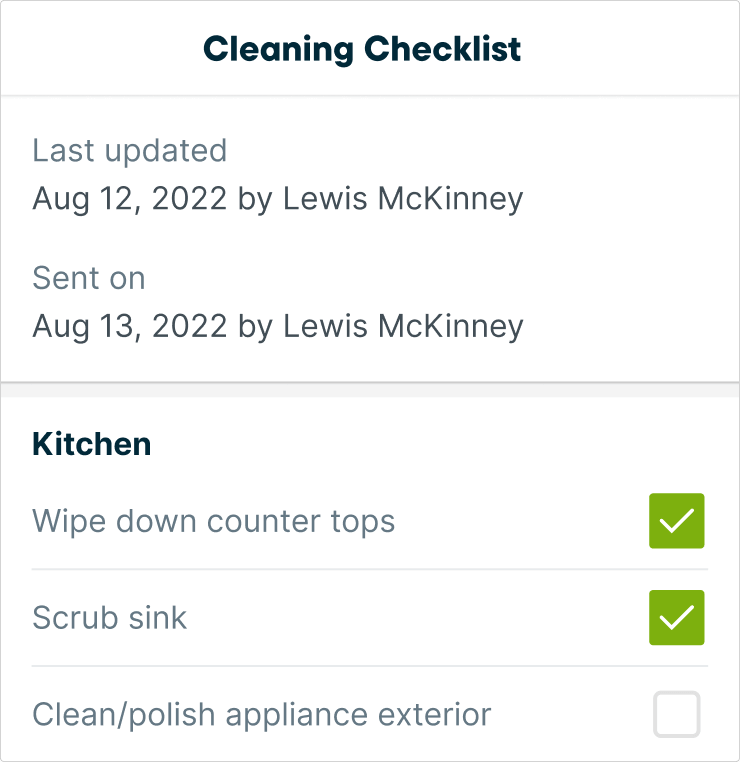
Service checklists are also helpful when you employ other cleaners. The list ensures that everyone maintains high-quality standards on the job.
READ MORE: Best CRM for cleaning business owners to impress customers
7. Offer contract extensions and renewals
One way to keep new contracts coming is to offer extensions and renewals. This way, you’re eliminating the time you’d otherwise spend replacing a client or prospecting for more leads.
In commercial cleaning, strong companies typically see client retention rates around 65–80% annually, making repeat business the foundation of reliable revenue.
Retaining clients is also more efficient than replacing them. In fact, acquiring a new customer can cost 5–7 times more than retaining an existing one. Ongoing contracts also provide predictable income without the time and cost of constant bidding.
Renewals can be a win-win for both you and your clients. Here’s how to improve retention and renew more contracts:
- Scheduled check-ins: Keep tabs on when signed contracts expire, so that you can offer renewals with plenty of time for your client to consider. Track contract end dates and reach out 60–90 days in advance.
- Incentives: Offer special discounts or incentives for renewing contracts with existing clients. For example, you could provide a 5–10% discount for a longer-term agreement, include a free deep cleaning or add-on service, or offer priority scheduling during busy seasons.
- Service expansion proposals: Briefly go over the past contract terms, making sure the services still match the client’s expectations. If they seem open, upsell your services by letting the client know about extra options or add-ons that they might enjoy.
- Quality audits: Review your work from time to time to ensure it meets your standards and the client’s expectations. Do a simple walkthrough, use a job checklist, or do an inspection to catch issues early and show you’re proactive.
- Client feedback: Ask for feedback often, whether through quick check-ins, surveys, or a short conversation. This helps you address concerns early, improve your service, and strengthen the relationship before renewal time.
Now that you know how to find commercial cleaning contracts and how to win them, you’re ready to bid on regular work, improve cash flow, and grow your cleaning business.
Originally published March 2022. Last updated on April 29, 2026.
Frequently Asked Questions
-
Your commercial cleaning contract should include all the terms and conditions of your working relationship with a client, like:
• Contract start date and end date
• Cleaning services (e.g., office cleaning, janitorial service, deep cleaning, carpet cleaning, window cleaning)
• Service area (address, building floor/unit)
• Payment amount, frequency, and method
• Contract termination requirements
• Type of working relationship (e.g., employee, contractor, partner)
• Any rules about safety or confidentiality
The client might have a contract for you to sign, or you might have to draft your own. Either way, work with a lawyer to make sure the contract will protect everyone involved.
Pro Tip: Read up on any payment terms you don’t understand. For example, be aware of (and negotiate) payment due date terms like “net 60.” This means you won’t be paid for service until 60 days after you provided it—and that can hurt your cash flow. -
Bidding is like throwing your hat in the ring. When you’re bidding on a new cleaning contract, you’re often competing with other cleaning companies for publicly posted opportunities.
An “open bid” means the potential customer posted the bidding opportunity and is taking proposals from any service provider who wants to submit one. The client then decides who wins the work after speaking to the people who bid or offered pricing for services.
A “closed bid” could mean that you’re dealing directly with a single individual or business. In this scenario, your chances of selection are higher. You’re going directly after one client and persuading them to sign based on your pricing, services, and brand.
Pro Tip: Sometimes the lowest price will win the cleaning bid, but don’t cut into your profit margin to make a sale. If you make your business stand out, you’ll still be a contender, even if your price is a little higher. -
Rates for commercial cleaning are often calculated per square foot. Your fee may depend on the size of the space, how often the service occurs, and the type or level of cleaning required. You can also charge hourly (anywhere from $25 to $60 per hour) based on market rates and your team’s experience.
-
If a client wants to end the contract early, the terms should be clearly outlined in your service agreement. Cancellation usually requires written notice 15–30 days in advance, which protects you from unexpected income loss. Some contracts may include early termination fees or a prorated final invoice to cover your planning and staffing costs.
-
Focus on standing out with professional proposals, strong references, and clear pricing that highlights your value. Offering flexible service options, proof of insurance, and a satisfaction guarantee can also help build trust and win more bids.