Free HVAC Invoice Template
Jobber’s free HVAC invoice template generator helps you bill for diagnostic fees, labor, parts, and refrigerant. Fill in the job, download a professional PDF, and send it before you leave the driveway.

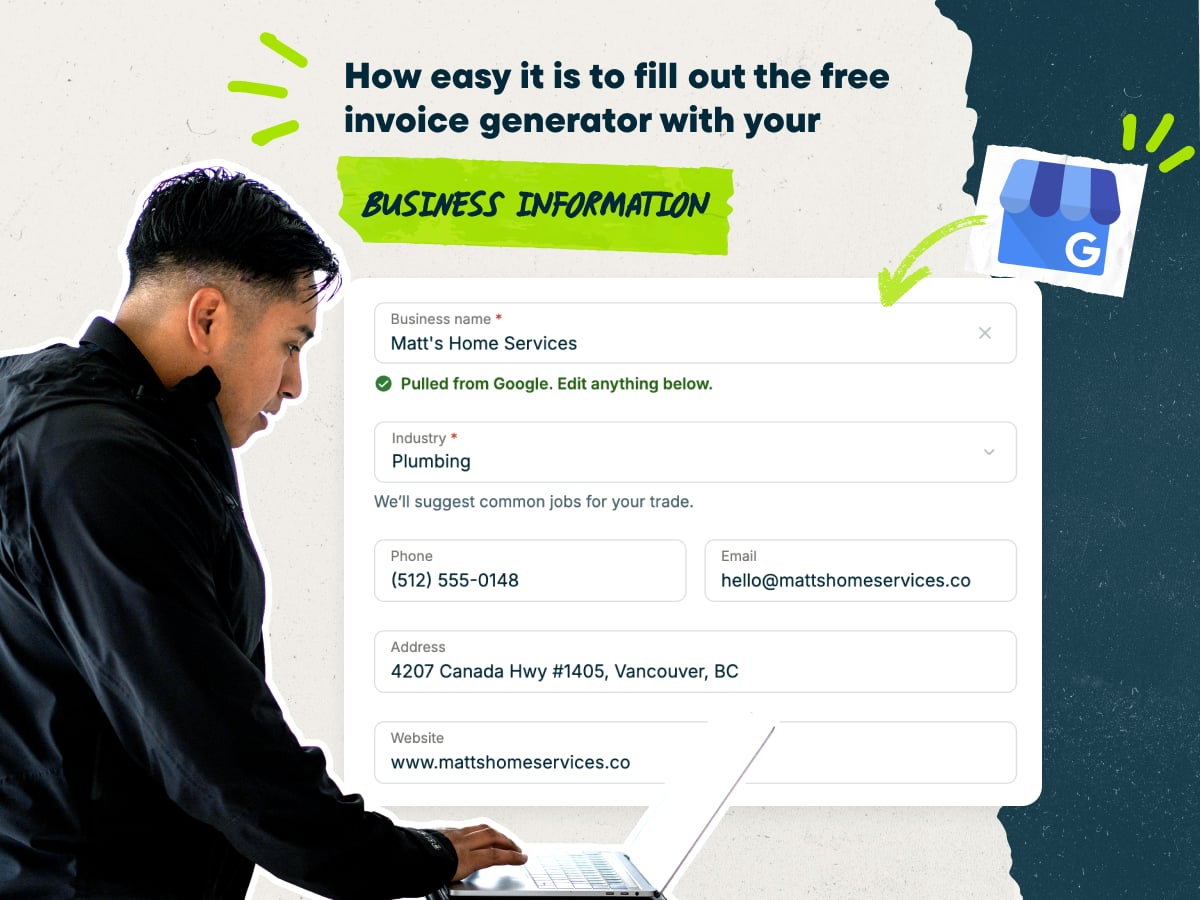
Create an HVAC invoice fast with our free invoice generator
- Enter your business name, and the generator auto-fills your contact details.
- Add your own line items or start from pre-loaded options with typical pricing.
- Enter your customer’s name, contact info, and service address.
- Download your invoice as a PDF or save it in Jobber.
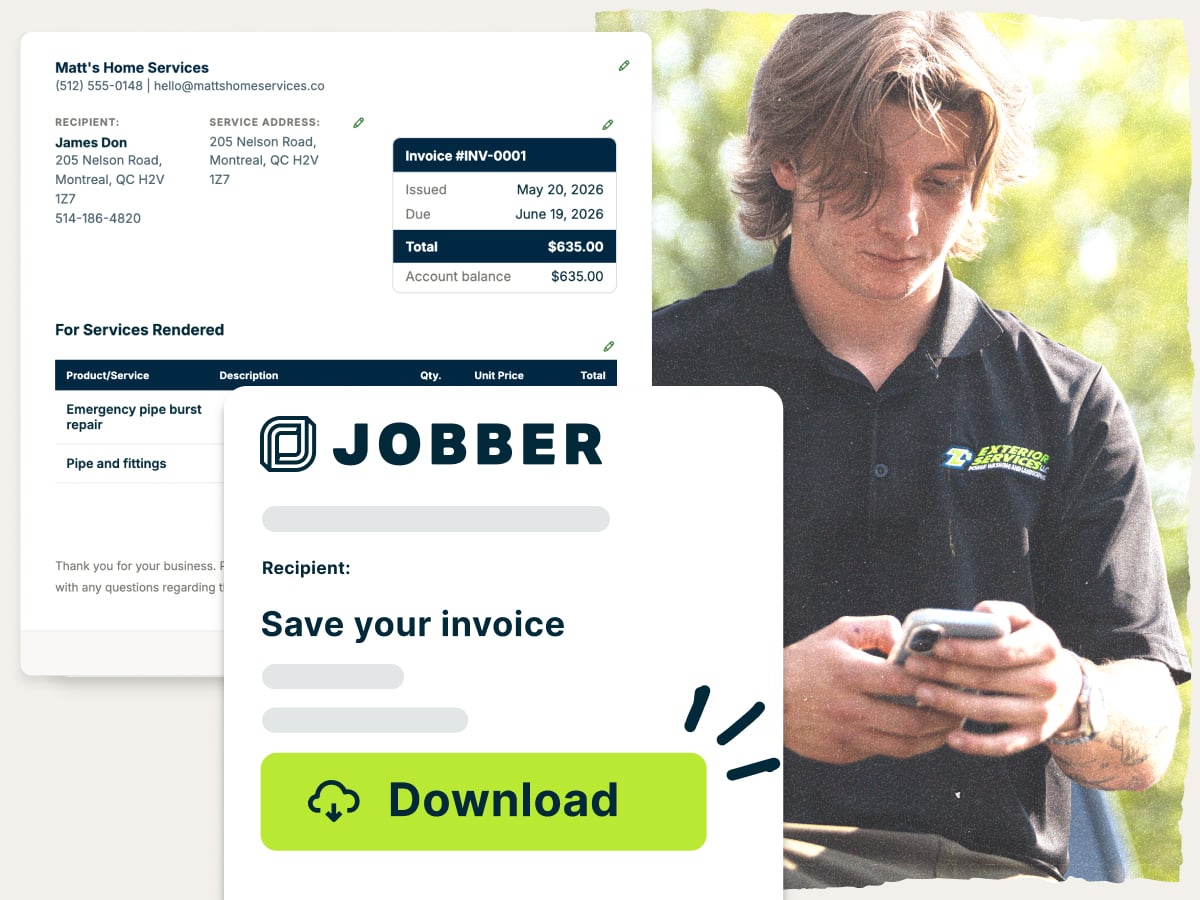
Why use Jobber’s free HVAC invoice generator?
- Ready to customize. Add in your services, prices, add-ons, and payment terms to match how you bill, whether it’s a tune-up or a full system replacement.
- Set up with the essentials. Every invoice includes the fields customers expect, like invoice number, dates, line items, tax, and total.
- Free to download. Create your invoice and download it as a PDF at no cost. Send it to the customer right away.
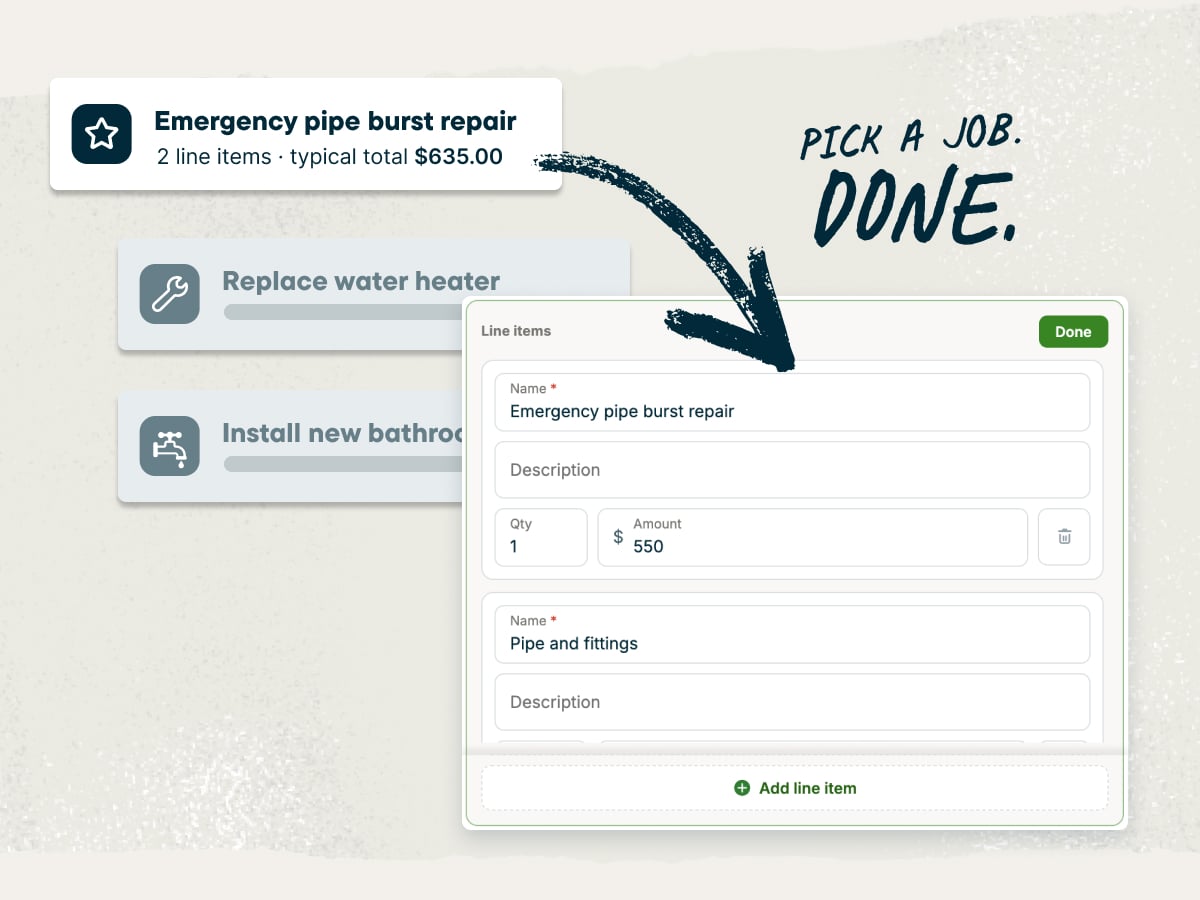
An invoice generator built for HVAC businesses
When you’re running service calls all day, invoices go out late and follow-ups slip. The generator gives you a clean, itemized invoice for every repair, tune-up, and install, so customers know what they’re paying for. When you’re ready to stop piecing together spreadsheets and receipts, Jobber for HVAC businesses keeps your quotes, jobs, and invoices in one place.
Explore other HVAC free tools
Over 400,000 home service pros in 50+ industries trust Jobber
“Jobber has freed up so much of my time because I can convert jobs into invoices while I’m still in my truck.”

How to create an HVAC invoice
You can build an invoice in Microsoft Word, Google Docs, Microsoft Excel, or Google Sheets. Formatting and math take time, so the free HVAC invoice generator handles the layout and totals for you. Once you know the basics of how to write an invoice, follow these steps to ensure your invoice includes all the details your customers need to see:
- Pick your HVAC pricing method first. Decide whether the job is flat-rate or time-and-materials. Use the same method on both the quote and the invoice.
- List the diagnostic fee on its own line. Customers need to see what the visit costs, even when you credit it toward the repair.
- Record refrigerant by type and weight. Write the refrigerant type, pounds added, and price per pound.
- Add equipment details. Include the brand, model, and serial number for every unit you repair or install. This speeds up warranty claims and future service calls.
- Build your markup into parts prices. Show one price per part with your HVAC parts markup already included.
- Label after-hours and emergency rates. Put the higher rate on its own line so the added charge is clear.
- Send it before you leave the driveway. Invoice on site while the customer is home. It’s one of the easiest invoice best practices to follow.
Repairs, deposits, and recurring maintenance each call for different types of invoices. When you’re sending more invoices than you can keep up with, field service invoicing software takes the extra paperwork off your plate.
What is the HVAC invoice generator best for?
The generator works for residential and commercial HVAC jobs of any size. Use this invoice generator for:
- Service calls and repairs: List the diagnostic fee, labor, parts, and refrigerant on one clear invoice.
- Tune-ups and maintenance plans: Charge a set tune-up price and show member discounts for plan customers.
- Installs and replacements: Collect a deposit up front, then bill progress payments as the job moves along.
- Emergency and after-hours calls: Show the higher rate on its own line so customers understand the charge.
- Add-ons and upgrades: Itemize air purifiers, ultraviolet light systems, dehumidifiers, duct sealing, and smart thermostat upgrades.
Whatever the job, an itemized invoice shows customers exactly what they paid for. That makes the next service call an easier yes.
What should be included in an HVAC invoice?
A complete HVAC service invoice answers your customer’s questions before they ask. Start with the basics of what to include on an invoice, then add the HVAC details:
- Invoice number: Give every invoice a unique invoice number so it’s easy to track.
- Invoice date and due date: Show when you sent the invoice and when payment is due.
- Your business info: Add your business name, address, phone, email, and contractor license number.
- Customer info: Include your customer’s name, contact details, and service address.
- Diagnostic or trip fee: List it as a separate line and note if you’re crediting it toward the repair.
- Labor: Show a flat-rate price per task or hours times your hourly rate. Label any after-hours or emergency services at your higher rate.
- Refrigerant: List the refrigerant type, pounds used, and price per pound.
- Parts and equipment: Include the brand, model, serial number, and part number for each item.
- Permit and disposal fees: Give permit costs and old-equipment disposal their own lines.
- Warranty terms: Spell out what’s covered for parts, what’s covered for labor, and for how long.
- Discounts: Show maintenance plan member discounts so customers see how much they saved with their plan.
- Subtotal and tax: Show tax as its own line. Tax rules vary by state and province, so check what applies to parts and labor.
- Deposits and payments received: Subtract any deposit or progress payment the customer already made.
- Total due: Make the balance due the easiest number on the page to find.
- Payment terms: State how and when you want to be paid. These invoice payment terms examples give you wording to start from.
- Thank-you note: End with a short thank-you note to the customer for choosing your services.
Some businesses also list technician certification numbers for refrigerant handling. Check your state or provincial rules to confirm what your invoices need to show.
Free HVAC invoice generator vs. Jobber invoicing software
The free generator is a quick way to bill a one-off job and look professional doing it. You fill in the details, download the PDF, and send it yourself.
HVAC invoice software like Jobber does more of the work for you. It turns completed jobs into invoices, sends them by text or email, and follows up on unpaid ones. You send invoices faster and let customers pay online with credit card processing.

and payment history organized in one place for easier access.
and pricing already recorded on the completed job.
making it easy for them to review and pay.
it is time to invoice after a visit, at job completion,
or on a recurring schedule.
and send them to customers in a few clicks.
remind customers when an invoice remains unpaid.
so they can pay directly from their digital invoice.
while working from the office, on the road, or at a job site.
Frequently asked questions about HVAC invoices
-
An HVAC invoice generator is a free online tool that builds a professional invoice for you. Enter your business details, customer info, and line items. The generator lays out the invoice, adds up the totals, and gives you a PDF to send to the customer.
-
Yes. Add your own business details, services, prices, and payment terms, or adjust the pre-loaded line items to match how you bill. You can also change the dates and tax rates as needed.
-
Yes. Download your finished invoice as a PDF, then print it, email it, or text it to your customer. You can also save it in Jobber.
-
Yes. The generator and the PDF download are both free.
-
You can set one up in Word, Google Docs, Excel, or Google Sheets. Add sections for your business info, customer info, line items, tax, total, and payment terms. The free generator on this page sets up those sections for you, so you only fill in the job details.
To skip manual invoices and speed up the process, use field service invoicing software that creates invoices from your completed jobs. -
An HVAC invoice shows who did the work, what the job included, and what the customer owes. The sample air conditioning repair invoice belows walks through the document line by line.

-
The generator works well for a one-off HVAC service invoice. To quote, schedule, and bill every job in one place, follow these steps in Jobber’s free Invoice Generator tool:
1. Add your business details and contractor license number.
2. Enter your customer’s name, contact info, and service address.
3. Add line items for the diagnostic fee, labor, parts, and refrigerant.
4. Add tax, discounts, deposits, and payment terms.
5. Download the PDF and send it to your customer. -
They’re the same document seen from two sides. You send an invoice to ask for payment, and your customer receives it as a bill. A receipt comes after payment, which is the main difference between an invoice and a receipt.
-
Hand over a printed copy, email a PDF, or text it to your customer. With Jobber, you can send invoices by text or email from the job and keep every message in one place with customer communication tools.
-
Send it as soon as the job’s done, ideally before you leave the property. For installs, bill the deposit before work starts and progress payments at each milestone. The size of the job determines whether you invoice before or after a job.
-
For residential service calls, ask for payment when the work is done to keep things simple. Commercial customers may ask for terms like net 30, which means payment is due 30 days after the invoice date. Whatever the due date is, include it in your payment terms.
-
HVAC invoicing software creates, sends, and tracks invoices for your heating and cooling business. It connects invoicing to the rest of your work, so you can:
• Turn completed repairs, maintenance visits, and installations into invoices without retyping anything.
• Keep customers updated with customer communication tools like automated service reminders and follow-ups.
• Accept card payments with credit card processing built into the invoice.
• Offer consumer financing on larger jobs, like furnace or AC replacements, so customers can pay over time.
• Assign technicians and plan visits with scheduling that links each job to its invoice.
Jobber’s HVAC software brings quoting, scheduling, invoicing, and payments into one place. -
A flat-rate invoice charges one set price for the job, like a standard air conditioning tune-up. A time-and-materials invoice charges for hours worked plus parts and materials. Flat-rate invoices are easier for customers to approve, while time-and-materials invoices protect you on jobs that are hard to predict.
-
Bill the plan on the schedule your agreement sets, like monthly, quarterly, or yearly. List the plan name, the visits it covers, and any member discounts on repairs.
Keeping a card on file makes recurring payments simple. Spell out invoice timing and payment terms in your HVAC service contract so there are no surprises for the customer.
Over 400,000 home service pros in 50+ industries trust Jobber
“If you can make a quote on the spot, you’re 10 steps ahead of the competition.”
Jobber changed the game because it’s right at people’s fingertips.
