Cleaning Industry Trends, Statistics, and Growth Outlook (2026)

Key takeaways:
Explore what’s shaping the cleaning industry in 2026 and where new opportunities are emerging for business owners.
- Industry growth is robust and competitive. The global cleaning sector is expected to reach $482 billion in 2026, with rising demand driven by urbanization, health awareness, and commercial growth.
- Recurring and digital services dominate. More customers prefer subscription-based cleaning, with 62% of bookings now made online or through mobile apps, making digital convenience and recurring packages key to winning business.
- Profitability and diversification are strong. While 64% of cleaning companies make under $100K/year, niches like healthcare, floor care, post-construction, and Airbnb turnover cleaning offer higher margins and stability.
- Technology and eco-friendly practices are essential. AI-powered admin tools, cleaning robots, and green products are becoming standard. Over 50% of owners use AI for quotes, invoices, and marketing, while eco-friendly solutions meet growing consumer expectations.
- Workforce and operational challenges remain. Labor shortages, high turnover, and rising costs require owners to focus on hiring, retention, fair pay, and using software to manage schedules and cash flow efficiently.
Stay up to date on industry trends and tips for growing your cleaning business. Sign up for the Jobber Newsletter.
The cleaning industry is bigger, busier, and more competitive than ever in 2026.
From cleaning robots to green cleaning services to cleaning software and mobile apps, customer expectations are changing. If you run a cleaning business, understanding where the industry is headed helps you win more work and grow faster.
Whether you offer residential cleaning, commercial janitorial services, or are thinking about starting a cleaning business, this guide breaks down the key stats, top trends, and real growth opportunities for 2026.
Jump to:
-
Cleaning services market size and statistics
-
Is the cleaning business profitable?
-
Labor and workforce trends
-
Cleaning industry demand trends and statistics
-
Pricing trends
-
Residential cleaning industry trends
-
Commercial cleaning industry trends
-
Green cleaning trends
-
Technology trends in cleaning
-
AI in cleaning
-
Marketing and lead generation trends
-
Growth opportunities in cleaning
-
How to use these cleaning industry trends
2026 cleaning services market size and statistics
The cleaning services industry is one of the most steady service businesses out there. It’s driven by urbanization, rising health awareness, dual-income households, and commercial growth.
Here are the key cleaning industry market size statistics:
- The global cleaning services market is predicted to grow to roughly $482 billion in 2026 and $859 billion by 2030 with a 7.5% annual growth rate.
- There are over 1.4+ million cleaners currently employed in the U.S.
- The U.S. janitorial services market is worth $112 billion, with 1+ million cleaning businesses as of 2026.
- The average annual pay for a cleaning business owner in the U.S. is $127,973 a year.
- The average annual salary for a house cleaner in the U.S is $35,034.
- 73% of cleaning business owners expect revenue growth in 2026.
- 55% of cleaning businesses raised prices in the last 12 months.
- 41% of households use recurring cleaning services, as customers shift from one-time bookings to weekly, bi-weekly, or monthly plans.
- 62% of cleaning service bookings are made through mobile apps and online platforms.
- The commercial segment dominated the contract cleaning service market with a revenue share of $221.2 million in 2026.
- The global eco-friendly cleaning products market is expected to reach $115 billion by 2033.
- The cleaning robot market is expected to hit $21.2 billion in 2026, with a 17.5% annual growth rate
- The global cleaning service software market reached $1.96 billion in 2025 and is expected to reach $2.99 billion by 2030, growing at a rate of 8.5%
- 50% of cleaning business owners are using AI tools to create estimates, invoices, and marketing content.
- 64% of leads for cleaning businesses come from repeat customers.
- Floor care cleaning is expected to account for 38.6% market share by 2035.
Is the cleaning business profitable in 2026?
Yes, cleaning is a profitable business. North America dominated the 2025 cleaning services market, with a 37.5% market share, and the 2026 global cleaning services market is expected to reach $482 billion.
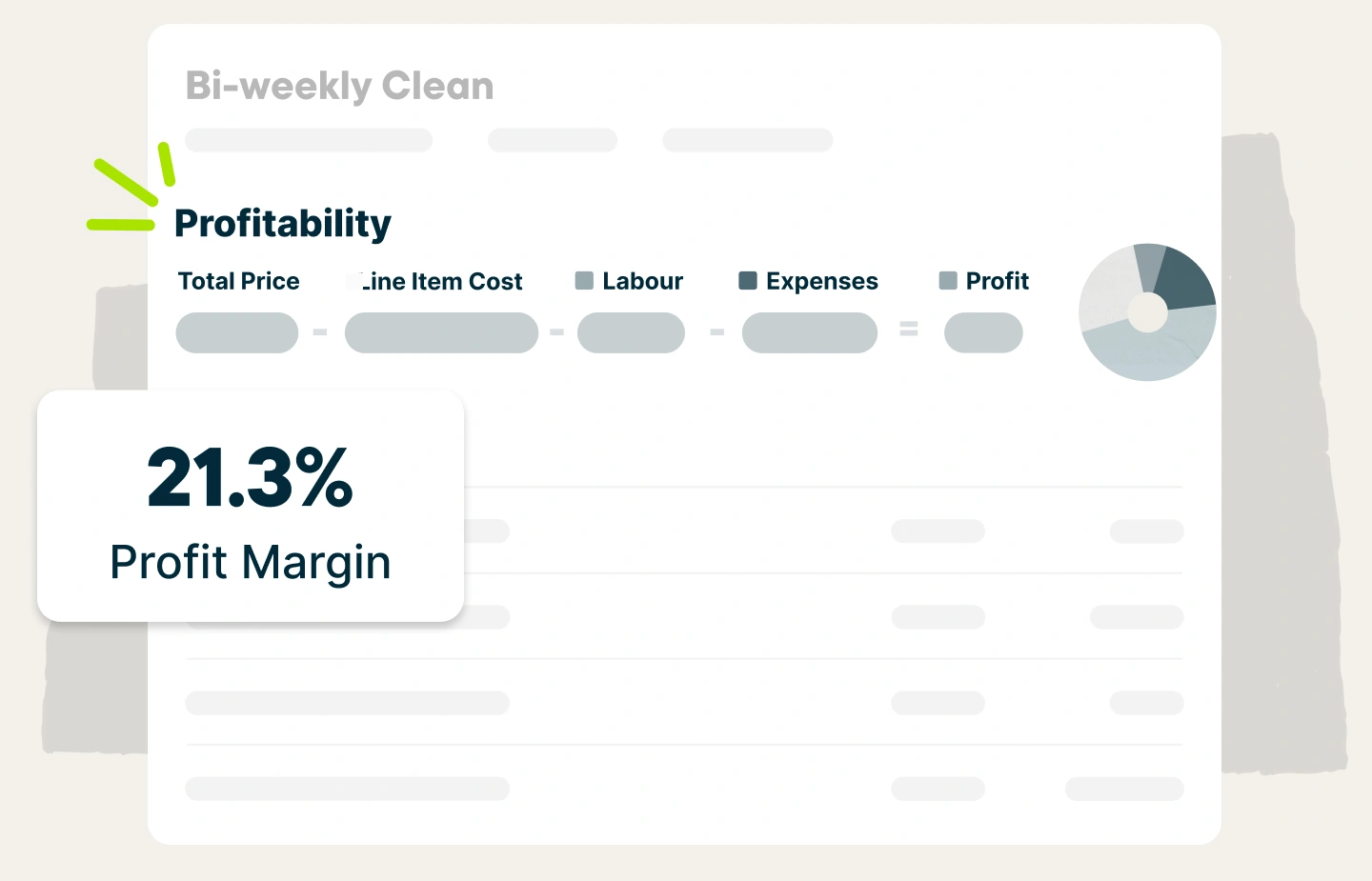
Cleaning business revenue can vary widely depending on your size, services, and pricing, but Jobber’s 2026 Home Service Trends Report found that:
- 64% of cleaning businesses earn under $100K annually
- 40% earn under $50K annually
- 18% generate $500K+ per year
$1,000 a day is my new standard goal.
I make up to $5,000 a week. You can earn up to $17,500 a month or more. Last year, the Red Rose made $150,000, and this year we’re hoping to make $250,000.

Cleaning industry labor and workforce trends
Labor shortages and high turnover continue to challenge cleaning businesses, especially as demand steadily grows and quality standards rise.
Here are the key labor statistics for the cleaning industry in 2026:
- There are over 1.4+ million cleaners currently employed in the United States.
- There are 74,355 active cleaner job openings in the US.
- About 85,500 new jobs for cleaners are projected over the next decade.
- The average annual pay for a cleaning business owner in the U.S. is $127,973 a year.
- The average annual salary for a house cleaner in the U.S is $35,034.
- 32% of cleaning businesses are not currently hiring
- 18% say skilled or specialized workers and crew leaders are hardest to find
A recent Jobber survey shows that cleaning hiring needs tend to focus on basic field staff or on not hiring at all, reflecting smaller teams or seasonal models.
Cleaning businesses have this high, high revolving door.

Pro Tip: To hire and keep great cleaning employees:
- Write a clear, detailed job description so expectations are upfront
- Ask practical interview questions to find reliable candidates
- Offer fair pay, bonuses, or perks to stay competitive
- Provide consistent hours and flexible schedules
Create a clear path for growth, training, and upskilling
Our employees are our number one asset. We treat our employees like they’re gold because they really are.

Cleaning industry demand trends and statistics
Demand is strong in 2026. Here’s what cleaning business owners are seeing, according to a recent Jobber trends survey:
- 58% of cleaning businesses report increased customer demand
- 73% expect revenue to grow, including 21% expecting significant growth
- 76% are operating at or near full capacity
- 50% say job sizes are getting bigger compared to last year
That said, 14% of business owners reported a decline in demand. This shows that some challenges remain:
- 31% say competition is a top concern
- 33% say weather and seasonality impact their business
- 22% report open availability or difficulty filling their scheduled
- 47% say customer communication is their biggest daily time drain
Pro Tip: Want to keep up with demand?The cleaning businesses that win right now are the ones that:
- Respond quickly to new leads within 24 hours
- Stay organized as schedules fill up
- Lock in repeat customers before competitors do
- Optimize their cleaning marketing (e.g., using flyers and door hangers and posting ads on social media)
- Build referral partnerships and customer relationships
Cleaning industry pricing trends
At the end of 2025, inflation had eased to 2.7%, yet high prices kept spending focused on practical, value-oriented services, such as cleaning.
According to Jobber’s 2026 Home Service Industry Report:
- 55% of cleaning businesses raised prices in the last 12 months
- Top drivers of price increases are inflation and material costs (68%) and labor costs (52%)
- 90% of cleaning business owners feel confident in their pricing
- Customers choose cleaners based on quality (66%), price (53%), and reviews (51%)
The message is clear: price matters, but it’s not the only thing. Customers are willing to pay more if they trust the results.
Pro Tip: Match your cleaning prices with quality work by:
- Always showing up on time
- Delivering consistent, high-quality work
- Showing before-and-after photos on your website and social media
- Backing it up with strong five-star reviews
And if you’re planning to adjust your rates? Give customers a heads-up, explain the reason clearly, and reinforce the value you provide. A simple, professional price increase letter goes a long way in keeping trust and clients.
Residential cleaning industry trends
About 58% of dual-income households regularly outsource cleaning, signaling a growing reliance on professional services amid lifestyle changes. That said, the residential segment is expected to see the highest growth rate as households become busier, disposable income rises, and awareness of good home hygiene increases.
Here are the trends shaping residential cleaning right now.
Strong win rates and fast payments
Cleaning businesses (especially residential) are closing work and getting paid quickly. The cleaning industry has one of the fastest payment cycles in home services, according to Jobber’s recent trend survey:
- 66% win more than half of the quotes they send
- 60% get paid the same day
- 84% get paid within 3 days
Subscription-based services are growing
41% of households use recurring cleaning services, as customers shift from one-time bookings to weekly, bi-weekly, or monthly plans. For cleaning businesses, this means more predictable income, easier scheduling, and stronger long-term customer relationships.
Online booking is now expected
62% of cleaning service bookings are made through mobile apps and online platforms, showing the digital transformation of service delivery.
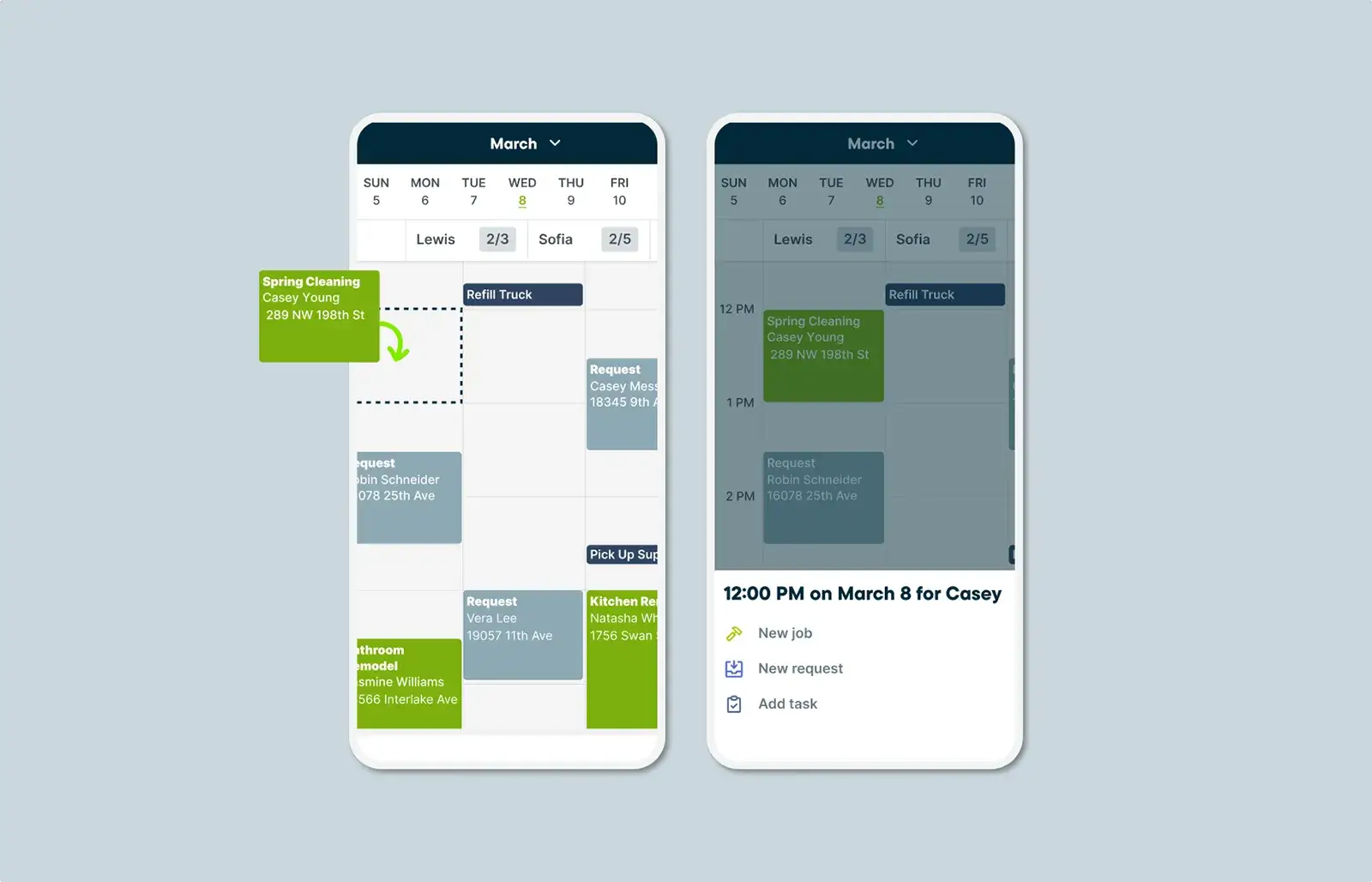
If booking with you feels harder than booking anything else, you’ll lose the job. That means offering online scheduling, instant confirmations, and easy digital payments.
Premium and specialized services are gaining ground
More residential customers are requesting tailored cleaning options like:
- Floor care
- Window cleaning
- Carpet and upholstery cleaning
- Maid services
- Deep cleaning
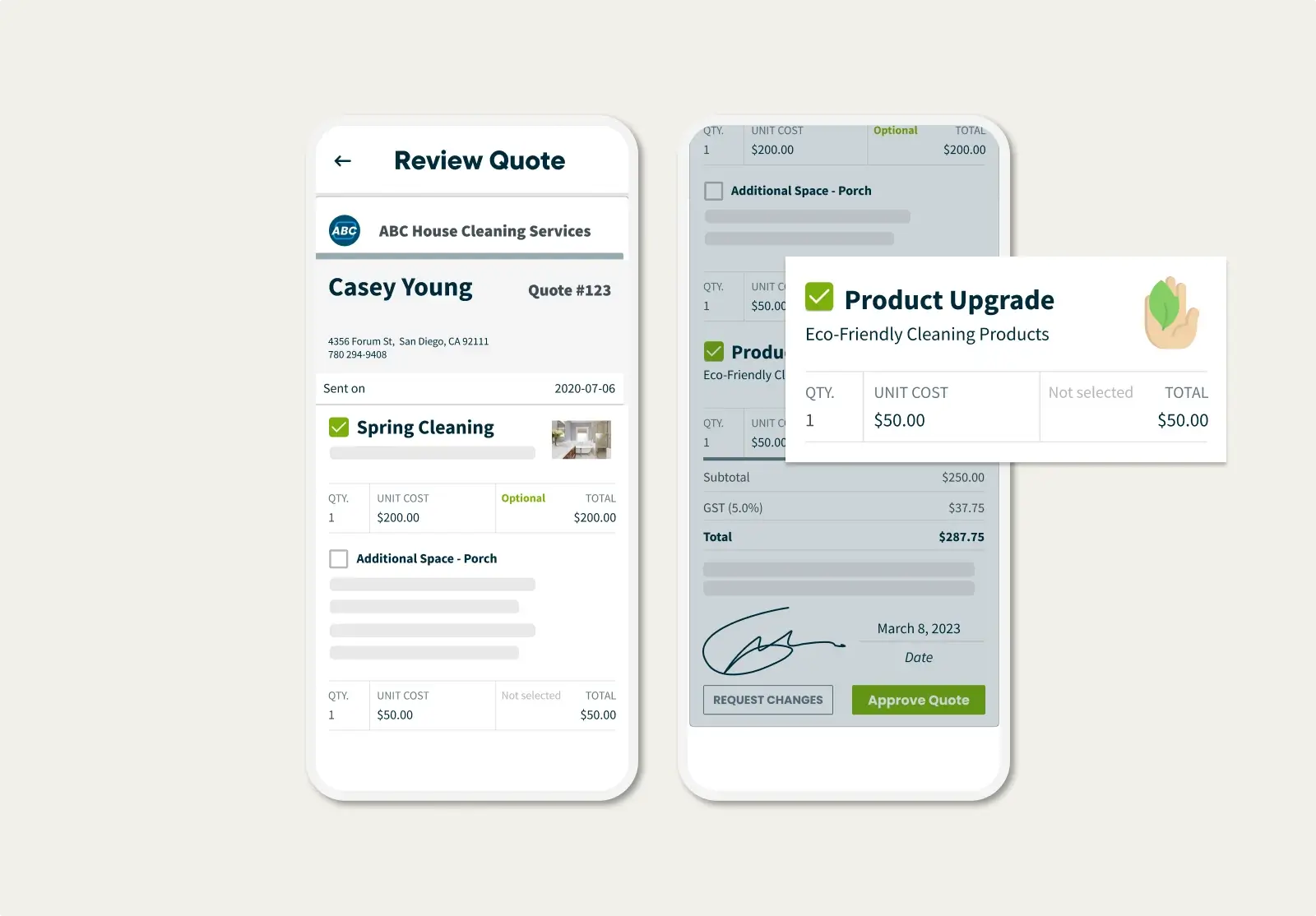
This gives cleaning businesses a chance to increase average job size without needing more customers.
You always want to be upselling, even when the client hasn’t asked for it.

Commercial cleaning industry trends
The commercial segment dominated the contract cleaning service market with a revenue share of $221.2 million in 2026. This cleaning business growth is driven by the need for sanitation, hygiene, and workplace security across healthcare, corporate, and educational spaces.
Here are the commercial cleaning industry trends for 2026.
Indoor air quality (IAQ) is now expected
The Environmental Protection Agency (EPA) estimates that poor indoor air quality could cost the nation tens of billions of dollars yearly in lost productivity and medical care. To prevent this, more businesses are turning to professional cleaning services.
Businesses in offices, healthcare, schools, and hospitality are now prioritizing:
- HEPA-filtered vacuums
- More frequent vent and duct cleaning
- UV-C treatment solutions
- Air quality monitoring (CO₂, VOCs)
Healthcare facility cleaning demand is growing
Healthcare facilities need more than just basic cleaning. They require specialized, compliant service such as:
- Infection control training
- Strict cleaning protocols
- Consistent, high-frequency cleaning service
With an aging population and rising healthcare demand, this segment offers stable, recurring, and higher-value contracts for commercial cleaning businesses.
Pro Tip: Consistency wins commercial work, so use a detailed cleaning checklist to meet expectations every time and ensure high-quality, consistent service across all job sites and teams.
Green cleaning trends
In 2026, both residential and commercial clients expect safer products, better air quality, and more sustainable practices.
Traditional cleaning products can release volatile organic compounds (VOCs), which impact indoor air quality, so switching to green cleaning has been a reliable solution.
I own an eco-friendly, non-toxic cleaning business.
We work with commercial clients that are like chiropractic offices, naturopath doctors, people that are on that path of trying to look for less toxins in their cleaning.
Demand for eco-friendly products is growing fast
Eco-friendly cleaning products aren’t just specialty items anymore, they’re becoming the standard for residential and commercial cleaning.
The global eco-friendly cleaning products market is expected to reach $115 billion by 2033, growing at around 11.5% annually. On top of that, 41% of consumers actually prefer eco-friendly cleaning products, and 78% globally prioritize green cleaning solutions.
Green certifications are becoming a client requirement
In commercial cleaning, especially, certifications like Green Seal, EPA Safer Choice, and USDA Organic are increasingly expected. What used to help you stand out is now helping you qualify for the job.
Pro Tip: Want to go green? You don’t need to overhaul your business overnight:
- Slowly switch to plant-based, biodegradable products
- Use reusable microfibre cloths instead of disposables
- Cut back on water and chemical waste where possible
- Reduce energy use by switching to energy-efficient equipment
- Look into Green Seal certification (especially if you target commercial contracts)
Technology trends in cleaning
The increased emphasis on hygiene and efficiency has pushed businesses to adopt advanced cleaning technologies. From cleaning robots to mobile software apps, technology is reshaping what’s possible for cleaning businesses, whether you run a solo residential operation or a full commercial crew.
Here are the tools and innovative ideas for cleaning companies to leverage in 2026.
Cleaning robots and touch-free dispensers are growing fast
Cleaning automation in the industry is gaining traction, especially in large commercial spaces. In fact, the global cleaning robot market is valued at $21.15 billion, growing at about 17% annually.
The following methods are making cleaning services easier and smoother:
- Hand-free vacuum cleaners
- Robotic sweepers
- Smart touch-free dispensers
And with today’s robots having features like:
- LIDAR navigation
- AI-powered obstacle avoidance
- Multi-function cleaning (vacuuming, mopping, disinfecting)
Some large facilities (like airports) are already seeing cost savings and efficiency gains from robotic cleaning pilots. Some airports have reported 25% lower janitorial costs through robotic cleaning systems and 40% fewer slip-and-fall accidents.
IoT and data-driven cleaning are on the rise
62% of companies are investing in IoT-enabled tools to improve efficiency and service delivery. Many teams are shifting to “clean when needed” using real-time data from:
- Occupancy sensors (track foot traffic)
- Smart dispensers (monitor supply levels)
- Air quality sensors (CO₂, VOCs, particulates)
This approach helps cleaning businesses improve efficiency and deliver measurable results to clients.
Cleaning software and mobile tools are making the biggest impact
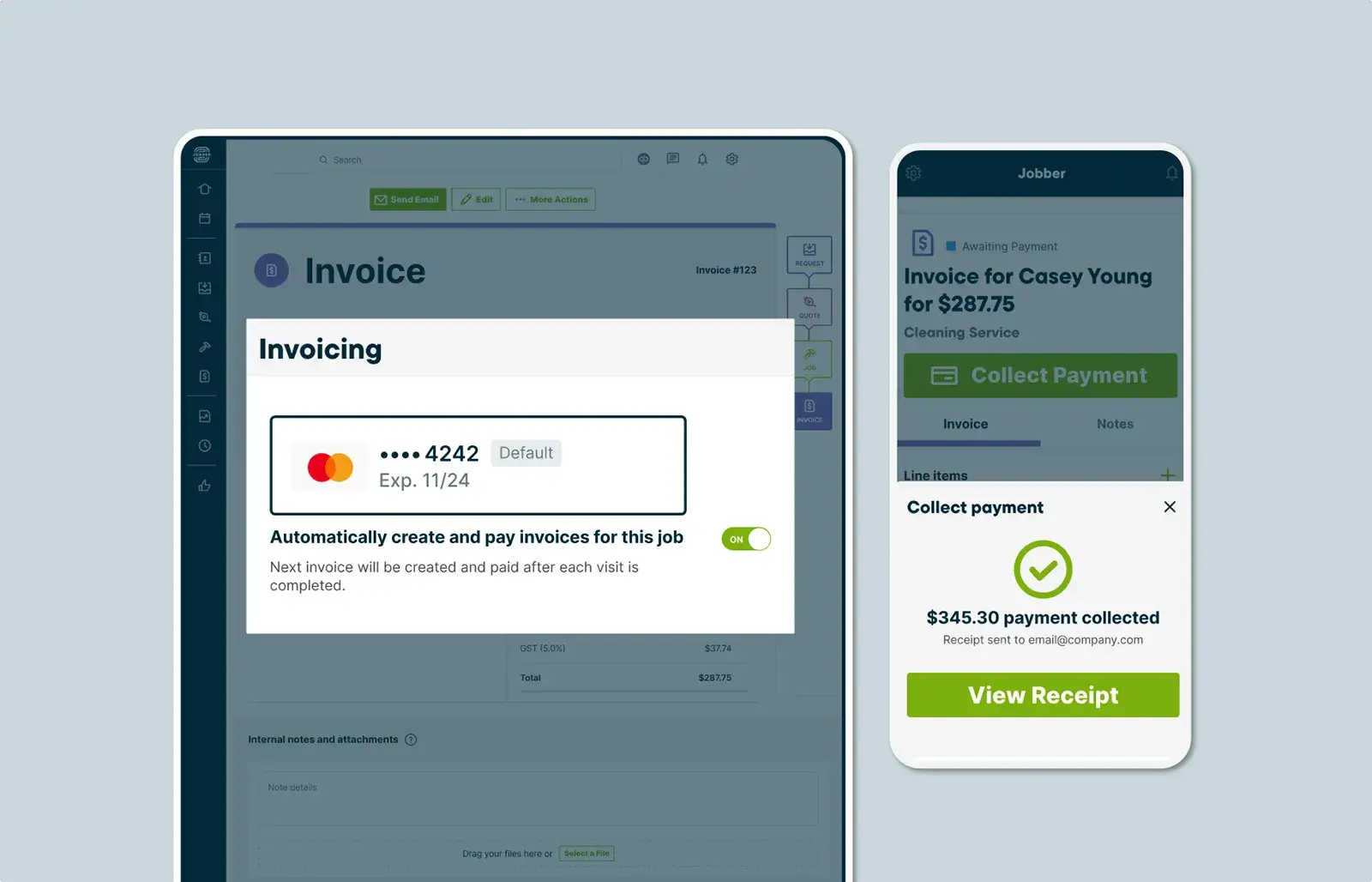
For small and mid-size cleaning businesses, the most useful tech isn’t robots—it’s better day-to-day cleaning apps. The global cleaning service software market reached $1.96 billion in 2025 and is expected to hit $2.99 billion in 2030, growing at a rate of 8.5%.
Especially as the industry faces a shortage of skilled labor, cleaning software and mobile apps help you do the following to stay productive and cost-efficient:
- Schedule cleaning jobs
- Send quotes and invoices
- Get paid quicker
- Communicate with customers
- Track work in real time
62% of cleaning service bookings are already being made through mobile apps and online platforms.
READ MORE: How Jobber Helped Time Maid Cleaning 4x Their Team and Service Quality
You instantly have a professional business when you’re using Jobber.
You can give quotes, invoice, all of that. That’s the stuff that billion-dollar companies have. So you can definitely command premium prices when you’re a professional business and you need the right software to do that.
AI in cleaning: what business owners are actually using
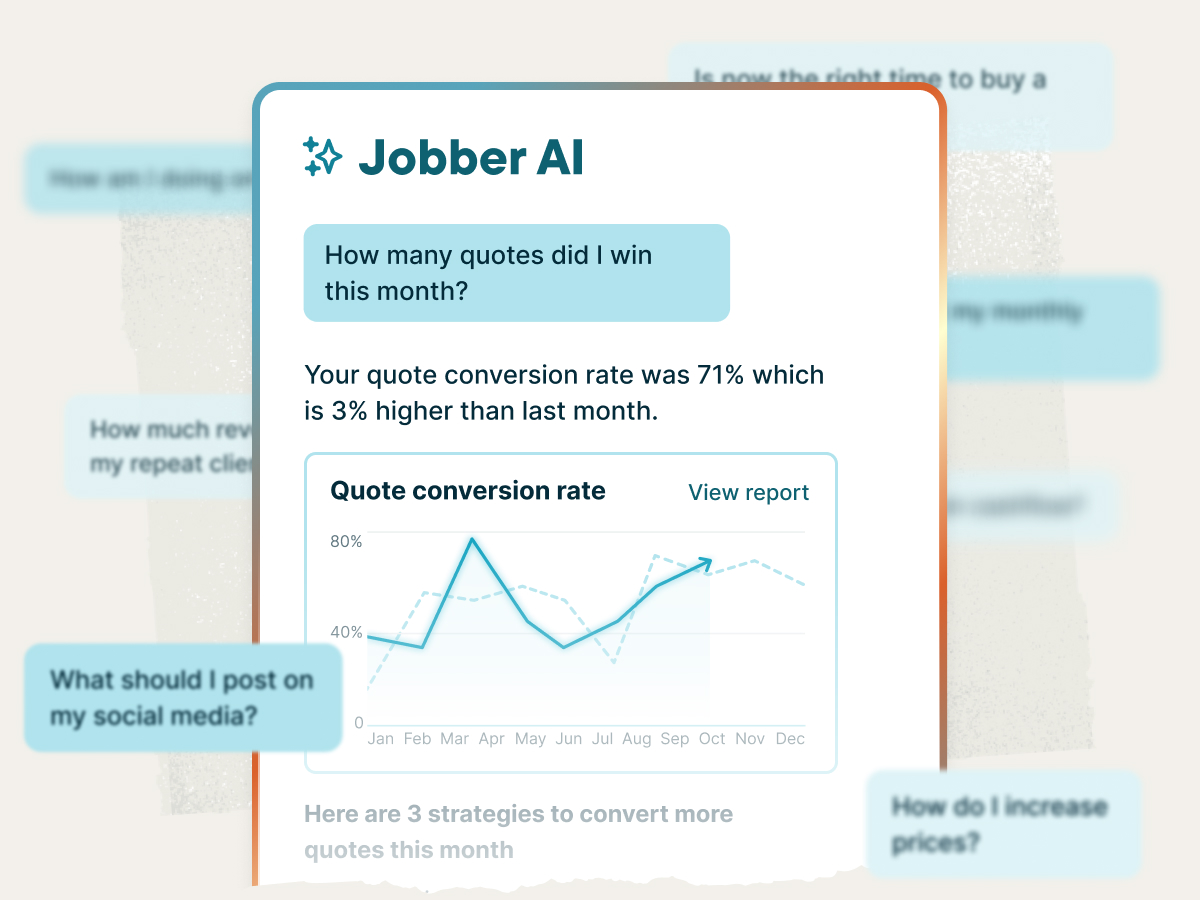
AI is showing up in more cleaning businesses, but not in the way most people expect. It’s not about robots replacing cleaners. It’s about saving time on admin work.
Here’s what Jobber’s recent Home Service Trends Report found:
- 50% of cleaning business owners are using AI tools
- The top uses are:
- Creating estimates, quotes, or contracts (57%)
- Generating invoices or billing documents (52%)
- Writing marketing content or social posts (51%)
- 50% also use AI for emails, proposals, or job descriptions
And when asked where AI could help most, business owners pointed to:
- Improving customer communication (22%)
- Optimizing scheduling and dispatch (19%)
- Reducing costs (15%)
- Reducing admin time (14%)
I literally put that in there [AI], can you give me an SOP for a small residential and commercial cleaning company? And boom, it came up with it with the framework, and then you can dial it in.

Cleaning business marketing and lead generation trends
In 2026, most new jobs still come from repeat customers, referrals, and how quickly you respond. Here’s where the rest of your marketing and lead generation efforts stack up.
Repeat customers and referrals drive most leads
Paid ads can help—but they’re not the main engine. A recent Jobber home service trends report found that:
- 64% of leads come from repeat customers
- 60% come from referrals
These two sources outperform every digital channel, which means great service and strong relationships are still your best marketing tools.
Facebook is the #1 digital channel
Turns out you don’t need to be everywhere. Just show up where your customers already are. When businesses do invest in marketing, online platforms lead the way:
- Facebook (36%) is the top-performing channel
- Followed by:
- Lead gen sites like Angi and Thumbtack (20%)
- Google Search (17%)
- Local Services Ads (15%)
That said, more and more cleaning service providers are using social media platforms like TikTok, YouTube, and Instagram to improve customer engagement, boost brand visibility, and attract a global client base.
Speed wins more jobs
Fast response time is one of the clearest competitive advantages in this industry, and the data shows most businesses already have it:
- 85% respond to leads the same day
- 26% respond within an hour
Pro Tip: Repeat customers are the backbone of a healthy cleaning business. Use a professional cleaning checklist to consistently meet expectations and give clients a reason to keep coming back.
Make sure that the problems are already kind of addressed before they start to happen.
Growth opportunities in the cleaning industry
The most profitable cleaning businesses in 2026 specialize in the work they do. Here are some of the biggest niche opportunities right now.
Floor cleaning
Floor care is expected to account for 38.6% market share by 2035, driven by universal application across commercial, residential, and institutional settings, along with continuous innovation and premium product adoption.
Medical and healthcare facility cleaning
Healthcare facilities require specialized training in infection control and health regulations and they pay premium rates for it. With an aging population and rising demand, this niche offers stable, long-term cleaning contracts.
Airbnb and vacation rental turnover cleaning
Short-term rental hosts need fast, dependable turnovers between guests, increasing demand for cleaning services. “If you’re cleaning a residential home, the cadence of that is usually going to be no more than two times a month, versus if you turn your Airbnb 12 times in one month. You’re going to eventually make more off the short-term rental,” said Savannah Revis, founder of Earth Love Cleaning.
If you can deliver speed and consistency, you can often charge more for Airbnb cleanings than the standard residential cleaning rate.
We love them [Airbnbs]. That’s my specialty.
It’s more stable too for the team because it’s a more consistent thing coming in… Sundays and Mondays, we’re still looking at 50 Airbnbs a day.
Post-construction cleanup
Construction projects often plan for cleaning from day one, so the budget is already built in. These jobs are larger and more complex, but they’re also less price-sensitive and can deliver strong margins with the right crew and equipment.
Government cleaning contracts
Government cleaning contracts can offer steady, long-term revenue for businesses that can handle the bidding process.
These jobs often go to the lowest qualified bidder, so strong pricing, proper registration, and the right certifications matter more than branding or marketing. Contracts can also last 12 to 36 months, giving you more predictable recurring revenue.
It’s harder to get in, but once you’re in there and as long as you’re executing, it’s pretty hard to get kicked out.
We know for the next three years, it’s creating that recurring revenue model. Also, the government’s going to pay. Even if they pay late, they’re going to pay.

Carpet cleaning
The carpet and upholstery segment is projected to grow at the fastest rate—8.8% annually from 2026 to 2033. Rising awareness of indoor air quality, allergens, and visual appeal, especially in residential environments, is driving demand for regular professional cleaning.
Data center cleaning
Data centers, biotech labs, and specialty manufacturing facilities require cleaners with specific technical training and strict protocols. The barrier to entry is higher, but that means less competition, higher rates, and long-term contracts for businesses willing to invest in training and certification.
READ MORE: 35+ Types of Cleaning Services You Can Offer
How to use these cleaning industry trends to grow your business
Knowing the trends is one thing, but acting on them is what actually drives cleaning business growth.
Here’s where to focus so you can have a standout year:
- Compete on quality, not just price. Customers care about price, but they choose based on results and trust. Consistent service and strong reviews make it easier to charge what you’re worth.
- Build a team that sticks around. Hiring is tough right now, so retain quality team members. Offer fair pay, steady hours, and clear expectations to keep good cleaners long-term.
- Lock in recurring revenue. Offer flexible, subscription-based cleaning (weekly, bi-weekly, monthly) to match what customers expect and build predictable income you can count on.
- Increase your average job value. Upsell premium and specialized services like deep cleaning, move-in/move-out cleans, or add-ons. Small upgrades add up fast.
- Go green where it counts. Use eco-friendly products and practices to meet client expectations, especially for commercial work, where it’s becoming a requirement.
- Adopt tools that save you time. Use AI and cleaning software like Jobber to handle quoting, scheduling, invoicing, and communication.
- Speed up your response time. The first business to reply often wins. Fast quotes, quick follow-ups, and easy booking helps you win cleaning clients.
- Lean into profitable niches. Consider specializing in areas like healthcare cleaning, short-term rentals, or post-construction. Niche services often mean higher rates and less competition.
Originally published in March 2022. Last updated on April 23, 2026.
Frequently Asked Questions
-
The cleaning industry is expected to reach $770 billion by 2033, driven by urbanization, health awareness, and an aging population.
Cleaning robots, IoT sensors, and AI scheduling tools will change how operations run, while green cleaning could become the new norm.
For cleaning business owners, the biggest opportunity is building around subscription services, strong systems, and specialized niches. -
The key cleaning trends shaping 2026 include:
• Strong demand: 58% of business owners report increased demand, and 76% are near full capacity.
• Quality over price: Workmanship and five-star reviews matter most.
• Recurring revenue: 41% of households use recurring cleaning services.
• Green cleaning: Eco-friendly cleaning services are becoming the norm, especially for commercial.
• AI adoption: 50% of business owners are using AI for admin tasks.
• Speed matters: Fast responses help win new and repeat work.
• Niche growth: Healthcare, Airbnb, and post-construction cleaning are driving more cleaning business. -
Yes, and very consistently. According to Jobber’s 2026 Home Service Industry Report, 73% of cleaning business owners expect revenue growth in 2026.
This makes sense, as the global cleaning market is $470+ billion in 2026 and is expected to reach $770 billion by 2033, growing at a rate of 7.3%.
Demand is definitely there, but the real opportunity is building a business that can handle it and turn it into repeat, profitable cleaning work. -
The main challenges are rising operational costs, high employee turnover, integrating new technology, and increasing customer expectations.
Businesses that invest in training, competitive pay, and cleaning software tend to be better positioned to handle these pressures.