
Key takeaways:
If you want to attract more clients and reward loyal customers, customer referral programs can be a proven way to grow your service business.
- Choose from 10 effective referral program ideas. Options include service discounts, gifts or cash rewards, service credits, double-sided incentives, contests, seasonal or limited-time incentives, donations, tiered rewards, and partnerships. Tailor your referral program to your business and customers.
- Match incentives to your business type. Recurring service providers find success with discounts or credits, while one-off service businesses can motivate customers with cash or gift cards.
- Make programs simple and trackable. The most successful referral programs are easy for customers to join, automatically track referrals, and promptly deliver rewards, keeping everyone motivated.
- Promote your program strategically. Use email, invoices, social media, and even physical reminder cards after jobs to keep your referral program top of mind for clients and employees.
- Leverage referral software for best results. Tools like Jobber Referrals automate tracking, streamline reward payouts, and use reports to help you measure success and improve your campaigns.
For more tips on building and promoting a customer referral program, sign up for the Jobber Newsletter today.
Originally published in October 2024. Last updated on October 17th, 2025.
Happy clients don’t just come back—they bring friends. When someone loves your service, they’re naturally inclined to share it with others.
A strong referral program helps you tap into that natural word-of-mouth momentum. You’ll reward loyal customers while attracting new ones who already trust your brand. If you don’t already have a program in place—or don’t know where to start, you’ve come to the right place.
Keep reading to discover 10 customer referral program ideas that’ll help you boost revenue, attract quality leads, and keep clients coming back.
What is a customer referral program?
A customer referral program is a marketing strategy that rewards existing customers for bringing in new clients through word-of-mouth. Instead of relying solely on advertising, home service businesses can tap into their happiest customers to spread the word about their offerings.
A referral program turns customer satisfaction into a business growth engine because when people love your service, they’re more likely to recommend it. By giving those customers a reason to make referrals—such as discounts, perks, or gifts—you encourage them to share their positive experiences more actively and consistently.
For home service businesses, referral programs are especially powerful because a personal recommendation carries far more weight than an ad. In fact, 92% of potential customers trust referrals from people they know above all other forms of advertising. With the right incentives, you can encourage your satisfied clients to do that marketing for you.
For example, you might offer a 15% discount on a future service, a free upgrade to a premium package, or a gift card for every referral a customer makes that turns into an approved quote or finished job.
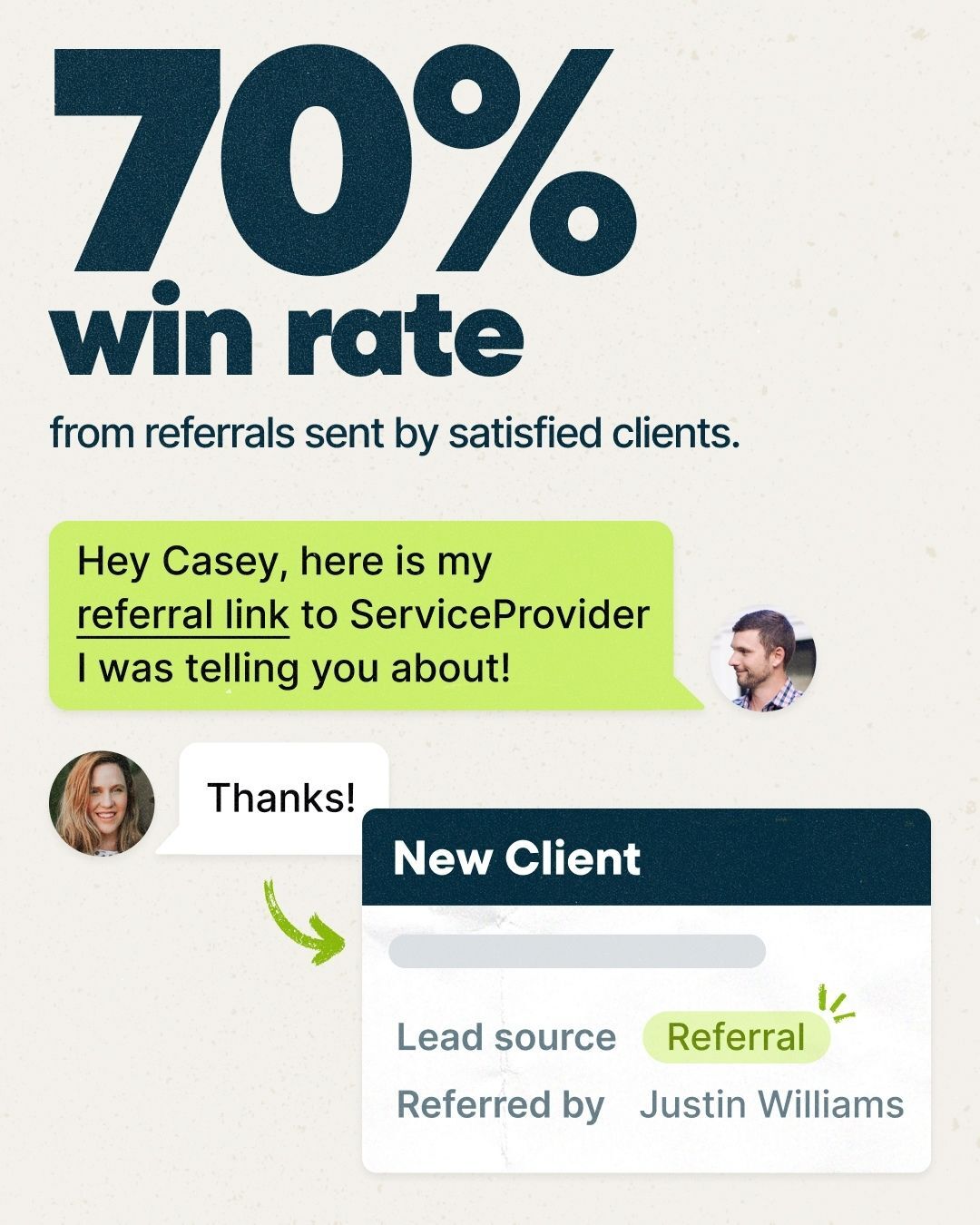
The good news is that there’s an easier way to get more referrals without calling each of your customers. Jobber Referrals makes it easy to promote your referral program to customers, with automated referral links and customizable email campaigns. 70% of referrals made through Jobber result in new work being booked.
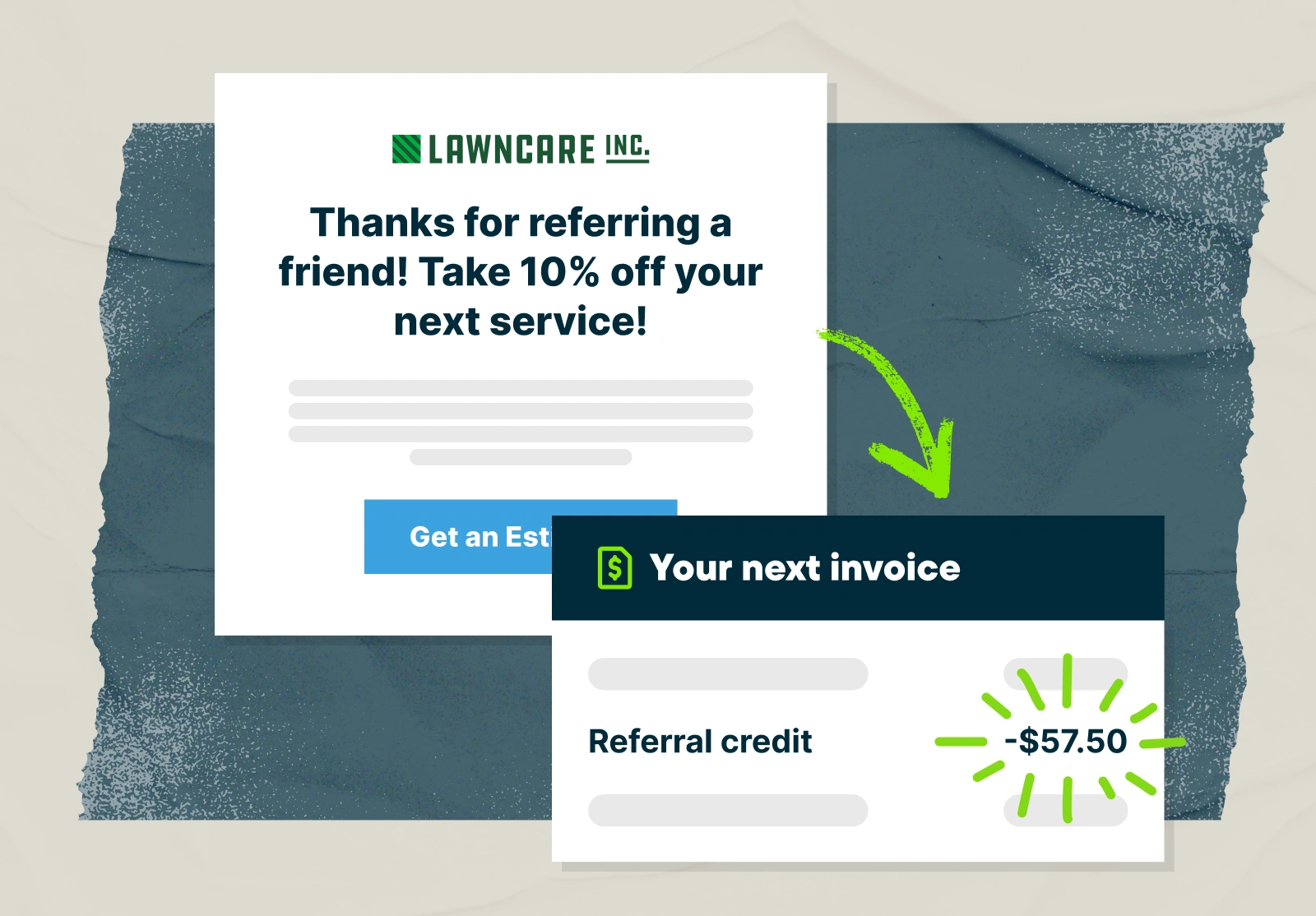
You can then reward your customers for bringing in new business by offering a credit towards their next service for every successful referral. The best part is that the referrals are automatically tracked in Jobber, taking one less thing off your plate.
How does a referral program work?
The best referral programs are easy to join, simple to share, and quick to reward. This keeps customers motivated and ensures the program runs smoothly.
A typical referral process looks like this:
- Invitation: You invite your existing customers to join the referral program, either through an email invitation, your website, or at the end of a service.
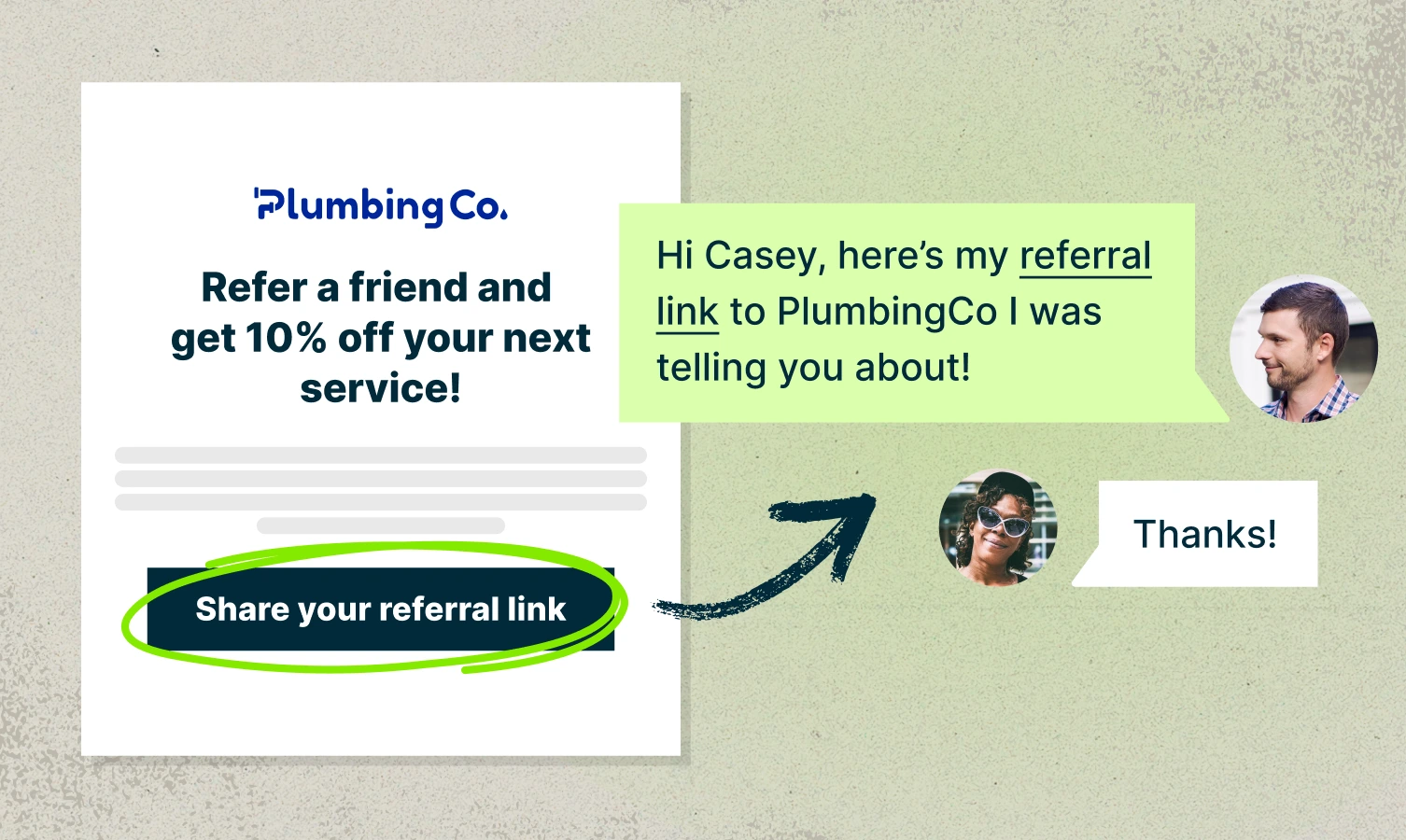
- Referral: Your customer makes the referral. Traditionally, you’d ask customers to pass on your business name, and you’d hope that they did. But with referral program software, you can give each customer a unique link that they can share with their friends and family. This lets you know exactly how many of your new clients are referrals, and who referred them to you.
- New client: When the referred person becomes a paying client, the referrer receives a reward.
- Reward delivery: The referral incentive, such as a service discount or credit, is delivered either automatically or manually, if you prefer.
10 customer referral program ideas
Check out these client referral program ideas to help improve your marketing strategy
1. Recurring service discounts or upgrades
One of the simplest ways to begin offering a customer referral program is through discounts or upgrades.
Using this type of referral program, for every referral a loyal customer sends your way, you could offer:
- A reimbursement for a previous service, like a $25 refund on their last bill
- A discount on a future service, like 10% off their next house cleaning
- A free one-time upgrade on an upcoming job, like a free fertilizer treatment on a future mowing service
These referral programs work well for businesses that offer recurring services, such as house cleaning, lawn care, pool maintenance, or dog walking, because they incentivize referrers to book a service they need again soon.
2. Gifts and cash rewards for one-off jobs
If your service business tends to do more one-off jobs, like handyman services, painting, junk removal, or electrical repairs or installations, offering gifts or cash rewards as an incentive over service discounts is a better strategy.
For example, if a client needs a fence built, they could still refer you to a neighbor, but they’re unlikely to need ongoing service soon.
Those customers should still benefit from providing you with a referral, but in this case, it makes more sense to reward them with something they can use now instead of a discount on a service they may not need for a while.
For one-off job referrals, you can offer:
- A personalized gift that speaks to your customers’ interests, like a gift card for a local restaurant, a ticket to a sporting event, or a deluxe coffee sampler.
- Branded swag your customers could use every day, like a mug, water bottle, pen, or magnet.
- Prepaid debit cards or gift cards based on the value of the referral—for example, bigger jobs result in higher-value gift cards.
LISTEN: How to deliver luxury-level service (without luxury prices)
3. Give service credits
Service credits are a budget-friendly way for your business to reward customer referrals.
Instead of offering cash or gift cards for other businesses, you give customers credits they can apply toward future services. This keeps the value within your business and encourages repeat bookings.
Giving credit instead of a discount can foster stronger customer loyalty and increase future spending by making customers feel like they’re getting a better deal. A discount simply lowers the current price, while offering credit shows trust and can encourage a customer to return for more business.
For example, a lawn care company might offer $30 in service credits for every new client a customer refers. Those credits can then be used toward their next mowing, seasonal cleanup, or fertilization package.
This approach not only motivates customers to refer friends but also increases customer retention, since credits naturally bring them back for additional services. It’s a simple, sustainable way to grow your client base while building long-term loyalty.
4. Give double-sided incentives
Using a double-sided customer referral program means you reward both existing customers and referred customers at the same time.
For example, Two Sisters Maid to Clean offers a free maintenance cleaning to referring customers and a $50 gift card for new recurring customers.
Another option is to offer your existing customers a gift or cash reward while your new customers receive a service discount.
5. Referral contests
Referral contests add suspense and excitement to your referral program. You can put out an email to your current customer base to let them know about the contest, the rules, what they have to do, and what they can win.
You can select winners in a few different ways:
- Setting up first, second, and third place prizes based on the types of jobs referred
- By rewarding the customer who brings in the most referrals
- Entering all referring customers into a random draw
Here are a few referral contest prize ideas:
- A free service, like a house cleaning
- Money towards a job, like $500 off a future landscaping project
- A cash prize, like a prepaid debit card
While many service businesses choose prizes that align with their existing offerings, some choose to go a more unconventional route, like Bob’s Carpet Care. Their referral contest offers a “romantic dinner for two” at a restaurant as the prize.
6. Holiday and seasonal referral programs
If offering a year-round referral program doesn’t make sense for you, either because you have a seasonal business or because you don’t have the resources to manage an ongoing initiative, seasonal and holiday discounts are a good option.
These are naturally time-sensitive, which spurs customers to find referrals faster.
For example, a snow removal company can offer a little Christmas joy by offering a referral program that offers a 40% discount on every successful referral that you get in November.
Or, if you just want to test-drive customer referral programs, try a themed reward, like a Valentine’s dinner for two or an Amazon gift card to help with holiday shopping.
7. Provide limited-time incentives
Similar to seasonal offers, limited-time incentives create a sense of urgency that encourages customers to refer others sooner rather than later.
By setting a clear deadline, you can drive quick action and keep referral programs fresh and exciting.
For example, a plumbing company might run a referral bonus that gives customers double rewards for referrals made before the end of the month. Or a cleaning service might offer a free add-on for any referral completed by the end of the month.
These short-term offers keep your referral program from feeling static and give you a reason to re-promote it throughout the year. When paired with regular reminders through email or social media, limited-time incentives can spark bursts of new business exactly when you want them most.
8. Charitable donations
If there’s a cause that’s near and dear to your business or to your community, consider building a referral marketing program around it. That way, both you and your customer feel like you’re doing a good deed, and you’ll be using your referral program reward to pay it forward.
Let’s say you’re a dog walker. If a referral brings in $150 worth of business, you could donate 15% of the first invoice to a local animal shelter.
Then, use that incentive in your marketing material to set you apart from competitors and help build your brand.
For example, you could add the amount you’ve donated to date to your website and social media pages or even include a line on your invoices to encourage customers to support the cause.
9. Tiered rewards
Tiered rewards programs, similar to a loyalty program, incentivize customers to send more referrals by rewarding them with different levels of prizes based on the number of new customers they bring in.
Tiered programs work well with point systems. For every successful referral, a customer receives a certain number of points. The more points they have, the bigger the reward.
For example, a lawn care company may give a customer 20 points for each referral and offer rewards like:
- 40 points: one free mow
- 60 points: one free mow plus hedge trimming and mulching
- 100 points: all of the above plus weed control treatment
10. Partnerships
Partnering with another business, also known as a B2B referral program, is an effective referral program strategy you can use to reach a new audience.
For example, as a landscaping company, you could partner with a local garden center.
You would offer a service discount to any customers referred to you by the garden center. In turn, they would offer discounted supplies or materials to anyone you refer to their business.
This type of referral program takes the work out of the customers’ hands while still providing them with a benefit. Plus, it gives you an opportunity to reach new customers and be recommended to them by an established brand that they know and trust.
How do you choose a customer referral program?
With so many referral program ideas to choose from, it can be difficult to know where to start. However, it’s important to understand three basic steps to help you choose the best referral program for your business:
1. Understand your customers
Start by looking at the type of work your customers book most often. Do they rely on you for recurring services—like cleaning, lawn care, or pool maintenance—or are they hiring you for one-time jobs like renovations or repairs?
Recurring customers tend to respond best to discounts, upgrades, or service credits. One-time customers, on the other hand, may be more motivated by rewards like gift cards or cash.
2. Do the math
It’s very important that the reward you’re paying the referrer is not more expensive than the profit you’ll earn from the new referral.
To figure this out, determine how much profit you typically make from a new client. If you offer recurring services, you may need to identify how much profit you typically make over their entire contract or relationship with you. This is known as your customer lifetime value (LTV).
Next, calculate the customer acquisition cost (CAC). This is how much you spend to acquire each new customer through the referral program. For example, if your referral reward is a $150 gift card.
Finally, ensure that your CAC is not higher than your LTV – otherwise, you are losing money, and your referral program needs to be rethought.
3. Know your desired program length
When choosing a customer referral program, determine how long you are willing to keep the program in place.
You might want to keep your referral program indefinitely, or you may want to do it seasonally. You might also want to experiment and try a one-time referral program.
No matter what your preference, knowing the length of the program will help you make the best choice for your business.
How to build a customer referral program
Once you choose a customer referral program, you need to set it up.
Here are the steps to follow to build a successful customer referral program that works for your business:
- Decide how you’ll track it. Before you launch your referral program, you need to have a plan in place to track it. Will you be using a spreadsheet? Do you need to create a unique link? Make sure to choose a method that is easy for you to keep up with.
- Promote it to existing customers. There are several ways to promote your referral program. For example, you can add a line on your invoices explaining the program. You can also create an email marketing campaign to promote the program to your customer base.
- Track referrals. Use referral program software to easily keep track of who refers whom and to track who gets what rewards.
- Pay out rewards. Have a timeline in place to ensure that rewards are paid out promptly to your customers. Also, make sure that you have a method in place (e.g., emailing vs. mailing gift cards).
- Measure the success of your program. You can also use your referral software to see how many referrals your business is getting, how many referrals result in jobs, and how big those jobs are to track your referral program’s success.
Jobber’s referral program software helps guide you through these steps to build a successful referral program for success. Here are some key features of Jobber’s referral software:
Automated referral requests
Get more referrals by automatically asking happy customers to spread the word right after a job is completed.
Jobber’s automation ensures that every satisfied client receives a quick, professional prompt to refer a friend—without you having to remember to ask. This helps you capture opportunities in the moment, when your service is still top of mind.
Referral tracking
Never lose track of who referred who. With Jobber, you can generate tracked referral links that customers can share directly with friends, or enter referrals manually when they come in through conversation.
This not only saves time but also ensures that every referral is credited accurately, so your best advocates always get the recognition they deserve.

Referral incentives
Jobber allows you to issue service credits that are automatically applied to the referrer’s next invoice, making the reward process seamless.
These incentives motivate customers to keep referring others and help encourage repeat business at the same time.
Referral reporting
Understand the real impact your referrals have on your business. Jobber’s built-in reporting lets you see how many new leads and jobs came from referrals, how much revenue they’ve generated, and which customers are your top referrers.
With these insights, you can identify what’s working and refine your strategy without the need for manual tracking or spreadsheets.
How to promote a customer referral program
Once you settle on a customer referral program that works for your business, it’s time to get the word out.
Your priority should be to make it easy to collect referrals. Using field service referral software like Jobber, you can request referrals from happy customers through an automated referral campaign. Each email contains a unique referral link, allowing customers to share your program with friends and family members in seconds.
Plus, referral tracking has never been easier. When they share their unique referral link with a friend or family member, it’s automatically tracked, and successful referral discounts are applied to their account for future services.
Some of the other ways to promote your new customer referral program are to:
- Promote referrals in customer communications. Highlight your customer referral program in contracts, invoices, receipts, service follow-up emails, thank you notes, and email signatures to get the word out to satisfied customers.
- Include your employees in the rewards. Consider offering referral incentives to motivate your team to bring in new clients. The more they promote your referral program, the better their chances are of getting a paycheck bonus or other reward. Or, set up an employee referral program.
- Reach out to happy customers. Positive reviews act as indirect referrals. If a customer leaves you a glowing review on Google or another platform, contact them personally to tell them about your referral program.
- Have an attention-grabbing headline. The more straightforward your customer referral program, the easier it will be for you to promote. Stick to a simple but appealing headline to tell customers exactly what’s in it for them from the get-go. For example, “Get $50 off your next cleaning when you refer a friend”.
- Leave referral cards at job sites. After every job, leave a card behind that promotes your referral program. A physical reminder about your referral reward can keep it top of mind—especially if it sits in the customer’s back pocket.
A successful referral program idea is based on three elements: a simple strategy, enticing referral rewards, and punchy promotion. When done right, it can bring in new contracts, create referral partners with existing customers, increase customer retention, and grow your service business.
Use Jobber Referrals to streamline your efforts and boost your referral rate by automating your customer referral program so you can focus on the job at hand.