
Key takeaways:
Looking to win new HVAC customers? These 15 HVAC marketing strategies are designed to help you build your brand, stand out from competitors, and fill your schedule all year.
- Maximize your online presence. Set up and optimize your Google Business Profile, launch an informative HVAC website, invest in SEO, and take advantage of review sites and lead generation platforms to attract more local homeowners searching for HVAC services.
- Leverage digital and direct marketing. Run Google Local Services Ads, send targeted email campaigns, and use direct mail and business cards to ensure your services stay top of mind for existing and potential clients.
- Encourage and showcase customer trust. Request Google and Facebook reviews, highlight testimonials and before-and-after photos, and launch a referral program to build social proof and get high-quality word-of-mouth leads.
- Stay active in your community and on social media. Regular posting, networking with other business owners, participating in community events, and using vehicle wraps keep your brand visible and approachable both online and offline.
- Track your marketing ROI and avoid common mistakes. Monitor key performance metrics for each strategy and ensure your marketing materials and profiles are regularly updated, with clear messaging, fast responses, and a personal touch.
Keep your HVAC business growing with proven marketing tips delivered to your inbox. Subscribe to the Jobber Newsletter.
You know how to fix systems. But keeping your schedule full year-round is a different beast. For many HVAC business owners, marketing their business is a completely new skill set to learn. But if you want to bring in steady leads or add a new truck, you’ve got to get your hands dirty (metaphorically, of course) and apply some marketing ideas.
This guide breaks down 15 surefire, low-lift HVAC marketing strategies to build brand awareness, bring in quality calls, win more quotes, and turn one-time repairs into repeat customers.
Each tactic includes step-by-step tips so you know exactly how to start, what it costs (time or money), and how to tell if it’s working.
How to market your HVAC company:
-
Set up your Google Business Profile
-
Run Local Services Ads
-
Build an HVAC website that highlights your work
-
Optimize your website with HVAC SEO
-
Ask for Google reviews
-
Get found on lead generation websites
-
Send helpful HVAC email campaigns that bring customers back
-
Start a customer referral program
-
Create a Facebook business page
-
Post on social media
-
Network with other business owners
-
Use vehicle wraps to attract customers on the go
-
Get noticed with direct mail
-
Create HVAC business cards
-
Give back to your community
1. Set up your Google Business Profile
Your Google Business Profile (GBP) is the free business listing that appears in Google Search and Maps when customers look for HVAC services in their area. This profile is often the first impression of your business.
It’s a free and easy way to increase your online visibility, and it’s one of the most popular HVAC digital marketing strategies, as 72% of consumers go to Google Search first to look up local business information.
When you sign up for a Business Profile, details like your HVAC business name, services, contact information, and client reviews will appear in local search results.
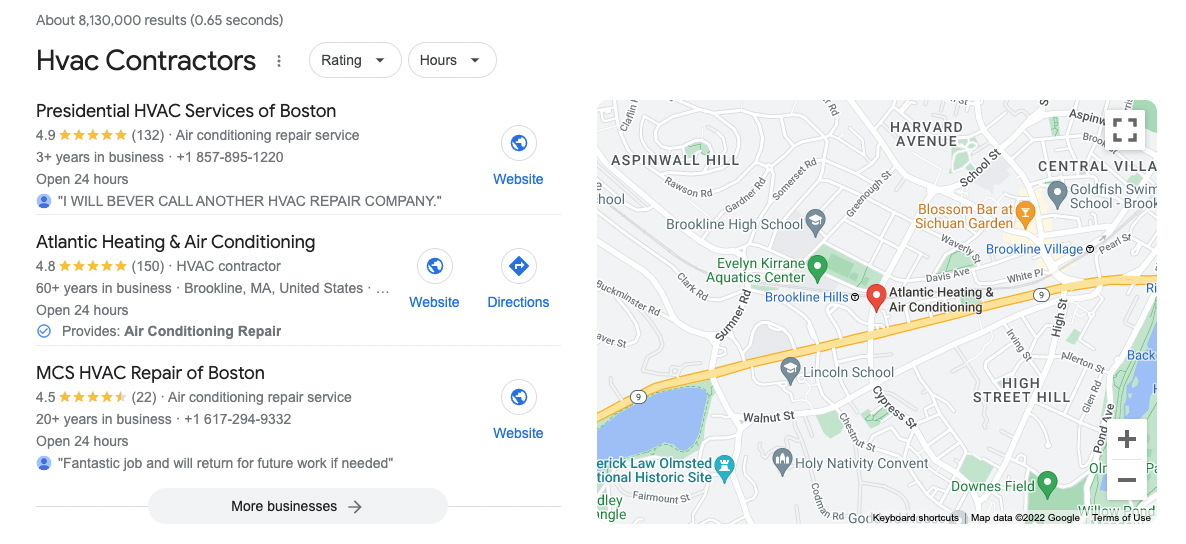
If your HVAC company runs multiple locations, you can create a separate Google Business Profile for each—just use a unique address and phone number for every location.
How to use it:
- Claim or create your profile
- Enter your business details, including name, address, phone number, business hours, and service areas
- Choose relevant categories like “HVAC contractor” and “Furnace repair”
- Add photos of your team, trucks, and recent jobs
- Post updates or offers to engage searchers
- Encourage happy customers to leave a review
Metrics to track:
Google Business Profile has its own performance data section so you can easily see how well this marketing channel is working for you. In particular, you can look at:
- Number of profile views and searches
- Clicks for directions, website visits, and calls
- Quantity and rating of customer reviews
Common mistakes to avoid:
- Incomplete or inconsistent information
- Not updating hours for seasonal or emergency availability
- Ignoring customer reviews or forgetting to ask for them
- Using stock photos instead of authentic ones of your work
97% of people are going onto Google Business Profile or Google and searching for services in their area.

2. Run Local Services Ads
Google Local Services Ads (LSAs) are specialized ads that appear at the very top of Google search results when local customers search for your services. These ads display your business name, reviews, and hours. People can contact you directly from these ads.
LSAs connect your HVAC business with high-intent searchers ready to book. When people in your service area search for terms like “HVAC [city]” or “HVAC service near me”, these ads appear at the top of their search results:
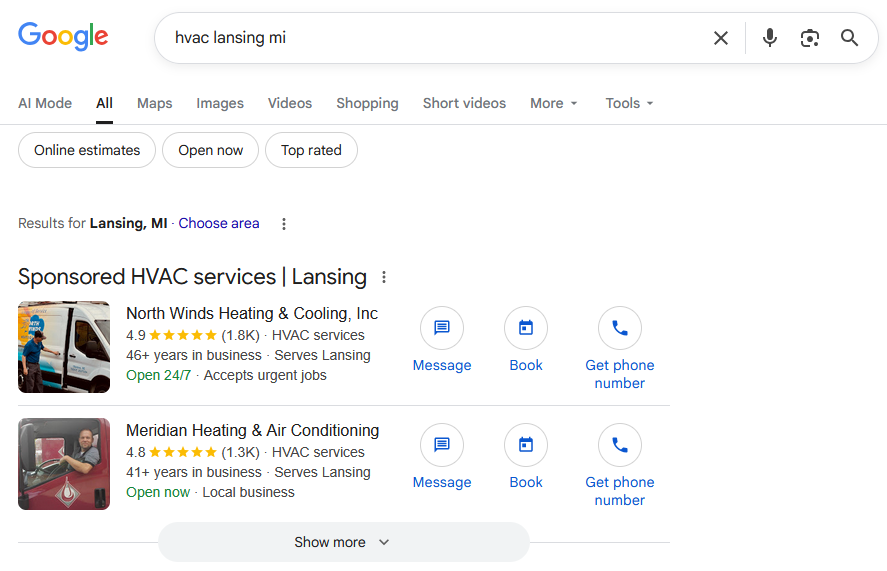
How to use LSAs:
- Set up an LSA account and verify your business
- Complete a background check and license verification
- Set your service areas and budget for leads
- Create your ad profile showcasing your services, reviews, and credentials
- Monitor leads directly on the LSA platform. Respond quickly.
You can also connect Jobber with Google LSA. Leads from LSA will show up in Jobber automatically, so you can respond quickly, send a quote, and book the job from one place, faster than competitors who are bouncing between apps.
Metrics to track:
- Number of leads generated
- Cost per lead
- Lead response time
- Conversion rate
- Profile views
- Ad impressions
Common mistakes to avoid:
- Not completing the required verification steps, can cause delays or even suspension
- Ignoring leads or responding slowly
- Not regularly updating service areas or business information
- Failing to respond to reviews, which influence trust and placement
You can also reach more potential customers by using pay-per-click advertising (also called PPC advertising). With LSAs, you only pay for the leads. But with PPC, you’re charged when someone clicks on your ad, even if they don’t become a lead.
The most common PPC ads for HVAC businesses are text-based Google Search Ads or an image-based Google Display Ads.
READ MORE: HVAC ad examples and HVAC advertising tips
3. Build an HVAC website that highlights your work
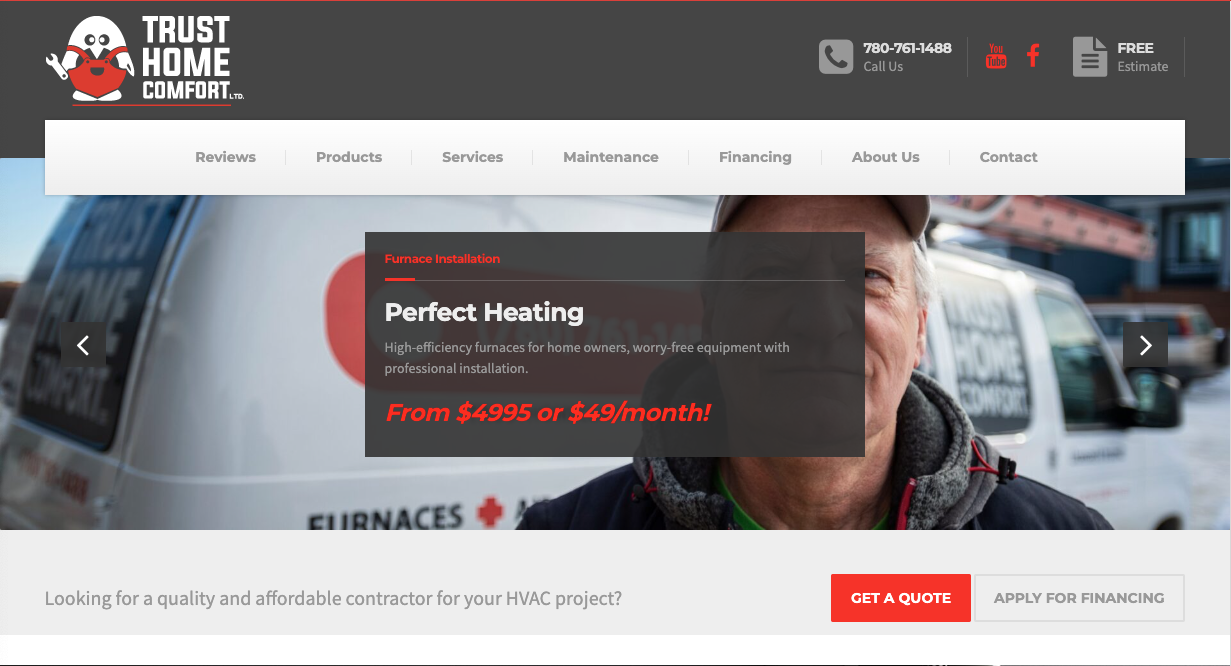
A solid HVAC marketing plan starts with your website, which lets customers find your services online and contact you. Your HVAC website should tell a potential customer why they should choose your company, provide details about your services, and let them request work.
Most people want someone local, available, and trustworthy. So, make sure your site includes:
- Your HVAC business name, logo, and tagline. Make it obvious who you are and what you do best.
- Contact information. Your phone number and email address should be quick to find and easy to click on mobile devices.
- Your service area. List the towns, neighborhoods, or zip codes you cover. People want to know that you’re local before they reach out.
- The HVAC services you offer. Keep it simple but clear, listing things like inspections, installations, preventative maintenance, and emergency calls.
- Reviews or testimonials. A handful of Google reviews or testimonials from satisfied customers can be very convincing.
- Before-and-after photos of your work. Show off completed HVAC projects. A clean, newly installed system can be more effective than simply writing about it.
- Professional photos of your team. Customers appreciate seeing real (not stock) photos of who will be walking into their home.
- Calls to action. Invite site visitors to call or email you, request a quote, etc. Make it easy for them to take the next step.
- An online booking form. Allow customers to request services through your website. Don’t make them play phone tag.
- Any special offers. A discount on a seasonal tune-up, for example, can encourage HVAC customers to contact you more quickly.
- A basic FAQ page. Answer common HVAC maintenance and repair questions, like how often to replace filters.
- A newsletter signup (optional). Allow customers to subscribe to your email marketing list.
[Customers] go to the website because they want to know two things: how much is this going to cost and when can you do it?
If you’re really looking to scale your business, you should look at having a professional website… If you’re doing Thumbtack and Nextdoor and all these places, it’s going to drive traffic back to your website.
Get your HVAC company online and in front of customers fast with a simple, professional HVAC website you can set up in minutes.
Simply provide Jobber with details about your HVAC business and services. We’ll create an HVAC website that shows off what sets you apart from the competition.
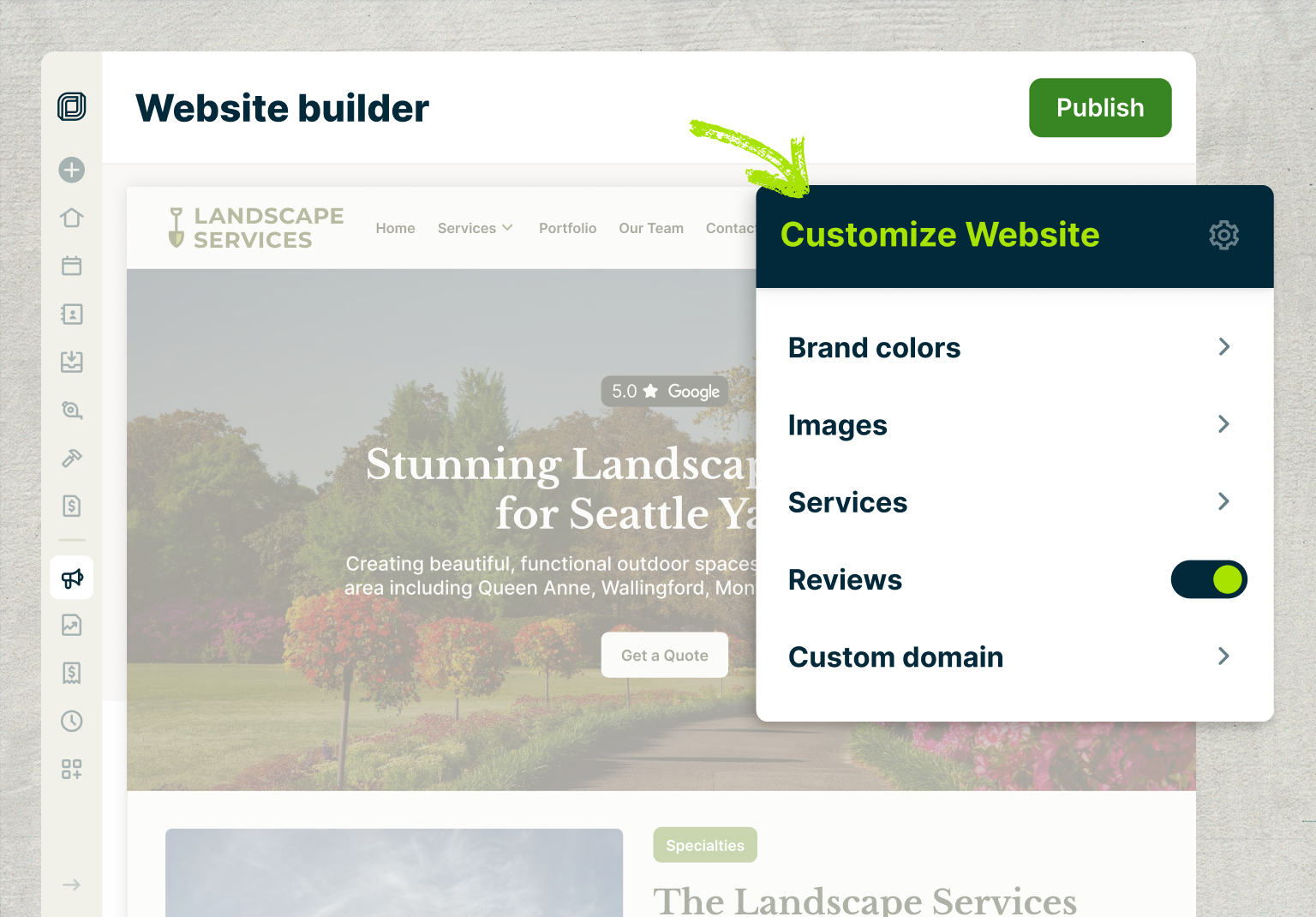
To help you convert website visitors into leads, your website automatically comes with a quote request form and an AI receptionist to chat with visitors, answer questions, and even book jobs while you’re busy.
You can even measure the success of your HVAC website directly in Jobber by tracking how many visitors your site is getting and how many requests are coming from it.
4. Optimize your website with HVAC SEO
Search engine optimization (SEO) is a process that helps more people find and visit your HVAC website. It involves improving your content marketing and user experience to rank higher than other HVAC companies vying for the same clicks.
Whether you optimize your website yourself or hire an HVAC marketing agency to do it for you, here’s what you need to cover your HVAC SEO basics:
- Add relevant, commonly searched keywords like “furnace and air conditioning repair” or “emergency HVAC services” to your page title and meta description.
- Share your company name, address, and phone number on every page of your website. This will help build local SEO since Google can see where you’re located.
- Make sure your HVAC website design is mobile-friendly for visitors who are looking at your site on their phones.
- Regularly publish quality HVAC blog content to keep your site relevant and educate your readers.
Jobber websites come with built-in SEO that boosts your spot in search results.
If marketing for HVAC feels like its own job on top of your day-to-day work, you’re not wrong. But investing in SEO keeps you visible on Google and in AI Search.
As you continue to create and optimize, here are a few things to avoid:
- Stuffing your site with too many keywords. Google can tell when the content isn’t natural and you’re just trying to forcibly rank.
- Using baseless, generic phrases like “best HVAC service” without going into detail about what you do or why customers choose you over the competition.
- Forgetting to update old content. If your homepage still says, “Your go-to HVAC techs for winter 2020,” people may think you’re not active or paying attention to booking inquiries via the site.
- Not fixing broken links or slow-loading photos. The little things add up and can collectively hurt your rankings.
5. Ask for Google reviews
Reviews from happy customers are proof that you’ve done great work. Even having just a few reviews can increase the likelihood of someone making a purchase by up to 270%.
A few days after the job is complete, call, text, or email your customer to ask if they’re happy with the work and invite them to leave a Google review. Respond to their review, too, and provide customer service to address any issues.
This will inspire confidence in your work and help your HVAC company appear higher in the search results when potential customers search for your services.
Pro Tip: You can also ask customers for a review to help your business appear in searches for local services in your area. Use these ready-to-use scripts to get started right away.
6. Get found on lead generation websites
You know how frustrating it can be to hunt for new leads. That’s why using contractor lead generation sites, like Angi and HomeAdvisor, can be one of the smartest marketing ideas for growing your HVAC business.
These platforms connect you directly with homeowners by collecting customer requests and matching them with local service providers who meet their needs. You can get more HVAC leads without cold calling or much marketing upfront.
Try one of these top lead generation sites:
| Site | How it works | Lead type | Review importance | Cost |
|---|---|---|---|---|
| Angi | Listings ranked by positive reviews, larger customer base | Shared leads* | Positive reviews crucial | $300/month for ads |
| HomeAdvisor | Matches customers needing installs/repairs— form-based lead matching | Shared leads and exclusive leads | Positive reviews help | $300-$350/year + per lead |
| Thumbtack | Connects contractors to local customers for various jobs | Shared leads | Positive reviews help | $10-$100+ per lead |
| Yelp | Directory/review site— customers search locally | Shared leads | Asking for reviews is recommended | Free listing, ads optional |
*Exclusive leads are leads sent only to you, while shared leads are available to multiple businesses at once.
READ MORE: Angi vs HomeAdvisor: which lead generation service should you use?
How to use lead gen sites:
- Create a profile that highlights your specialties, licenses, and service area
- Upload photos of your team, trucks, and recent jobs
- Gather positive customer reviews to rank higher
- Set your budget or bidding preferences
- Respond quickly to incoming leads
Metrics to track:
- Number of leads received
- Cost per lead
- Lead response time
- Conversion rate to booked jobs
- Profile views
- Ranking on the platform
- Quality and quantity of customer reviews
Common mistakes to avoid:
- Leaving your profile incomplete or outdated
- Ignoring leads or responding slowly, which hurts your ranking and reputation
- Over-spending without tracking ROI or adjusting your budget
7. Send helpful HVAC email campaigns that bring customers back
Email might not sound as exciting as ads or social posts, but it’s a reliable HVAC marketing strategy to stay in front of customers without spending a lot.
To get more revenue from existing customers, try using email marketing to promote special offers, referral programs, and new services. Email marketing keeps your HVAC company top of mind for your customers and can help you build stronger relationships.
Follow these steps to start email marketing to existing clients:
- Plan your content. Not every email you send to your email list needs to be a sales message. Your emails could include recent projects, blog articles, maintenance tips, and positive reviews from happy customers. This will help keep subscribers engaged and help them feel confident in your expertise.
- Offer value. Your emails should always contain something that a client finds valuable. It could be a blog post with air conditioning usage tips, or maybe a discount on your next visit. Try subject lines like “5 signs it’s time for a new filter” or “$25 off your next tune-up.” Whatever it is, your client will only read it if they’re getting something in exchange.
- Segment your audience. This lets you customize the content you send to each group. For example, you can create a group of customers who received air conditioner installation services and contact them the following year about AC maintenance.
- Write a strong subject line. The subject line is what makes someone open your email, so make it interesting. For example, instead of just saying “Seasonal sale,” say “Save 20% on a humidifier install when you book today!”
- Expect that customers won’t buy right away. Keep subscribers interested with relevant content so they stay subscribed. That way, you’re still showing up in their inbox when they’re ready to book HVAC services.
In a competitive field where customers often choose the cheapest quote, staying connected makes all the difference. Email marketing lets you highlight what makes your service better, and a personal touch is something that bigger companies can’t match.
And unlike social media, where posts disappear in a feed, emails land directly in your customer’s inbox.
Email can be done almost as frequently as you want.
Your average email open rate is about 15–20%. So, if you have 10,000 people, you can get in front of a decent amount.
How to use email
Send effective HVAC marketing emails faster with a tool that prepares email marketing templates and audiences for you. Jobber lets you create email campaigns with premade branded templates that are built for specific goals and customers.
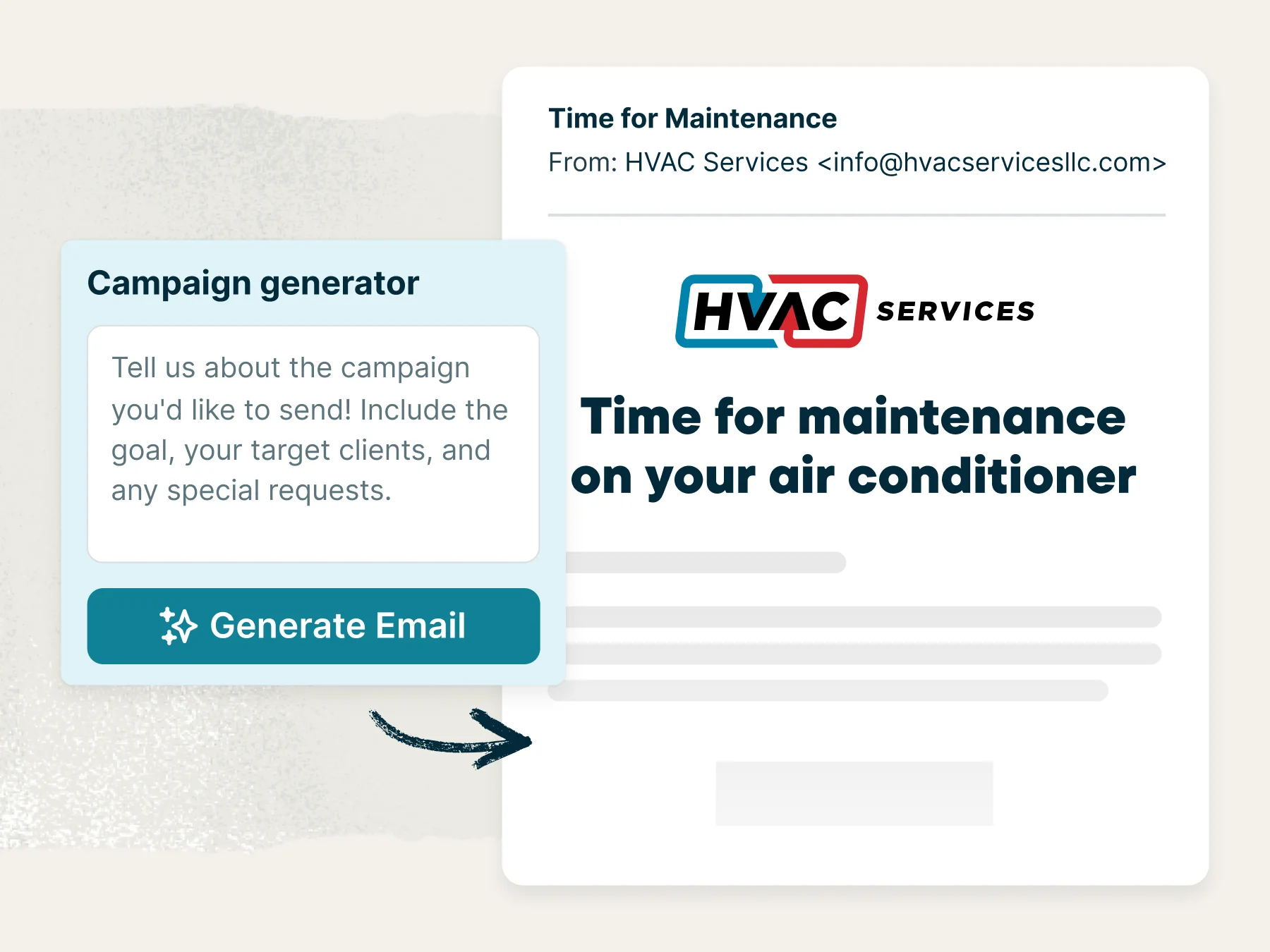
After editing the email with details about your HVAC services, you can edit your client segments to choose what group of clients you want to email. You can even select clients using tags, job history, or by a particular HVAC service you’ve provided.
Track the success of your marketing efforts over time from a simple dashboard. For every HVAC marketing campaign you send in Jobber, you’ll see the number of customers who opened the email, clicked on a link, or converted into a job.
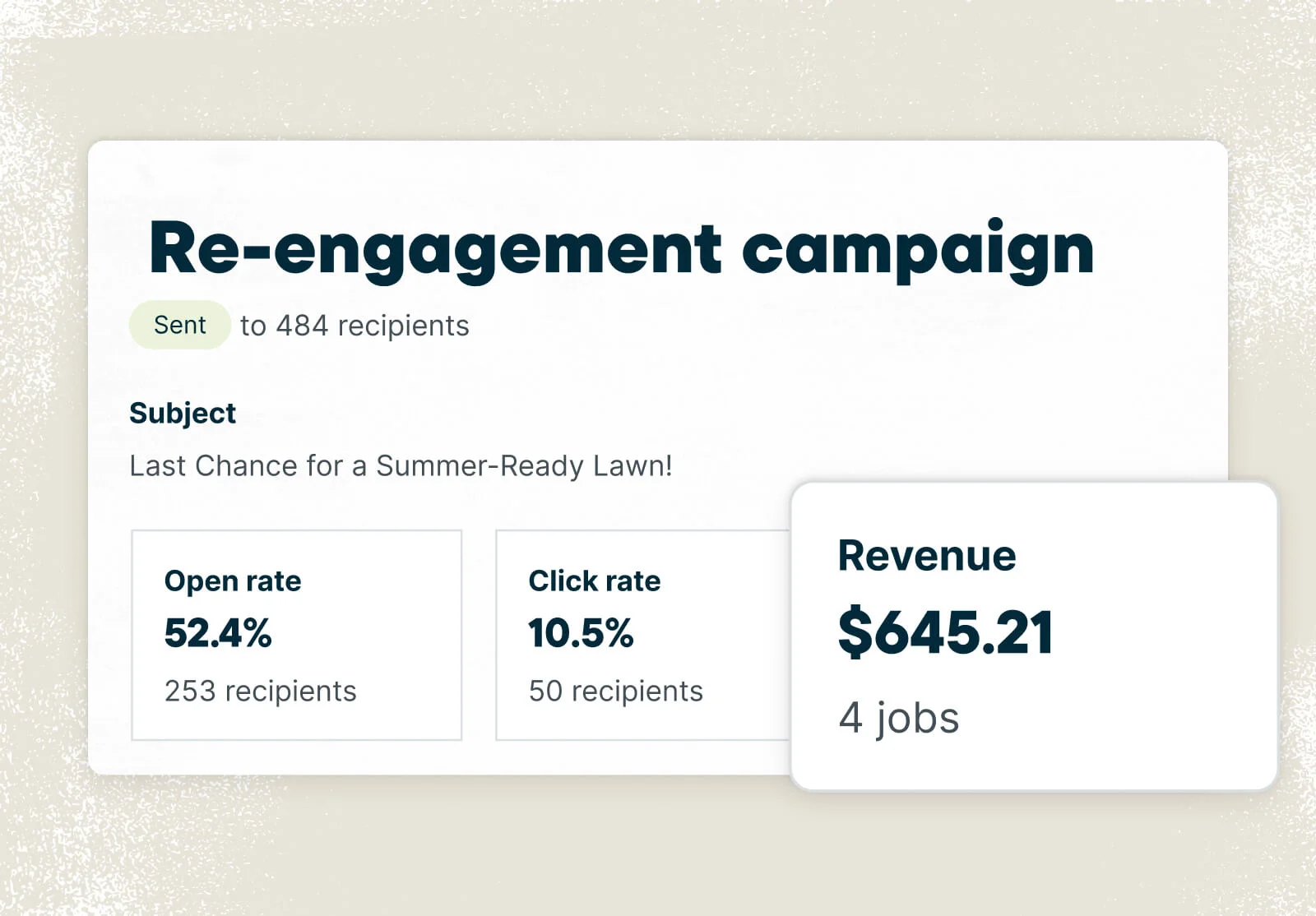
Metrics to track:
- Open rates to gauge interest in your subject lines
- Click-through rates to measure engagement with your offers
- Conversion rates to determine how many recipients request a quote or book a service
- Unsubscribe rate, which indicates if your messages are too frequent or irrelevant
Common mistakes to avoid:
- Sending generic emails instead of targeted, personalized messages
- Not basing your messages on customer history or seasonality
- Sending too many emails, which can annoy customers
- Failing to include clear calls to action or easy ways to contact you
8. Start a customer referral program
A customer referral program encourages your HVAC customers to recommend your services to friends, family, and neighbors by offering rewards.
Referrals come with built-in trust, making them some of the highest-quality leads you can get. A strong program turns your happy customers into an unofficial sales team.
Here are examples of incentives you can offer to your current and referred HVAC customers:
- $50 off their next A/C maintenance visit, with a similar offer in the summer for furnaces
- $100 in cash or credit per closed sale for client referrals
- Entry into a draw for a grand prize, like a $200 Visa gift card
READ MORE: 15 brilliant customer referral program ideas (with examples)
With Jobber, you can promote your referral program to customers with a professional email marketing campaign that’s ready to send in seconds flat. Then apply and track your referral program success all from the same place.
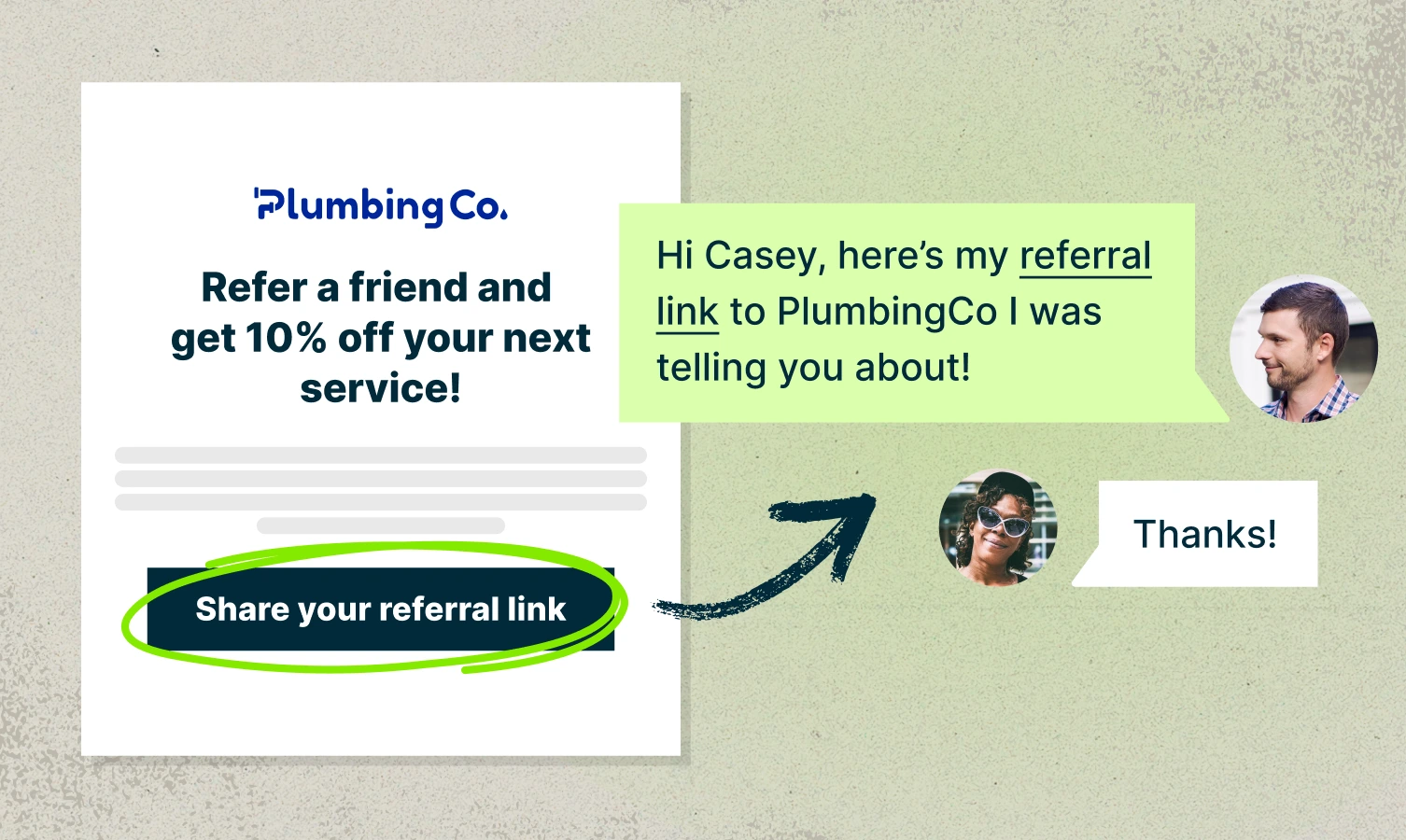
When a referral is made through a customer’s unique link, it’s automatically tracked. The next time they use your service, their referral credit will automatically be applied to their invoice.
Metrics to track:
- Number of referrals received
- Conversion rate of referrals to booked jobs
- Cost per acquired customer through referrals
- Repeat referral activity by individual customers
Common mistakes to avoid:
- Offering rewards that aren’t appealing, which won’t motivate customers to participate
- Not promoting the program through staff and communications
- Failing to track referrals and rewards, which leads to customer frustration
- Missing the best moments to ask customers to join the program, such as right after a great service
9. Create a Facebook business page
Creating a Facebook business page is one of the simplest, most affordable ways to boost your online presence.
It also helps you reach your ideal customers in the same place they spend their downtime. Chances are, you’ve probably scrolled Facebook yourself while watching TV or waiting for a pizza to show up at the door.
Just like your website, a business page on Facebook is a place where potential HVAC clients can learn what you can do for them, find your contact information, and request work.
Here’s what to include when you create a Facebook business page:
- Contact information
- Company description
- Profile picture with your company logo
- Cover photo (e.g., your team or HVAC van)
- Business hours
- Photos of past work
- A button that lets customers contact you or request services
- At least one customer testimonial praising your work
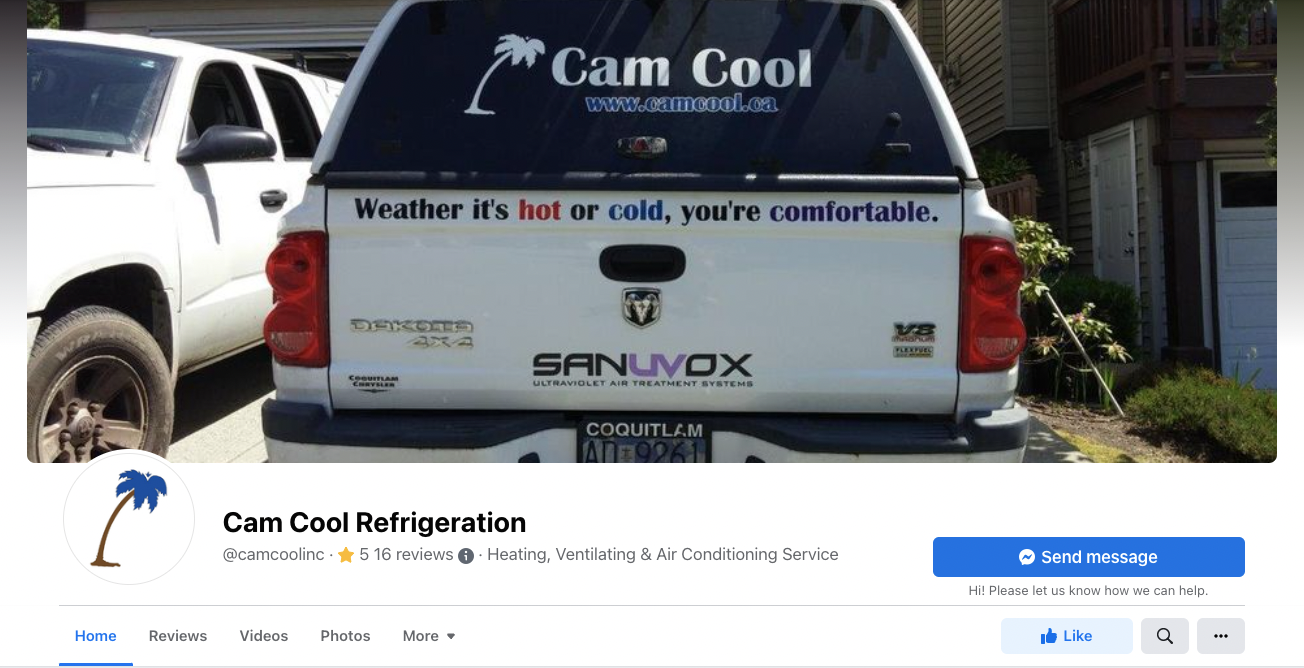
Once your Facebook page is up, don’t set it and forget it. Ask your friends, family, and customers to follow you.
Then get your current customers to leave a review and respond to those reviews with a thank-you. A quick “Thanks for choosing us!” shows you’re attentive and human, which can go a long way in competitive markets.
When your page visitors see you have positive customer reviews, they’re more likely to book you for work.
Then keep tabs on what’s working. Check these on a regular schedule, such as monthly or quarterly:
- Message response rate. Facebook tracks how fast you reply to inquiries. The faster you respond, the more confident leads will feel messaging you.
- Page follows and reach. A slow, steady climb is fine. It’s better to have 100 engaged residents than 1,000 followers from places outside your service area.
- Clicks to your website or booking link. That’s the real sign your Facebook page is doing its job.
Treat this platform like an extension of your reputation in the community. When homeowners see your name pop up often in their feed—whether you’re offering helpful advice or celebrating customer wins—they’ll think of you later.
11. Network with other business owners
Connecting with entrepreneurs and local businesses can help your company reach new customers. For example, a plumbing company can refer you to their clients, and you can do the same.
Try these ideas for meeting new people and making connections:
- Join The Home Service Community to meet other small business owners who get what you’re building.
- Participate in local home shows and HVAC trade shows to meet potential partners and customers. Don’t forget to bring your business cards!
- Attend networking events like Business Network International (BNI) and local Chamber of Commerce meet-ups.
But just like a bad install, networking in the wrong way won’t be a good use of your time. Here’s what to avoid when trying to establish a good reputation and connect with other local pros:
- Just networking to sell. Nobody wants to be pitched at every turn. Network to build relationships rather than transactions. Ask about their business, listen for ways to help, and the referrals will come later.
- Only networking inside your own trade. Branch out and connect with real estate agents, property managers, and builders. They often hear about heating and cooling problems.
- Not showing what makes you different. To avoid blending in when you meet other business owners, tell quick stories that show you’re reliable.
- Forgetting to follow up. Handshakes are great, but a simple follow-up by email or social media goes a long way. It keeps your name fresh and makes it easy for people to refer you later.
12. Use vehicle wraps to attract customers on the go
Vehicle wrap marketing is a great one-time investment to help you attract prospective customers in your area. Decals or wraps help promote your HVAC company while you’re driving from job to job.
Your vehicle wraps and decals should include:
- Your business name and logo
- A tagline or slogan with your strongest selling point (e.g., “24/7 emergency services”)
- Your phone number and HVAC website URL
- A simple and eye-catching design with your company colors
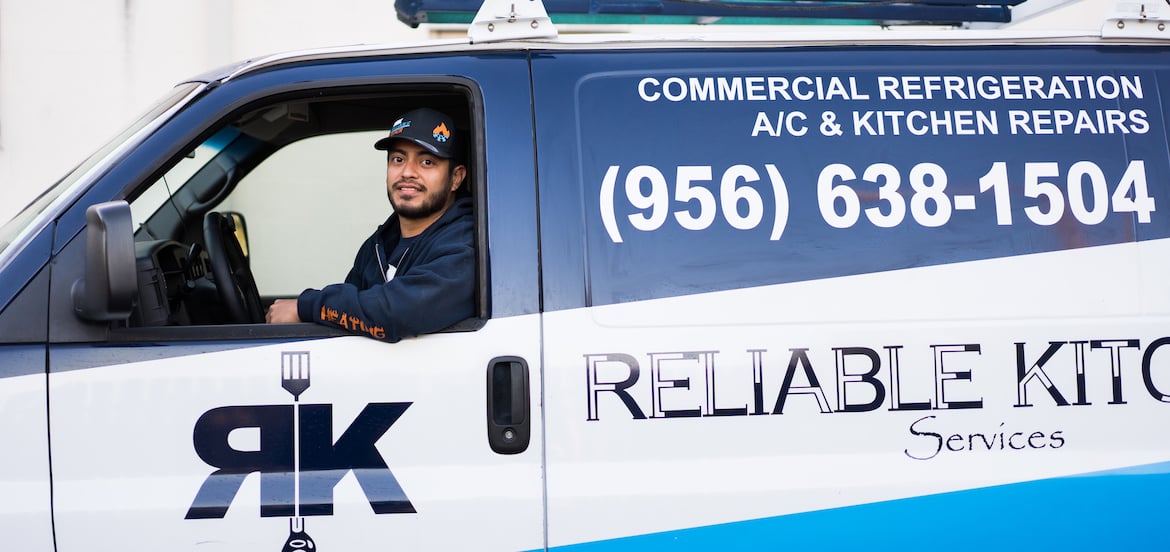
You can create the decals yourself or hire a service like 99designs or a freelancer to design them for you. Then, contact a local print shop that does vehicle decor to get them printed and installed.
If your wrap doesn’t look great, though, it’s just a moving distraction and a missed opportunity. Here are some common mistakes to steer clear of:
- Overcomplicating the design. Ever seen a wrap that looks like someone crammed an entire website of information onto it? The result is no one reads any of it, so keep things simple.
- Forgetting about readability. If your phone number blends into the background or it’s too small, people might not catch it. Use high-contrast colors. Ask yourself if someone could read it from 30 feet away from inside their car.
- Using generic stock images. It’s tempting to just use an AC graphic or a smiling technician from a stock site, but homeowners can tell when something doesn’t look legit. Use real images for authenticity.
- Skimping on quality. A cheap wrap job can peel or fade in just months. Treat your wrap like your best marketing tool. Go with a reputable local installer and durable vinyl that holds up through snow, salt, and summer heat.
- Forgetting to clean it. If part of your phone number is illegible because it’s covered in grime, it’s not doing you any favors. A quick wash keeps your wrap and your reputation looking sharp.
13. Get noticed with direct mail
Since you’ll be visiting customers’ homes, it makes sense to send HVAC marketing materials directly to their doorstep or mailbox.
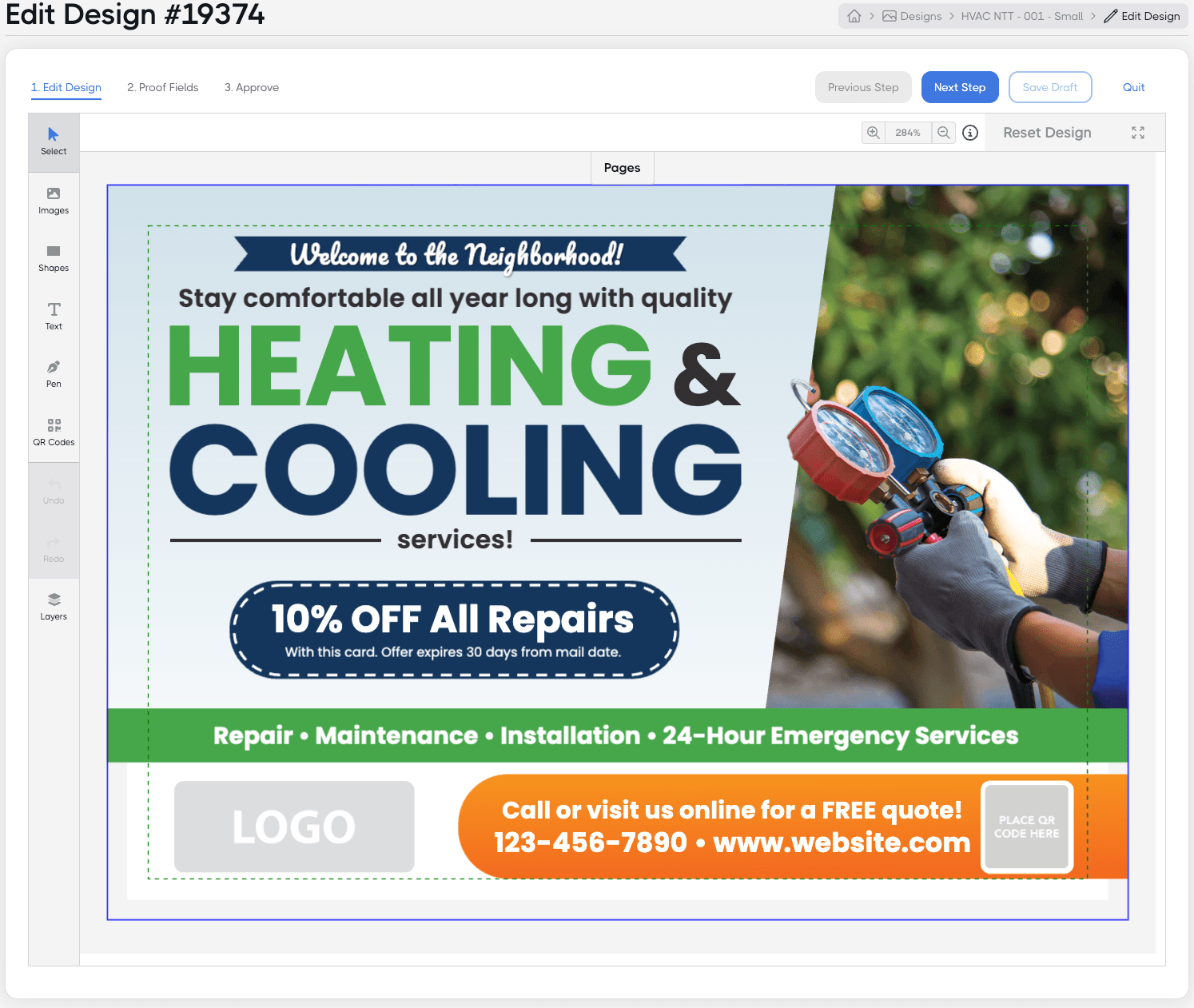
Traditional advertising like direct mail makes it easy to spread the word about your business. You can reach different group sizes, share different messages, and use unique promo codes to see which mail earned new customers.
Mailers could include flyers, brochures, postcards, door hangers, and other print items. Whatever you decide to send, it should include:
- Your HVAC company name and logo
- Contact information (e.g., phone number, email address, online booking details)
- A brief list of the HVAC services you offer
- Before-and-after photos showing off the quality of your services
- A compelling call to action (e.g., “book online,” “get a free quote”)
- Clear information about discounts, special rates, or promotions (with an expiration date)
Jobber’s PostcardMania integration gives you an automated way to send targeted direct mail without adding more work to your plate. It syncs with your Jobber account to help you easily follow up after completed jobs, engage with new leads, or market your HVAC services to nearby homes.
14. Create HVAC business cards
Business cards are an inexpensive way to promote your services to people you meet, whether it’s at the hardware store, the grocery store, or a networking event.
You can create an HVAC business card using free DIY tools like Canva or Business Card Maker. Or, find a freelance designer on sites like Upwork or Fiverr.
Your business card should include:
- Your HVAC company name and logo
- A one-line summary of what you do (e.g., air conditioning repair services)
- Your name and job title
- Business address
- Your email address and phone number
- Your website’s URL or a QR code for easy access
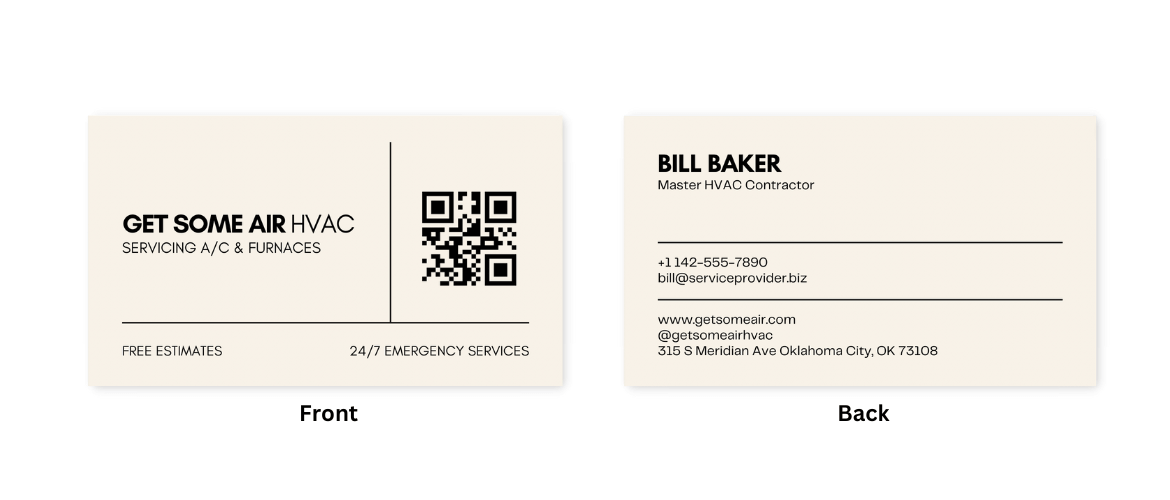
And since that card can actually carry a lot of weight when it comes to first impressions, here are some things to avoid:
- Making it all about the logo. Everyone loves a good logo, but if it takes up half the card, you’re losing valuable space to include helpful information about your business.
- Forgetting readability. If someone has to squint to read the card, they might not bother calling. Go for a clean, straightforward look that’s easy to scan.
- Not using both sides. A blank backside is prime real estate. Without cluttering the entire card, take advantage of both sides. You could even include a brief seasonal reminder like “Ask about spring duct cleaning!”
- Printing the cheapest option possible. Printing costs add up, but flimsy cards with blurry text suggest you don’t care. Go for sturdy card stock and a clean matte finish—these small details that tell customers you take your business seriously.
15. Give back to your community
Participating in local events and initiatives can improve your visibility and show customers you care about your community. Then, when they’re considering which HVAC company to hire, you’re always top of mind.
Consider community engagement ideas like:
- Sponsoring a local food bank drive or holiday toy drive
- Supporting groups that are important to you (e.g., veterans, low-income families)
- Volunteering at community events and holiday celebrations
- Donating to silent auctions and other fundraisers
- Buying jerseys and equipment for local sports teams
But even with the best intentions, it’s easy to make a few missteps. Here are some common ones to avoid:
- Making it all about marketing. If you’re handing out business cards and hanging up a giant banner, it comes off as self-serving. Focus on getting involved first and the recognition will follow.
- Committing too many resources. Devoting too many volunteer hours can stretch your team thin. It doesn’t hurt to start small and grow from there.
- Not sharing your efforts the right way. Rather than essentially saying “Look what we did!” when posting about your community work, focus your message on why it matters. Put the community first. Talk about how you helped raise funds to keep local families warm this winter.
Need more inspiration?
Check out this video to get ideas for low-cost marketing strategies, straight from experienced business owners:
Frequently Asked Questions
-
Plan to spend anywhere from 7-10% of your gross revenue on HVAC contractor marketing. That said, your budget will vary based on your location, the local market, and what goals you’re trying to achieve.
You might find you can reach your goals with a smaller budget, or you might need to invest more to show up in a high-competition market.
-
72% of consumers use Google Search to look up local business information. The most effective tactics focus on helping local homeowners find and trust your business. Start by optimizing your Google Business Profile with contact details, service categories, and photos of your team, vans, and projects.
On your website, use local keywords like “AC repair in [city]” on your service pages and in meta tags. Create location-based landing pages for each area you serve. Publish helpful content that answers real customer questions, such as blog posts on troubleshooting or maintenance tips or troubleshooting guides.
Finally, encourage and respond to Google reviews since they have an impact on how well you rank.
-
The most effective local channels are the ones that put your business in front of homeowners right when they need your services.
To start, a Google Business Profile helps you appear in map results and “near me” searches. Encourage satisfied clients to leave a Google review, which improves your rankings and credibility.
Local Services Ads (LSAs) can put your business at the top Google results, which is ideal for booking high-intent customers. And you can use lead generation websites like Angi and HomeAdvisor for more local opportunities.
Continue optimizing (and creating content for) your website with city-specific keywords and messaging that talks about your service areas.
Originally published in August 2022. Last updated on November 4, 2025.
10. Post on social media
Make a point of regularly posting relevant, original content on your HVAC social media profiles to keep followers interested. This shows your ideal customers that you’re active and engaged.
Start by creating a simple social media marketing calendar that outlines what you’ll post every week and when you’ll post it.
Then try some of these post ideas and see what your audience interacts with the most:
Include a clear call to action at the end of each social media post. This tells your followers what to do next, whether that’s liking and subscribing or heading over to your website.
Once you have a consistent posting schedule, reuse and repurpose your social media content across the platforms you’ve chosen to be present on, whether it’s Facebook, Instagram, LinkedIn, etc.