
Key takeaways:
Growing your heating and air conditioning business takes a strategic approach from planning to execution. Here’s how you can expand successfully.
- Create a clear growth plan. Define your vision for business expansion by updating your business plan with hiring goals, new service areas, quality control processes, and an expense timeline.
- Build a strong marketing strategy. Use targeted marketing tactics such as social media outreach, a professional website, Google Business Profile, online ads, and personalized email campaigns to attract new customers.
- Hire and retain top HVAC technicians. Follow a thorough hiring process and foster team loyalty with flexible scheduling, ongoing training, competitive pay, and open communication.
- Maximize profitability and win more work. Price services strategically with value-added packages, recurring service contracts, and clear, detailed estimates to boost revenue and close more sales.
- Streamline scheduling, customer service, and invoicing. Optimize technician routes to minimize travel, use a CRM for standout customer experiences, maintain high-quality standards with job checklists, and offer convenient payment options to get paid faster.
For more tips and expert advice on growing your HVAC business, sign up for the Jobber Newsletter. Subscribe here.
Originally published in May 2020. Last updated on November 7, 2025.
Growing your HVAC business can make your company a household name and increase your profits. It takes organization and determination, but you already have these qualities as an HVAC business owner. You’re ready to scale upward.
Now you just need guidelines to help you run a successful HVAC business with growth in mind. In this article, we share proven tips for streamlining your day-to-day operations so you can take your business to the next level.
How to grow an HVAC business:
-
Plan your business growth
-
Create your marketing strategy
-
Hire qualified HVAC techs (and keep them!)
-
Price your services for profit
-
Win more work with detailed estimates
-
Schedule more jobs with less driving time
-
Provide excellent customer service
-
Build a reputation for high-quality work
-
Send invoices and get paid faster
1. Plan your business growth
Before you grow your business, you need to define what that growth looks like and build a roadmap that will help get you there. Figure out how you’ll build a company that can operate at a larger scale with higher revenue and expenses.
You can update your existing HVAC business plan with information like:
- How and when you’ll start hiring HVAC technicians
- Processes and systems for quality control as your team grows
- Which new service areas you’ll expand into, if any
- Additional companies you’ll be competing against
- Expenses and timeline for your planned growth
If you don’t have a plan, create one.
It’s always better to be calculated. Just a little bit of time at the early stages of your business goes a really long way.

2. Create your marketing strategy
Finding customers is one of the biggest challenges for many HVAC companies—and the most essential way to grow your business.
To find potential HVAC customers, figure out where they spend time and how to reach them in those spaces. You could find success if you focus on these HVAC marketing ideas:
- Create HVAC social media posts to reach ideal customers in places like Facebook, X, Instagram, YouTube, and more
- Build an HVAC website that shares important information about your business (and get found in search engines using SEO for HVAC companies)
- Create a Google Business Profile (or update your existing profile) to help local customers find you online
- Run HVAC ads on search engines, social media platforms, review sites, and other places where ideal customers might discover your business
- Design personalized email marketing campaigns to show ideal customers that you understand their HVAC needs
Send effective marketing emails faster using Jobber Campaigns. Choose from premade templates built for specific goals and customers, add details about your HVAC services, and pick which clients you want to email.

3. Hire qualified HVAC techs (and keep them!)
Your business can only grow if you have enough HVAC technicians to handle the workload. When demand for your services is high enough—or you know it will be soon—follow this process to hire your team:
- Apply for an employer identification number (EIN) from the IRS
- Register with your state’s labor department
- Prepare to share the employee’s information with your state’s new hire reporting agency
- Put a payroll system in place to help you keep accurate records
- Get workers’ compensation insurance (a must-have in almost all states)
- Write an employment contract or at-will agreement and get a lawyer to review it
- Get a personal data form that your employee can fill out for payroll purposes
- Create standard operating procedures for every task you do
- Design and order employee uniforms (a branded t-shirt is fine to start with)
- Write an HVAC technician job description
- Share your job posting on your website, social media, and job sites like Indeed
- Meet with the best candidates and ask these HVAC interview questions
- Offer the job to your top pick
Because finding the right people takes time, effort, and money, it’s essential to make sure your HVAC technicians are qualified and motivated to stay with your company long-term. Here are a few ways to do that:
- Use flexible scheduling that balances the needs of your team and your customers (a drag and drop calendar with automatic team reminders can help with that!)
- Provide continuous training so you’re always sending the most qualified HVAC technician for the job
- Ask for feedback and keep technicians in the loop about how the business is doing
- Offer competitive HVAC technician salaries and benefits
- Encourage high performance with an employee bonus program
- Mentor less experienced HVAC technicians
4. Price your services for profit
HVAC services can feel pricey for homeowners, so they’re looking for the best pricing possible. But deals and discounts aren’t always the best way to grow your business—they cut into your profits and can make your business look like a budget option.
Instead, try HVAC pricing strategies that increase your revenue while addressing customers’ concerns about cost, like:
- Contract add-ons, upsells, and good-better-best HVAC proposals to increase the value of every job
- HVAC service contracts or maintenance agreements that help you earn recurring revenue and ensure consistent cash flow
- Membership or “frequent flyer” plans to lock in customers and reduce seasonality
- Monthly or biweekly payment options that make it easier for customers to afford higher-cost services
We lead with a monthly payment or a biweekly payment for our products and services.
Bigger companies get their foot in the door with “Get a water heater for $30 a month,” and they include full warranty and maintenance in that price. [We’ve] found pretty good results from doing that.

It’s also a good idea to pick a niche and own it. Maybe you’re an expert at emergency services, or you could be known for fast, quality HVAC system installations.
Whatever it is, pick your specialty and price your services for a healthy HVAC profit margin. Customers are willing to pay higher prices for services if you’re a known expert in that area.
5. Win more work with detailed estimates
To turn HVAC leads into paying customers, make a good impression with an estimate they’ll want to sign. Jobber’s HVAC estimating software lets you create a professional estimate with information like:
- Your HVAC company name, logo, and contact details
- Your services and pricing
- Optional line items and good-better-best tiered pricing options
- Item descriptions and photos to describe the units you’re installing
- Estimate terms and conditions
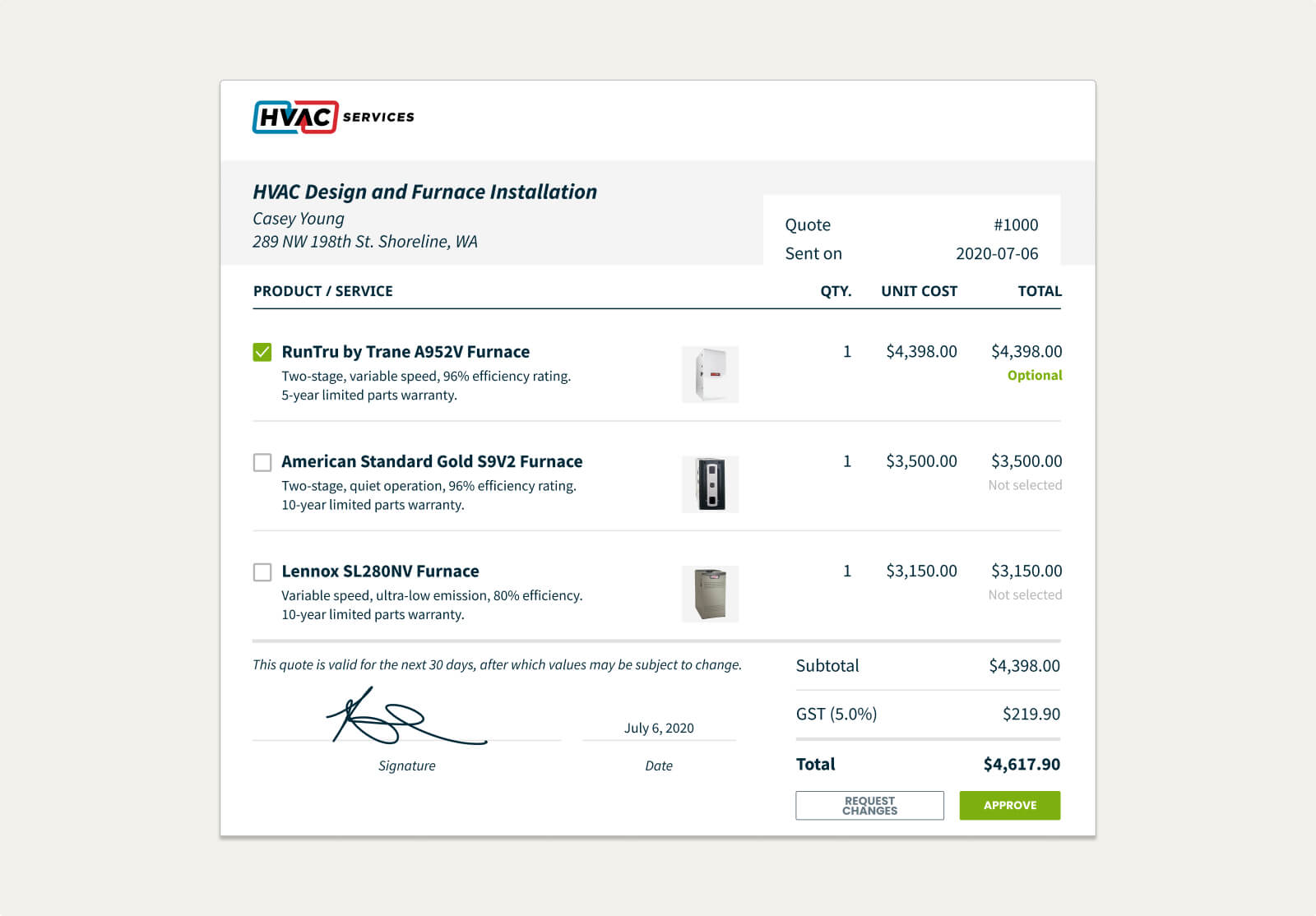
Once you’ve created and sent your professionally designed estimate, follow these steps to turn the estimate into paid work:
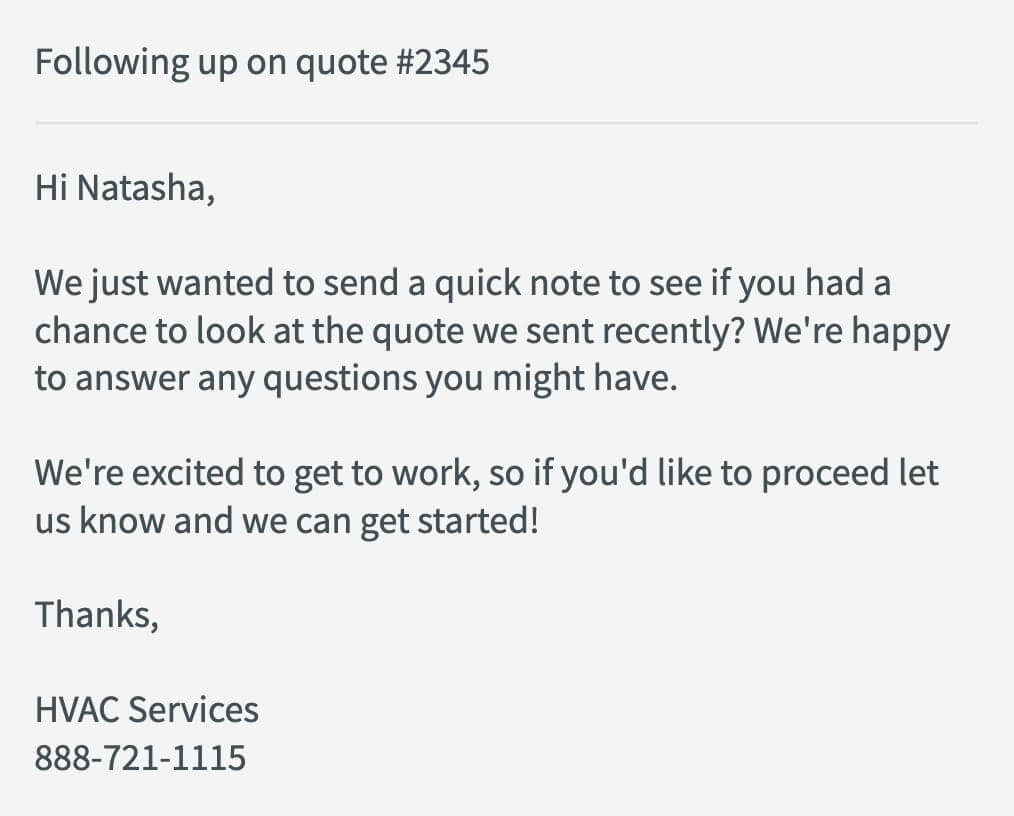
Send follow-up emails. Close the sale faster by sending two or three standard quote follow-up emails that remind your client to approve the estimate.
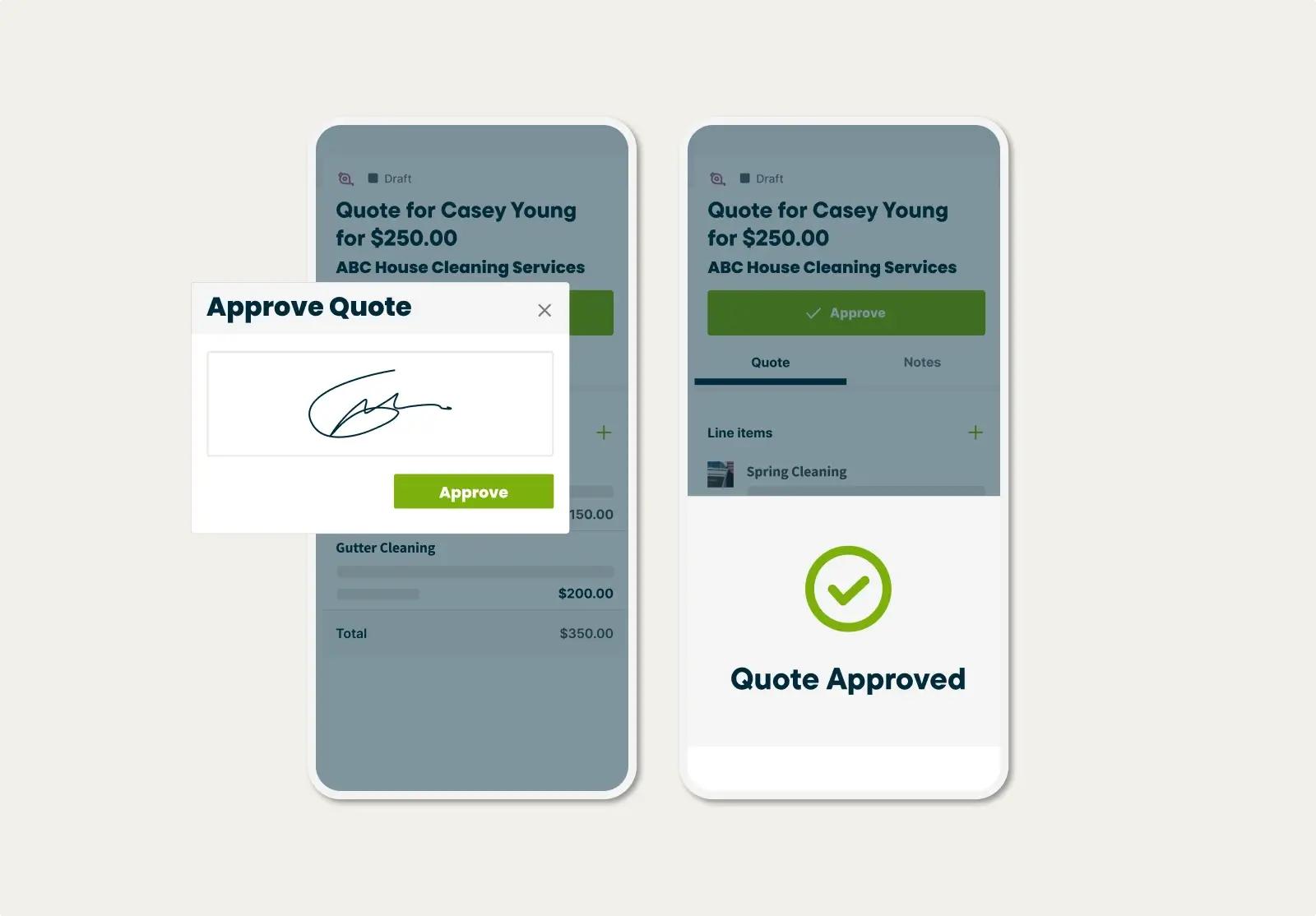
Collect a signature online. Let your customers approve the estimate online and pay the deposit on their phone or computer with a self-service portal like Jobber’s client hub.
Keep estimate details handy. Store information from the estimate so your technicians can see it when they’re on site. In Jobber, you can convert your approved estimate into a job in a few clicks, then schedule the job immediately.
6. Schedule more jobs with less driving time
Efficient HVAC dispatching is a critical way to fit more jobs into your schedule. And the more jobs you do, the more revenue your business earns—and the more the company grows.
Before each workday, plan how you’ll dispatch your technicians to their jobs. Planning routes in advance will help your techs spend less time on the road and more time on the job. Here’s how:
- Pin visits on an online map using a route planner app. These pins give a bird’s-eye view of customer properties, so you can plan out the fastest route between locations.
- If you’re dispatching multiple vans in a day, group pinned locations into regions that each vehicle can cover. If you get an emergency service call, you can quickly dispatch the crew closest to that location.
Jobber integrates with FleetSharp to provide route optimization for more efficient scheduling and dispatching. You can even use GPS tracking to ensure technicians arrive on site and alert customers of potential delays.
7. Provide excellent customer service
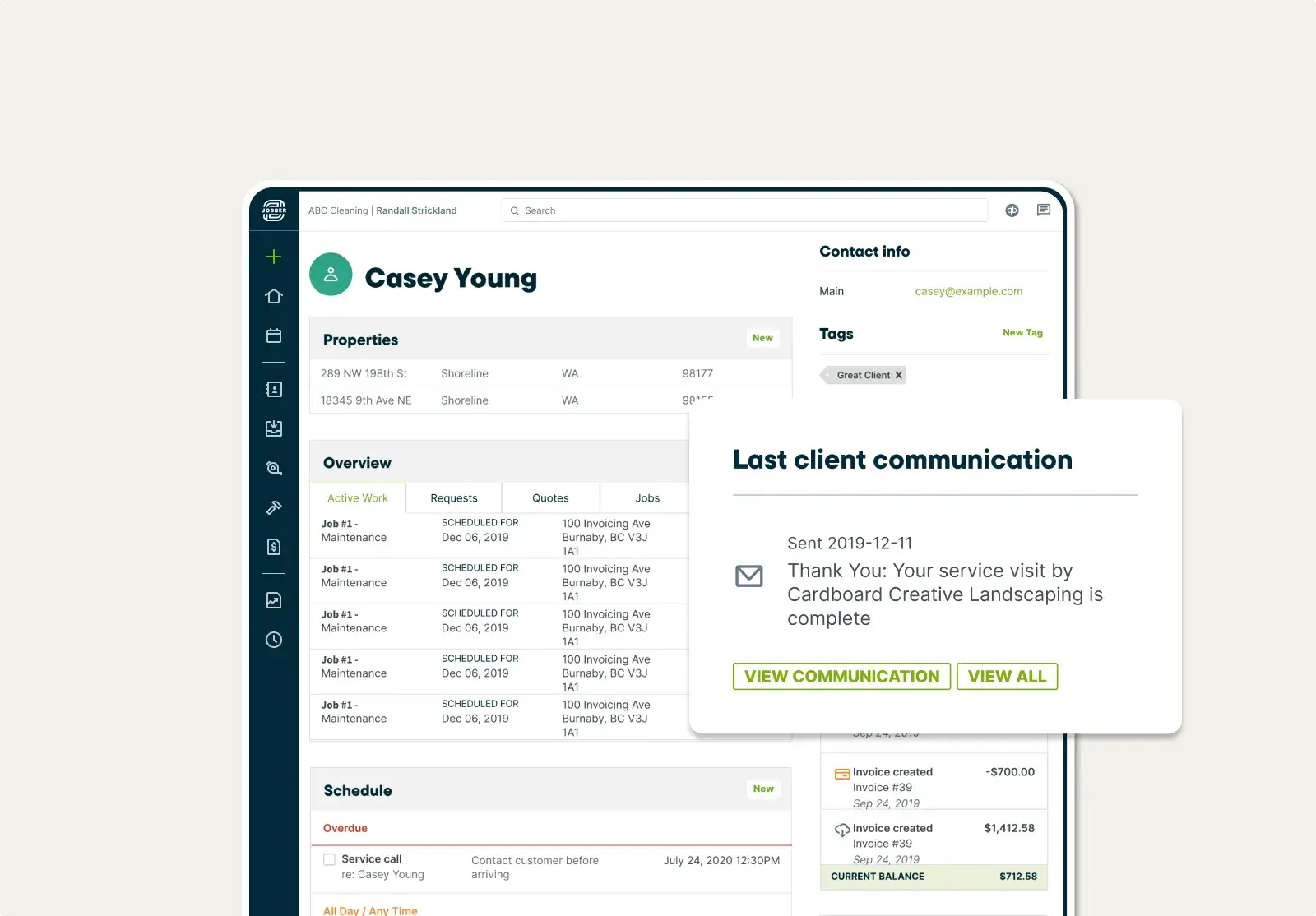
Return HVAC customers are a great source of recurring revenue. To retain these customers long-term, you need to provide top-notch customer service. A client relationship management system (CRM) can help you do that.
Your HVAC CRM should store customers’ contact information, job history, and maintenance agreements. HVAC techs can access customer files on the job site, allowing them to do their best work and provide a personalized customer experience.
We’ve got a lot of homeowners that call us with issues: emergency repairs, a flood, no heat, no air conditioning.
We have to really understand their situation… We want to make sure that we’re providing a very high level of service and care.
Plus, with Jobber, you can keep customers informed at every stage of the job:
- A few days before the job, send an appointment reminder email to prepare the customer for your visit. Include instructions for removing any obstacles to your work.
- On the first day of the job, send an on-my-way text message. This can prevent last-minute cancellations and reassure customers that you’ll be there.
- A week after the job, send a customer service follow-up email to ensure the new HVAC system is working. This shows you care and gives you the chance to make corrections.
When you’re confident that you have a satisfied customer, send a feedback survey to collect testimonials you can use in your HVAC marketing strategy.
A CRM like Jobber centralizes your client management—helping you deliver professional, reliable service that makes every customer feel like your top priority.
8. Build a reputation for high-quality work
Your customers are more likely to recommend your business to others if you’re known for doing great work without callbacks. Job forms and checklists are an effective way to ensure your team gets the job done right the first time.
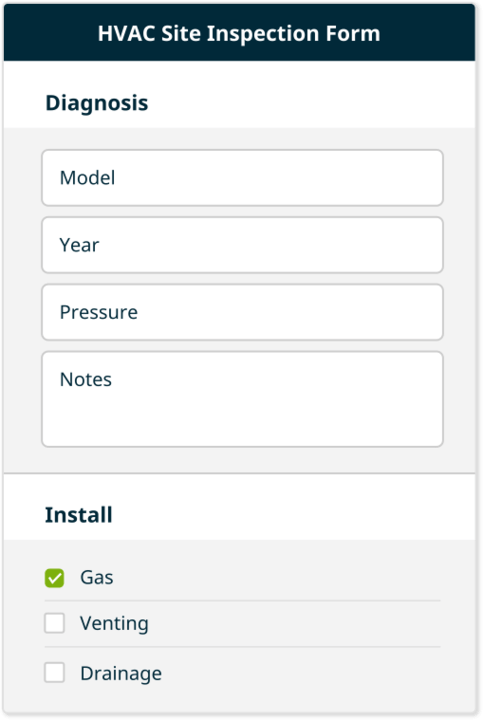
Create forms that cater to all types of HVAC jobs, like a standardized inspection checklist or installation checklist. You can customize these forms on a case-by-case basis to fit different HVAC systems.
Here’s an example of a digital checklist created with Jobber, which your technicians can bring to the job site. They can attach it to a specific job in the customer’s file, then email the completed checklist as proof that they completed the job properly.
Having that technician checklist is so important.
Looking like a professional company and having a checklist is going to help you stand out, and it’s going to help you win more jobs.

9. Send invoices and get paid faster
When you make it easy for customers to receive and pay invoices, you can get paid faster and improve cash flow. That makes it easier to reinvest in your company and grow your operation.
Invoicing customers after a job is simple with Jobber’s invoicing software. With just a couple of clicks, you can quickly create a professional-looking invoice with all the necessary job details and email it to the customer.
Jobber also makes it easy to follow up on unpaid invoices. See at a glance which invoices are sent or outstanding, and get automatic reminders to send invoices for jobs you’ve just finished.
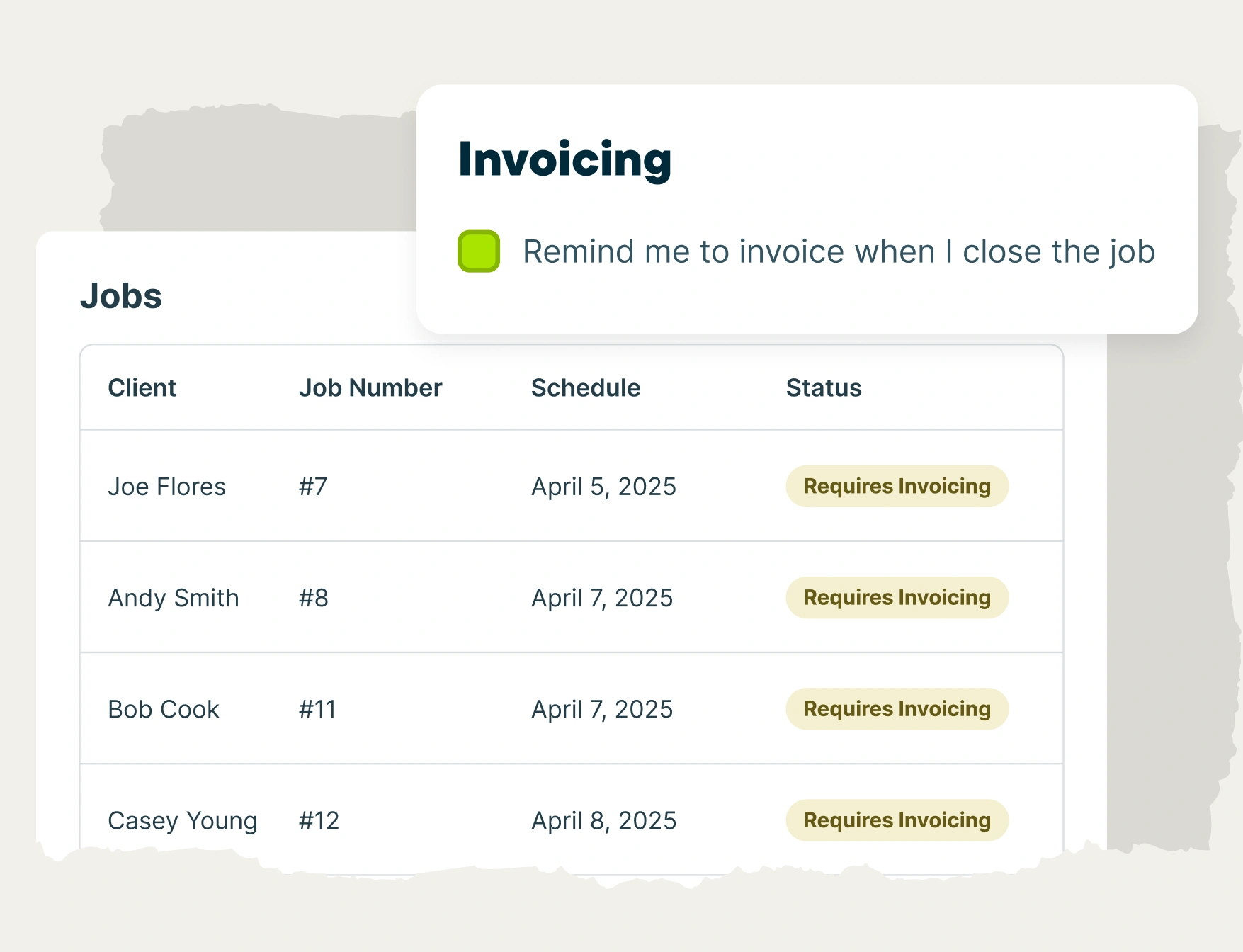
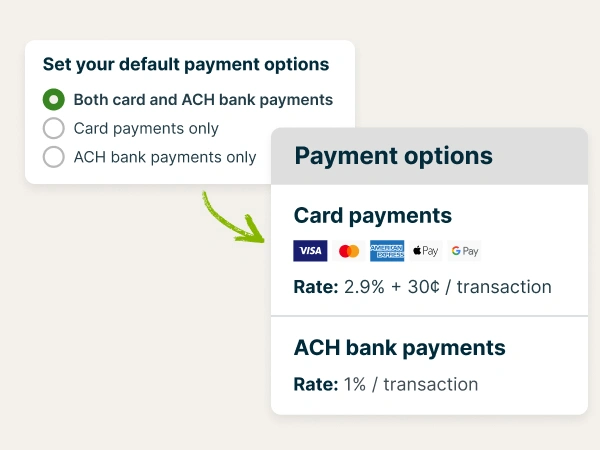
Then, get paid faster by offering multiple payment options, including:
- Recurring payment processing so you can automatically bill your clients for quarterly or annual HVAC maintenance
- Bank payments as a fast, convenient alternative to checks
- Consumer financing options so you get the full payment now, while the customer pays over time
- In-person and online credit card payments using instant credit card processing software
Take debit and credit card payments in person with one tap, or let customers pay invoices online by entering card details into their client hub.
Ready to grow your HVAC business?
Start with these business tips and keep looking for opportunities to create more efficiency. Soon you’ll be managing jobs, customers, and teams like a seasoned pro.
Want to learn more about kickstarting business growth by being more efficient? Listen to the Masters of Home Service Podcast Episode: How to Run a Highly Efficient Business.