HVAC Tools List: 30+ Essential Tools for HVAC Work (With Prices)

Key takeaways:
If you want to build a complete HVAC toolkit, this article covers the 30+ essential tools every HVAC technician or business owner should have, along with price guidance and usage tips.
- Start with the basics. Essential hand tools include screwdrivers, wrenches, pliers, tape measures, and flashlights. Expect to spend $275–1,495 on quality basics that last.
- Invest in power and specialty tools. Power tools (drills, saws, grinders) typically cost $130–490, while specialized tools (multimeters, manifold gauges, leak detectors) run $470–1,705, supporting everything from troubleshooting to advanced installs.
- Safety and efficiency matter. Budget $375–1,045 for safety tools like goggles, gloves, boots, masks, and fall protection to prevent injuries and comply with regulations.
- Don’t forget digital tools. HVAC business management software like Jobber, accounting tools, and calculators help streamline operations and keep your business organized.
- Prioritize tool choices based on your business needs and budget. Buy high-quality tools where it counts, consider used or rental options, and expand your kit as your business grows and services diversify.
For more practical business tips and HVAC industry advice, sign up for the Jobber Newsletter.
Originally published in January 2025. Last updated on November 21, 2025.
Choosing the best HVAC tools can seem daunting, whether you’re an apprentice building your personal toolkit or a small business owner looking to grow.
Looking for an easier way to budget your startup costs and know what to buy? We’ve got a complete list of tools you’ll need as an HVAC technician or installer, along with average prices.
As a bonus, you can use our free downloadable HVAC tool list to keep lists of what you’ve purchased and what you want to buy next.
How much do HVAC tools cost?
At a quick glance, you can see that you’ll need to stock your HVAC van with basic supplies, power tools, and some specialty gear. When it comes to pricing, here’s what you might expect to pay at this stage:
| HVAC tools by category | Plan to spend |
| Basic hand tools | $275–1495 |
| Power tools | $130–490 |
| Specialized HVAC tools | $470–1,705 |
| Safety tools and equipment | $375–1,045 |
Pricing will vary based on the quality of the tools you buy. Since HVAC work can be demanding on your tools, you want to make sure you’re buying durable products that will last.
But don’t feel like you have to buy everything brand new. You can look for used HVAC tools, even rentals until your schedule fills up and you’ve got enough steady cash to invest in your own gear.
Essential HVAC tools list
Here is a shortlist of all the essential HVAC tools you need to work effectively as an HVAC technician.
| Tool Name | Use | Technician Level |
| Screwdriver set | Install/replace parts, secure components | Beginner |
| Adjustable pipe wrench | Tighten/loosen threaded pipes and fittings | Beginner |
| Adjustable wrench/Set | Loosen or tighten various fasteners on the job | Beginner |
| Pliers (Set) | Grip, bend, and cut wires | Beginner |
| Tape measure | Take precise measurements | Beginner |
| Tin snips | Cut and shape sheet metal/thin materials | Beginner |
| Wire strippers | Safely remove wire insulation for connections | Beginner |
| Tube cutters | Cleanly cut copper and plastic tubing | Beginner |
| Power drill | Install and fasten components (using screws/bits) | Beginner |
| Safety glasses or goggles | Protect eyes from debris, dust, and chemicals | Beginner |
| Gloves | Guard hands from sharp objects and tools | Beginner |
| Multimeter | Test and measure voltage, resistance, and continuity | Intermediate |
Basic hand tools
Plan to spend $275–1,495 for all of the following hand tools, which you’ll need for most HVAC repair, maintenance, and installation jobs:
1. Screwdriver set ($10–30)
Keep flathead and Phillips screwdrivers in various sizes to install and replace parts, open control panels, complete sheet metal work, and secure HVAC components in place.
Buying options:
- Amazon (Amazon Basics, 12-piece set)
- Walmart (Hyper Tough Heavy Duty)
2. Adjustable pipe wrench ($10–30)
Use this tool to tighten or loosen threaded pipes and fittings during installation, repair, or maintenance work.
Buying options:
- Amazon (Duratech 10-inch aluminum)
- Lowe’s (Kobalt 10-inch cast iron)
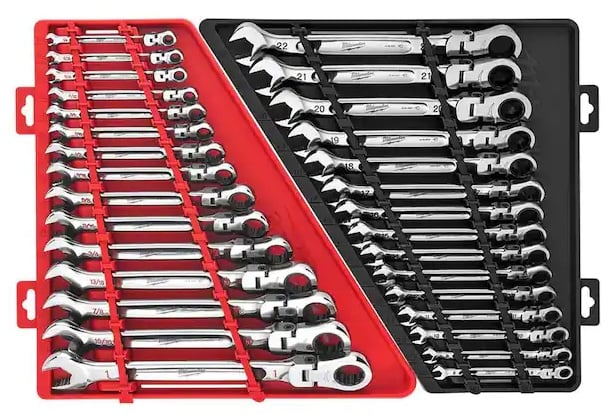
3. Adjustable wrench or wrench set ($10–500)
An adjustable wrench or a variety of wrench sizes will allow you to be prepared for any loosening or tightening requirements on the job.
Buying options:
- Amazon (Locking adjustable wrench)
- Home Depot (Milwaukee combination wrench set)
4. Pliers or plier set ($15–45)
Needle-nose pliers and channel lock pliers are useful for gripping, bending, and cutting wires. Slip-joint pliers have adjustable jaws that help you grip objects of various sizes.
Buying options:
- Amazon (Black+Decker 4-piece set)
- Home Depot (Husky locking pliers, all metal)
5. Tape measure ($5–20)
Use a tape measure to take precise measurements of components and equipment, whether you’re replacing or installing.
Buying options:
- Amazon (DeWalt Atomic Compact, 30ft.)
- Lowe’s (Craftsman for High-Visibility, 25ft.)
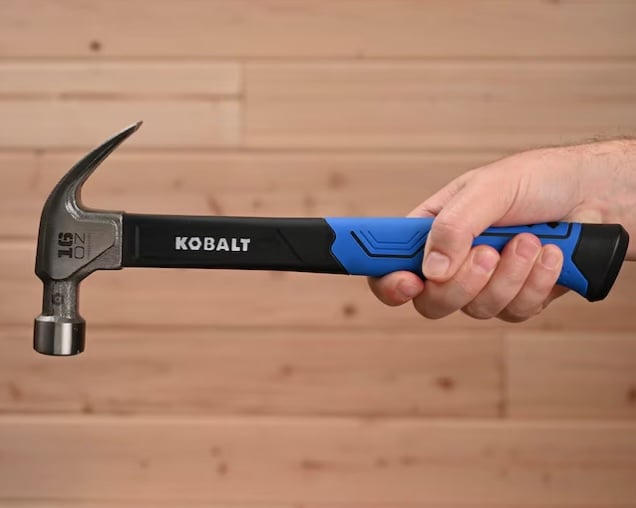
6. Hammer ($10–30)
Find a lightweight hammer with a comfortable grip, and keep it handy to secure brackets and tap objects into place.
Buying options:
- Amazon (Fiberglass, general purpose)
- Lowe’s (Kobalt steel head)
7. Tin snips ($10–35)
Cut and shape sheet metal and other thin materials with either straight snips (to cut notches and slight curves) or offset snips (to maneuver longer cuts and keep your hands safe from sharp material).
Buying options:
- Amazon (Amazon Basics straight cut)
- Lowe’s (Marshalltown Aviation straight cut)
8. Hand seamer ($30–60)
A straight-jaw hand seamer helps you bend and shape sheet metal to securely connect sheet metal pieces. Use a crimping hand seamer to join and connect sheet metal pieces.
Buying options:
- Amazon (Duratech metal bender, 3in.)
- Harbor Freight (6in. Pittsburgh metal seamer)
9. Staple gun ($20–40)
This helps you secure joists and foil lines in your ductwork.
Buying options:
- Amazon (Arrow Heavy Duty for wood, upholstery)
- Home Depot (Ryobi Heavy Duty 4-in-1)
10. Wire strippers ($15–40)
Use these to safely remove insulation from electrical wires before making electrical connections for an HVAC system.
Buying options:
- Amazon (WGGE Professional 8in. wire stripper)
- Home Depot (Klein Tools, self-adjusting wire stripper)
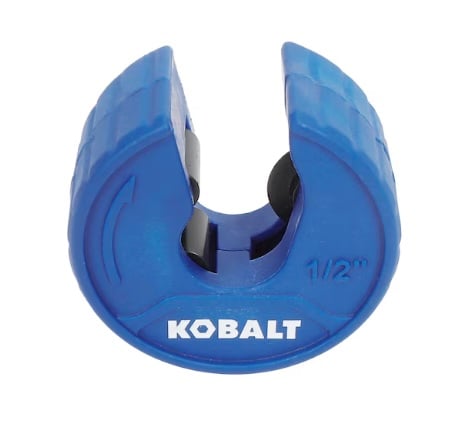
11. Tube cutters ($15–25)
For most residential work, smaller cutters (e.g., half-inch cutters) will cut through copper and plastic tubing cleanly. Get a wider pair for commercial systems with larger tubing.
Buying options:
- Amazon (Ultimate tub cutter set)
- Lowe’s (Kobalt Cutter 2-in-1)
12. Duct knife ($20–30)
Use a duct knife with a serrated blade to cut ductwork or fiberglass insulation for HVAC installations.
Buying options:
13. Tube flaring tool ($25–140)
This helps you create smooth and precise flared ends on copper tubing, allowing refrigerant to flow properly in an HVAC system.
Buying options:
- Amazon (Wostore tubing flare kit)
- Home Depot (RIGID 3/16in. 37-degree flaring tool)
14. Torpedo level ($20–35)
You can use any kind of level to ensure accurate horizontal and vertical alignment during installs, but a torpedo level is portable and handy for tight quarters.
Buying options:
- Amazon (Craftsman torpedo level, magnetic)
15. Hex keys ($5–20 per set)
You’ll often find hexagonal screws and bolts in HVAC equipment, so keep hex keys (also known as Allen wrenches) in your tool bag.
Buying options:
- Amazon (MULWARK Key tool portable hex set)
- Home Depot (Klein Tools T-handle hex key)
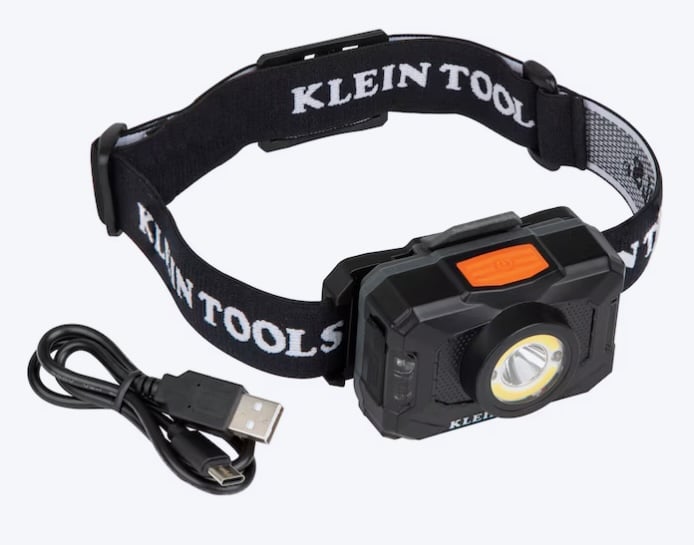
16. Flashlight or headlamp ($20–70)
A decent flashlight or headlamp will come in handy for HVAC work at night, in the dark, or in those hard-to-reach areas on the job.
Buying options:
- Home Depot (Husky rechargeable flashlight)
- Lowe’s (Klein rechargeable headlamp)
17. Extension cords ($12–60)
An extension cord is a worthwhile safety net for your HVAC toolbag when you need power for your tools on a job site. Anywhere from 25 to 50 feet will give you enough reach and is easy to carry around.
Buying options:
- Amazon (POWGRN outdoor – 50ft)
- Home Depot (Husky indoor/outdoor – 25ft)
READ MORE: Free HVAC parts markup chart (+ calculation guide)
Want to learn how to stock up so that you’re ready for service calls, quick fixes, and specialty HVAC jobs? Check out a full custom van tour from Walter Washington of Washington A/C and Heating.
Power tools
Essential HVAC power tools can cost you anywhere between $130 and $490 if your company doesn’t provide them for you. Here are the power tools you’ll need:
18. Power drill ($20–80)
You’ll need a drill or driver to install and fasten components for all kinds of HVAC units. You can use an impact driver to drive screws and fasteners with higher torque and efficiency.
Buying options:
- Amazon (DeWalt 20V MAX with drill and bits)
- Home Depot (RYOBI ONE+ 18V)
19. Handheld power saw ($30–130)
This is a must-have for cutting through metal, wood, plastic, and PVC when you need to modify or install new components. Use a reciprocating saw when working in tight spaces or a jigsaw for more intricate cuts.
Buying options:
- Amazon (6in. mini electric saw)
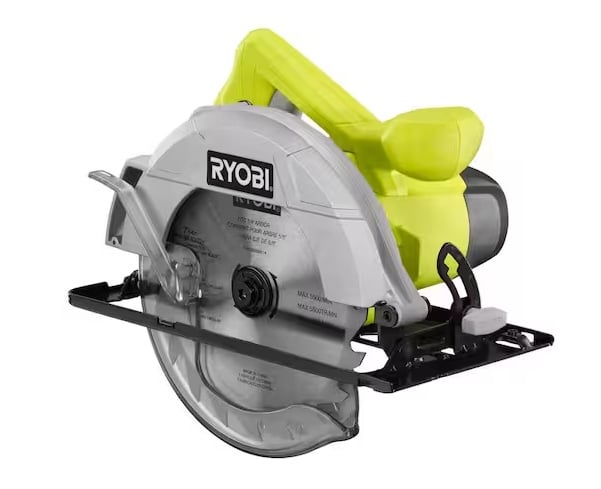
20. Circular saw ($40–130)
A large, circular blade can easily make long, straight cuts into larger pieces of material. This type of saw is best for ductwork fabrication, trimming, and framing work.
Buying options:
- Amazon (DeWALT circular saw)
- Home Depot (RYOBI corded circular saw)
21. Angle grinder ($40–150)
Use this to cut, grind, and polish materials used for HVAC installations.
Buying options:
- Amazon (DeWALT angle grinder, one-touch)
- Lowe’s (Kobalt paddle switch, brushless)
Specialized HVAC tools
You can expect to pay between $470 and $1,705 for all these specialized tools used for HVAC troubleshooting, installs, and more complex repair and maintenance tasks:
22. Multimeter ($30–40)
This device is an essential tool for testing and measuring voltage, resistance, and continuity in electrical circuits.
Buying options:
- Amazon (Basic digital multimeter)
23. HVAC/R thermometer ($25–150)
Use this to measure air and refrigerant temperatures accurately and make necessary adjustments.
Buying options:
- Amazon (Klein Tools digital laser gun)
- Lowe’s (Kobalt display digital infrared)
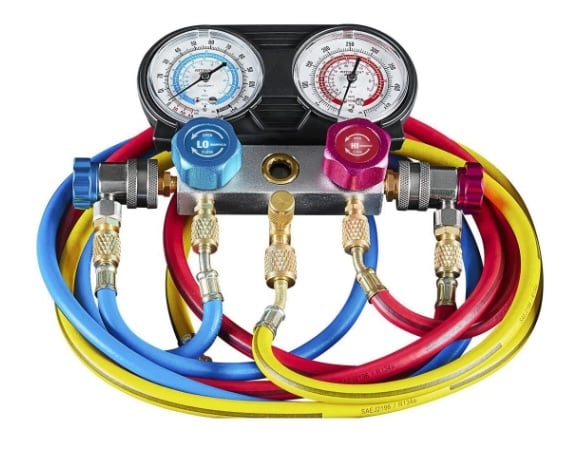
24. Manifold gauge set ($35–85)
Analog, digital, and Bluetooth gauges can all help you measure and monitor refrigerant pressure levels and temperatures in HVAC systems to check that they’re working properly.
Buying options:
- Harbor Freight (Pittsburgh R134A A/C manifold gauge set)
25. Psychrometer ($60–130)
This tool measures airflow, relative humidity, and wet-bulb temperature in an HVAC system to help with accurate diagnosis and optimization.
Buying options:
- Amazon (General Tools psychrometer)
- TruTech Tools (Fieldpiece digital pocket psychrometer)
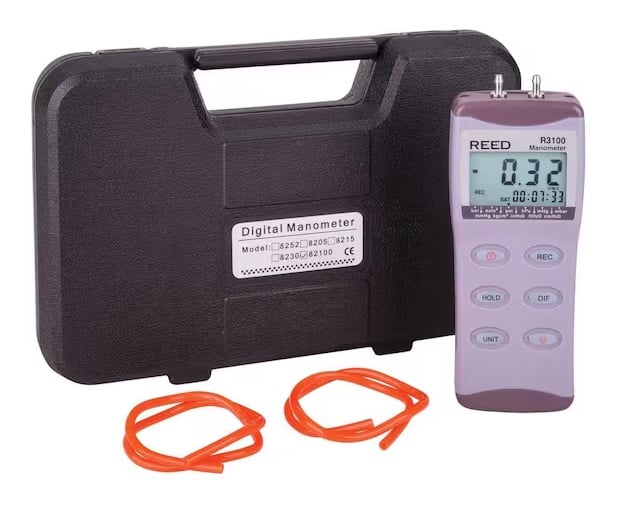
26. Manometer ($100–400)
An analog or digital manometer is important for checking air pressure in HVAC systems.
Buying options:
- Amazon (Klein digital manometer)
- Home Depot (REED Instruments digital manometer)
27. Nitrogen regulator gauges ($65–110)
Keep these gauges handy when you need to check and regulate the flow of nitrogen gas in an HVAC system.
Buying options:
- Amazon (Nitrogen regulator with hose)
- Home Depot (Double gauge CO2 regulator)
28. Coil fin straightener combs ($10–30)
When the aluminum fins on an AC unit’s evaporator and condenser coils get bent out of shape, a coil fin straightener stores them to improve airflow and prevent coil damage.
Buying options:
- Amazon (Fin comb set for air conditioner)
- Grainger Tools (Yellow Jacket fin comb kit)
29. Core removal tool ($10–30)
Use this to properly remove the service valve from an air conditioning system so you can replace or reinstall it without losing refrigerant.
Buying options:
- Amazon (HVAC valve core remover set)
30. HVAC data logger ($100–500)
This handheld device helps you monitor and record a system’s temperature, humidity, and pressure over time, providing valuable data for analysis and system optimization.
Buying options:
- Amazon (DVTH temperature and humidity logger)
- Home Depot (HVAC clamp meter tester kit)
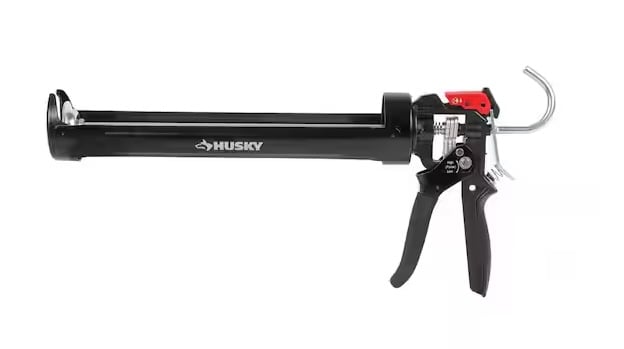
31. Caulking gun ($10–30)
A caulking gun at your disposal ensures you can quickly fix seals and fill holes on any job. Caulking can be messy work, so take good care of your gun by cleaning it after every use, releasing the plunger rod, and keeping it dry to make sure it lasts a long time.
Buying options:
- Amazon (Leikius professional caulk gun)
- Home Depot (Husky caulk gun)
32. Leak detector ($25–200)
A critical tool to help an HVAC technician locate the source of a refrigerant leak.
Buying options:
- Amazon (Elitech HVAC leak detector)
- Home Depot (REED instruments leak detector)
If you’re starting an HVAC business, account for these costs in your HVAC business plan under your startup costs. Start by purchasing the tools you’re most likely to need based on the HVAC services you offer.
As your business grows and you start to expand your services, you can slowly invest in specialized equipment, like refrigerant recovery machines, storage tanks, and core drillers.
Safety tools
You’ll need the right safety tools and equipment to protect yourself from injury and your client’s property from damage. Budget $375–1,045 for these safety tools to protect yourself on the job:
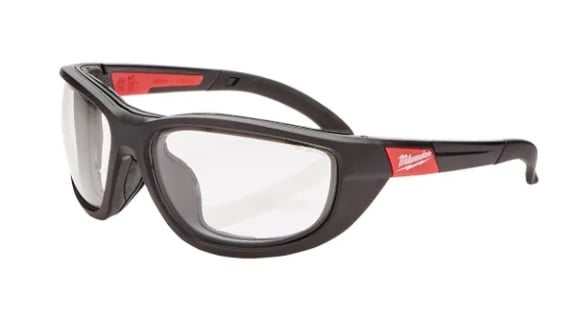
33. Safety glasses or goggles ($10–30)
Protect eyes from flying debris, dust, and chemicals that are common with installation and HVAC maintenance.
Buying options:
- Amazon (Dewalt safety goggles)
- Home Depot (Milwaukee performance safety glasses)
34. Gloves ($15–30)
Guard your hands from sharp objects like metal ducts, wires, or power tools.
Buying options:
- Amazon (Ironclad general utility)
- Home Depot (Firm Grip work gloves)
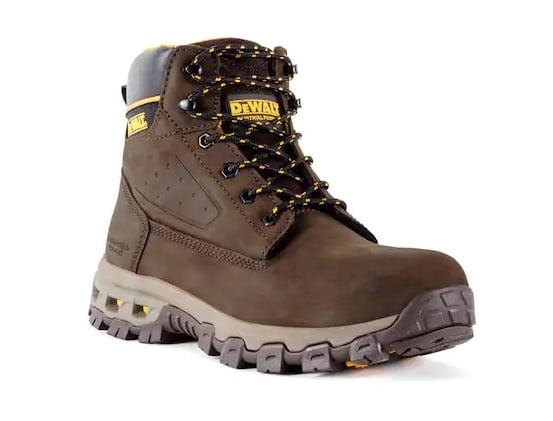
35. Steel-toed boots ($70–100)
Protect feet from heavy equipment or falling objects that could cause injury during the HVAC installation process.
Buying options:
- Amazon (CAT waterproof)
- Home Depot (Dewalt work boots)
36. Masks ($10–30)
When there’s a risk of inhaling dust, fumes, or harmful particles, workers need protection (especially when working in tight spaces or with insulation materials).
Buying options:
- Amazon (3M N95 respirator masks)
- Home Depot (Milwaukee multi-purpose mask)
37. Lockout/tagout (LOTO) devices ($200–500)
Proper lockout/tagout protection is part of the Occupational Safety and Health Administration (OSHA) guidelines. LOTO devices isolate and de-energize equipment to prevent machine startups while you’re working, which prevents burns, shocks, or other injuries.
Buying options:
- Amazon (Universal lockout/tagout kit)
- Home Depot (IDEAL lockout/tagout station)
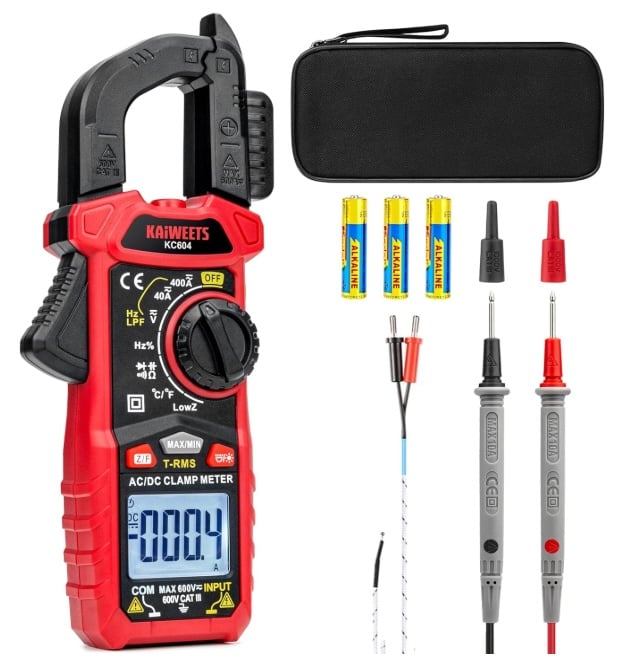
38. Voltage tester ($20–35)
Use a non-contact voltage tester to verify the absence of electrical power before working on electrical components.
Buying options:
- Amazon (Digital clamp meter, multimeter)
39. Safety harness and fall protection kit ($50–150)
Secure yourself in a harness when working in elevated areas or on roofs to prevent falls and injury.
Buying options:
- Amazon (Frontline OSHA-compliant kit)
Digital tools to run a more efficient HVAC business
Running an HVAC business can get messy fast when jobs, schedules, and customer details all live in different places. That leads to slow dispatching, unclear job info, clunky payment processes, and software that wasn’t really designed for HVAC teams in the first place.
The tools below help clean that up by keeping your scheduling, job details, dispatching, invoices, and payments in one spot—so you spend less time chasing paperwork and more time getting jobs done.
40. HVAC service software
Jobber’s HVAC service software pulls everything together. It’s one app that lets you create professional quotes, schedule and assign service calls quickly, dispatch technicians, manage clients, and organize invoicing—without the paperwork or administrative hassle.
Before using Jobber, we were using paper invoices. It was taking a long time for us to get paid. Now using Jobber, it’s all in one app. We invoice and bill a lot quicker now.

Here’s how Jobber can help you save time, stay organized, and run your HVAC business more smoothly:
- Build professional-looking quotes and recommend top-tier packages or add-on services in minutes based on your customer’s needs
- Organize your schedule to keep your team and customers on the same page
- Manage all your client and job details in one place—including service history, before and after photos of your work, and equipment condition
- Send professional invoices with one click and get paid 4x faster
- Create an HVAC business website to highlight your services, show examples of your work, and make it easy for customers to book your services online
Plus, you can get started for free, with a 14-day trial.
Other software companies would charge an expensive setup fee or you’d have to purchase the software just one time and stick with it.
Jobber didn’t need a bunch of money up front. As a new business, we couldn’t tell if it was going to fit our needs, so we wanted to start small to make it less risky for us financially.
41. Fleet management software
As a business owner, you can use GPS to locate, monitor, and track the efficiency of your work vehicles. FleetSharp is a great option for mapping out more efficient routes and reducing fuel costs.
When you connect FleetSharp with Jobber, you’ll be able to track where your crew is in real time and assign emergency jobs to the nearest crew.
This tool’s pricing varies by the number of vehicles.
READ MORE: 6 best fleet management software for efficiency and savings
42. Accounting software
Service business owners need accounting software for bookkeeping, payroll, inventory tracking, and monitoring profitability. QuickBooks Online is the best accounting software for plumbing businesses of all sizes that need to manage their accounting and bookkeeping better.
Use QuickBooks Online to track income and expenses, financial reports, payroll, accounts receivable, and accounts payable.
Pro Tip: Use Jobber’s Quickbooks integration to keep your data up to date and eliminate double entry.
43. HVAC Calculators
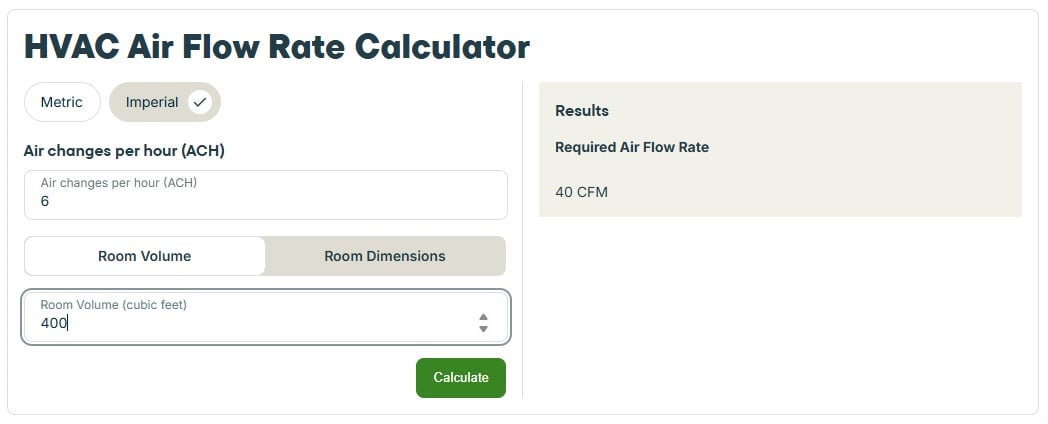
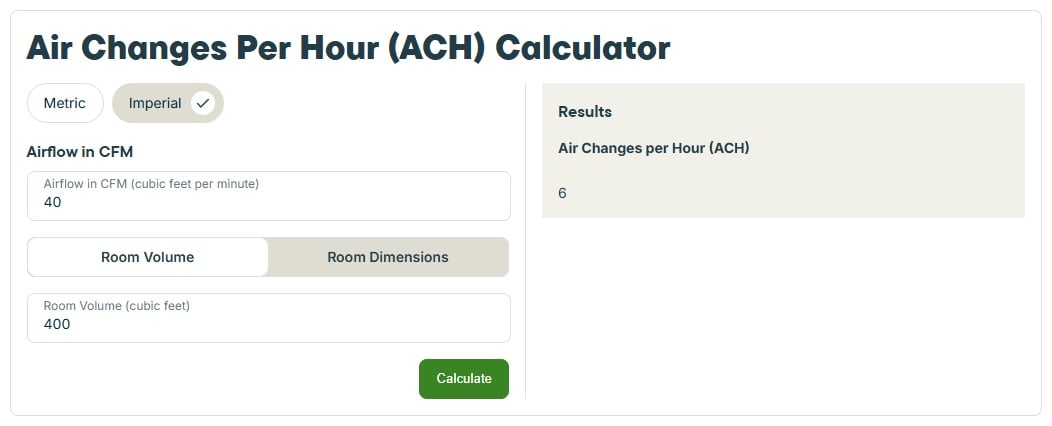
To provide HVAC services effectively and efficiently, you need to be able to monitor conditions on the job in real time. Jobber’s HVAC CFM calculator and Air Changes Per Hour calculator let you understand proper air flow and changes in the room’s air with a few simple inputs.
CFM Calculator: The CFM calculator makes it easy to determine the required airflow based on room size and desired air changes per hour (ACH).
ACH Calculator: The ACH calculator determines the number of air changes per hour (ACH) needed to ventilate a room.
Bookmark these calculators to keep them readily available on HVAC job sites.
Frequently Asked Questions
-
The most essential HVAC tools for a new technician fall under three categories: basic hand tools, diagnostic tools, and safety tools.
For basic hand tools, you want to have a good set of screwdrivers and wrenches, as well as pliers and a tape measure.
For diagnostic tools, you’ll want a multimeter to check for electricity and a manifold gauge set to check cooling pressure. -
There are common HVAC tools that every technician needs, but the right tools for your specific needs depend on the type of work you’re doing. For residential HVAC work, you are going to need a more basic set of tools, while commercial work and more complex HVAC systems require more advanced tools to perform the job.
-
Specialized HVAC tools needed for advanced diagnostics and troubleshooting include:
• A leak detector to identify areas where refrigerant is being lost.
• A manometer used to check air pressure in ducts.
• A voltage tester to confirm if there is electricity in the systems.
• A multimeter to measure the electrical current across systems.
• A manifold gauge set to measure refrigerant pressure.
• A thermometer to monitor the refrigeration and coolant temperatures.
• An HVAC data logger to record the temperature, pressure, and humidity over time. -
You can find a wide variety of HVAC tools for purchase online at Amazon, local major retailers like Home Depot and Lowes, or from trusted HVAC tool suppliers such as TruTech Tools or SupplyHouse.com.