
Key takeaways:
Starting a landscaping business can be rewarding and profitable when you approach it with the right preparation and strategies.
- Develop strong landscaping skills and gain hands-on experience. Build credibility and confidence by learning the essentials of plant care, equipment use, and effective job site workflow before launching your business.
- Create a comprehensive business plan and handle official registration. A well-structured plan helps you set goals, attract funding, register your business, select the right structure, and ensure you’re licensed and legally compliant.
- Secure insurance, open a business bank account, and organize your finances. Protect your business, separate personal and business finances, and use accounting software to stay on top of expenses and payroll.
- Choose your services, invest in essential equipment, and use business software. Decide if you’ll target residential or commercial clients, start with core landscaping offerings, purchase quality tools, and leverage software like Jobber to streamline your operations.
- Price your services for profit and attract your first customers. Calculate job costs, set fair margins, and focus on effective marketing and building your brand’s reputation to win contracts and grow your client base.
- Prioritize customer service, manage reviews, and scale thoughtfully. Handle feedback professionally, collect and respond to reviews, build a strong team as business grows, and plan for off-season work to keep revenue steady year-round.
Want more tips to grow your service business? Sign up for the Jobber Newsletter.
Starting a landscaping business gives you the flexibility to work on the jobs you want, when you want. You’ll create beautiful outdoor spaces for your clients and make a respectable profit doing it.
In this article, we’ll cover how to start a landscaping business that attracts customers, turns a sustainable profit, and grows over time.
Learn how to start a small landscaping business:
-
Build your landscaping skill set
-
Write a landscaping business plan
-
Set up your landscaping business through official processes
-
Get proper business insurance
-
Open a business bank account
-
Choose which landscaping services to offer
-
Buy landscaping equipment
-
Price your landscaping services
-
Get your first customers
-
Build your brand’s reputation
-
Hire landscapers and grow your business
-
Plan for the off-season
How much does it cost to start a landscaping business?
You can expect to spend about $1,760–3,065 (USD) getting your landscaping business up and running:
- Registration and business license ($75–400)
- Business insurance ($600)
- Landscaping business software ($400)
- Equipment ($685–1,665)
Expect to add another $30,000 to that if you also need to buy a truck or trailer.
To help curb these costs, check with your bank to see if you’re eligible for a business loan or personal loan, or apply for a landscaping or lawn care grant.
Before you start your landscaping business, you need to get a lay of the land, literally and figuratively. This is a massive industry with serious earning potential. In 2026, the U.S. landscaping services industry is projected to reach $188.8 billion in revenue.
Below are several important steps you should follow to get started, grow, and run your business successfully.
1. Build your landscaping skill set
Getting hands-on experience is one of the smartest steps you can take before starting your business. Even if you plan to focus on landscape design or sales, understanding how the work actually gets done will make you a stronger business owner.
This experience helps you price jobs accurately, set realistic timelines, and lead your team with confidence.
Focus on building important skills like these:
- Plant care and maintenance: Understand soil types, irrigation needs, and seasonal care to create landscapes that last.
- Landscape design basics: Learn how to balance hardscaping and softscaping so projects are both functional and visually appealing.
- Equipment and tool use: Know how to safely and efficiently use common landscaping tools—from chainsaws to skid steers—to protect your crew and your business.
- Job site workflow: Learn how projects run from setup to cleanup so you can spot inefficiencies and keep jobs on schedule.
A solid skill set gives you credibility with customers, clarity in your estimates, and a stronger foundation for growing a reliable, professional landscaping business.
2. Write a landscaping business plan
A business plan is like a roadmap to success. It keeps you moving in the right direction and helps attract investors to secure funding.
Your landscaping business plan should include:
- A cover page that includes your landscaping business name, logo, and contact information.
- An executive summary that gives a quick overview of your business. It should include what makes you different from other businesses in the landscaping industry.
- A business overview that summarizes your business structure and work history or experience.
- A landscaping services list and how you plan to price your services.
- A market analysis that describes who your ideal customers are.
- A competitive analysis that lists other landscaping businesses in your area.
- A marketing strategy that explains how you plan on attracting new customers.
- A financial plan that includes your sales forecast, budget, and any employee costs.
3. Set up your landscaping business through official processes
Pick a landscaping company name, register your business, and get a business license. Here’s what that process looks like:
Choose a business structure
Before you do anything else, choose a business structure. You’ll need that information for the rest of the business registration process.
Check out these options, based on where you live:
- Set up a sole proprietorship (U.S., CA) or become a sole trader (UK, AU) to run your business alone and have complete control over it. This is the most common option for individuals starting a landscaping business.
- Register as a partnership (U.S., CA, UK), or form a joint venture or co-operative (AU) if you’re starting your business with two or more self-employed people.
- Register as a limited liability company or LLC (U.S.), corporation (CA), limited company or limited partnership (UK), or company (AU) if your business has medium or high liability risk. This will help protect your personal assets in case of any legal issues.
READ MORE: Should I incorporate my small business?
Register your business name
Next, register your business with your regional government. You can do this at any local registry.
All you need is the registration fee and a landscaping company name that’s unique, simple to spell, and easy to remember.
Here’s how the registration process will look for you, depending on your country:
- United States: Trademark your business name and register your domain name.
- Canada: Register and trademark your trade name to protect your brand. However, if the business’s name is the same as your personal name, you don’t need to register it.
- United Kingdom: Decide if you’re a sole trader or business partnership, check name availability, search for a trademark, and register the company name and business.
- Australia: Register your business name through the Business Registration Service, ASIC, or a private service provider. You don’t need to register your business if you use your personal name as your business name.
Get a landscaping license
You may be required to have a landscaping license (or a gardening license) in your city or state. If you do need one, don’t start landscaping homes or businesses without it.
Your business license will have an up-front cost, and you’ll need to renew it every year. The cost will depend on the type of license you need and the services it allows for.
Head over to your city or state website and look for information about business licenses. You can also find other local regulations by googling “YOUR CITY NAME + business laws.”
Get your employer identification number
If your business is a partnership or has employees, you may need to apply for an employer identification number (U.S.) or business number (CA). You’ll use this unique ID when tax time comes around.
4. Get proper business insurance
Business insurance protects you from potential damage, injury, or other accidents.
The most common types of small business insurance you’ll need are:
- General liability insurance to cover personal injury or damage to a client’s property.
- Commercial property insurance for damage to your landscaping equipment or business property.
- Commercial auto insurance for work trucks involved in an accident or other damage.
- Workers compensation insurance to cover injury to an employee on the job.
Work with your insurance provider to create a custom business owner’s policy with the coverage you’ll need to run your business.
5. Open a business bank account
Set up a business bank account and get a business credit card. Separate bank accounts will keep your business expenses separate from your personal ones.
This will also make your life easier when it comes time to file your taxes.
Then use accounting software like QuickBooks Online to track your expenses, run payroll, and keep your finances organized.
6. Choose which landscaping services to offer
Before you pick which services you’ll offer, decide whether you’ll serve residential clients, commercial clients, or both.
Homeowners and businesses have different landscaping needs, so choose the one that best fits your skills.
Here’s a breakdown of common services by client type:
Residential services
- Hardscaping: Build patios, walkways, and retaining walls for homeowners to enjoy their outdoor living areas.
- Home gardens: Create and care for vegetable and flower gardens.
- Landscape design and architecture: Design aesthetically pleasing and functional outdoor spaces tailored to homeowner preferences.
- Lawn care: Provide regular lawn mowing, fertilization, and weed control to keep lawns healthy and green.
- Seasonal cleanup: Provide spring and fall clean-up services to remove debris and prepare the landscape for the changing seasons.
- Small tree and shrub pruning: Maintain the health and appearance of smaller trees and shrubs.
- Softscaping: Plant flowers, shrubs, and trees to enhance the beauty of residential properties.
- Water features: Install and maintain smaller ponds, fountains, or decorative water features.
Commercial services
- Erosion control: Implement measures to prevent soil erosion.
- Hardscaping: Build durable patios, walkways, and retaining walls suitable for heavy commercial use.
- Irrigation: Install and maintain irrigation systems to keep landscapes watered.
- Landscape design and architecture: Design comprehensive landscape plans that balance functionality and aesthetics.
- Lawn care: Maintain large lawn areas, including mowing, fertilization, and weed control.
- Outdoor lighting: Install and maintain outdoor lighting systems for safety and aesthetics.
- Snow and ice removal: Clear snow and ice from parking lots and sidewalks for safe access to commercial buildings.
- Tree care: Prune, trim, and remove large, mature trees.
Services applicable to both residential and commercial
- Drainage: Address drainage issues, such as installing French drains or improving grading.
- Fencing: Install fences for privacy, security, or aesthetic purposes.
- Land clearing: Clear land for new construction or landscaping projects.
- Grading and land leveling: Level land for construction, landscaping, or drainage purposes.
- Retaining walls: Build retaining walls to prevent soil erosion and create level surfaces.
- Seasonal color installation: Plant seasonal flowers and plants to add color and visual interest to landscapes.
- Sustainable landscaping: Implement eco-friendly practices, such as conserving water and reducing pesticide use.
- Turf installation: Install new lawns using sod or seeding methods.
By offering a diverse range of services, you can cater to various client needs and potentially increase your revenue streams. Remember to start with core services that align with your expertise and gradually expand your offerings as you grow.
Pro Tip: Check with your state or municipality to see if you need a landscaping license to perform certain services. For example, landscapers in California need a state license for any job that exceeds $500.
7. Buy landscaping equipment
These are the essential landscaping tools you’ll need to tackle your first jobs:
- Lawn mower
- Weed whacker
- Leaf blower
- Hedge trimmer
- Lawn aerator
- Broadcast spreader
- Tiller
- Pressurized sprayer
- Wheelbarrow
- Shovel, spade, hoe, and rake
- Pruning shears
- Tool kit (hammer, screwdriver, etc.)
- Small gardening tools (weeder, trowel, etc.)
- Garden hose and nozzle
- Landscaping gloves
- Safety goggles and earmuffs
- Steel-toed boots
- Bucket (to carry smaller tools)
- Cargo net (for vehicle)
Curious about what kind of equipment a successful landscaping and lawn care company uses to get their jobs done? We asked Brian Boase from MIL-SPEC Landscaping to open his shop doors to give you an inside look at his tools and setup.
Invest in landscaping business software
The right software helps you spend less time managing admin and more time on the work that drives revenue. Jobber gives landscapers the tools they need to stay organized and get paid faster:
- Professional quotes with photos and optional upgrades for your customers to choose (like premium mulch, grass treatments, or high-end stone)
- Smart scheduling and routing to reduce drive time, minimize fuel costs, and keep your team operating more efficiently
- Automated client communication, including reminders, on-my-way texts, and follow-ups with clients
- Fast invoicing and online payments to improve cash flow without stress
- Easy review collection, so happy customers can quickly leave feedback and build your online reputation
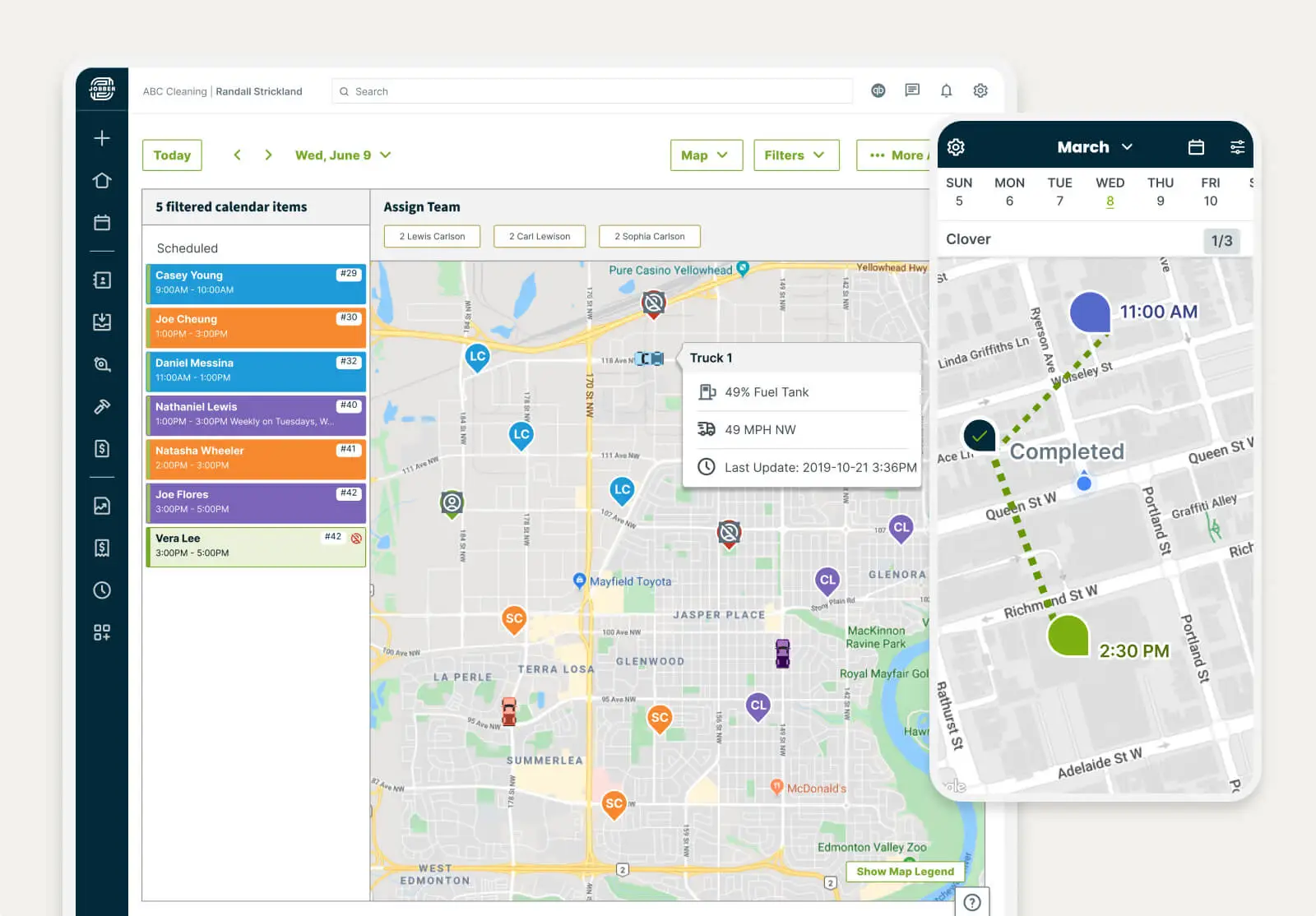
With everything in one place, Jobber helps landscapers stay organized, deliver a more professional customer experience, and scale their business without adding unnecessary complexity.
8. Price your landscaping services
Pricing landscaping jobs might feel challenging when you’re just getting started. Use these tips to help you set fair and profitable prices:
- Think about how many hours the job will take, then multiply by your hourly rate.
- Calculate the total material costs for the service (e.g., plants, rocks). This should also cover any equipment rentals you might need.
- Add up your overhead costs (e.g., rent, marketing, utilities). Then divide this amount by the number of weekly labor hours worked. This gives you the amount of overhead you need to charge for every hour of labor.
- Factor in your profit margin. This allows you to profit from a service. Charge a 15–20% markup for residential clients and 10–15% for commercial ones.
FREE TOOL: Try our free profit margin calculator
Knowing your numbers is huge. A lot of new business owners don’t truly know what it costs to run their business. So sit down and figure out your overhead.
If you’re going to grow a business, you need office staff, you have your insurance, all that kind of stuff. So start with knowing your numbers, build your pricing off of that, and build a business that’s profitable from day one.

9. Get your first customers
Marketing helps you reach potential clients and show them what you have to offer.
Start by setting a budget that you can afford.
Then create a marketing plan that describes the landscaping marketing strategies you’ll invest in, like these:
- Create a look for your company (a brand) that’s recognizable by potential clients. Use a tool like Looka to design a logo, pick your fonts and company colors, then order matching business cards, uniforms, and vehicle decals.
- Set up Facebook and Instagram business accounts. Then share before-and-after images of completed landscaping projects to connect with new customers.
- Start a customer referral program and ask satisfied clients to write reviews.
- Build a landscaping website and attract potential customers to it through Google’s Local Services Ads.
- Claim your free Google Business Profile. Add your contact information, landscaping services, service area, and working hours.
- Send out landscaping and lawn mowing flyers in the neighborhoods where you’d like to work.
Some of these ideas might work better for you than others. Give each of them a try, then focus on the ones that bring in the most residential or commercial landscaping clients.
Getting the first couple of customers might be challenging, but it grows quicker than you might think.

10. Build your brand’s reputation
A strong reputation is essential for making your landscaping business successful. Outstanding service not only sets you apart but also earns trust from customers.
When homeowners and businesses know they can count on you, they’re more likely to recommend your services.
Here’s how you can maintain high standards.
Handle customer complaints and feedback like a pro
Having a process for handling customer concerns will help. Listen carefully when issues arise, acknowledge any mistakes, and work toward a solution. Looking at complaints as a learning opportunity can benefit your business in several ways:
- It shows potential customers that you’re committed to providing the best service possible.
- It can turn unhappy customers into loyal advocates.
- It helps you to learn from your mistakes.
- It gives you a chance to retain customers.
- It helps you manage your brand’s reputation.
Manage your online reviews
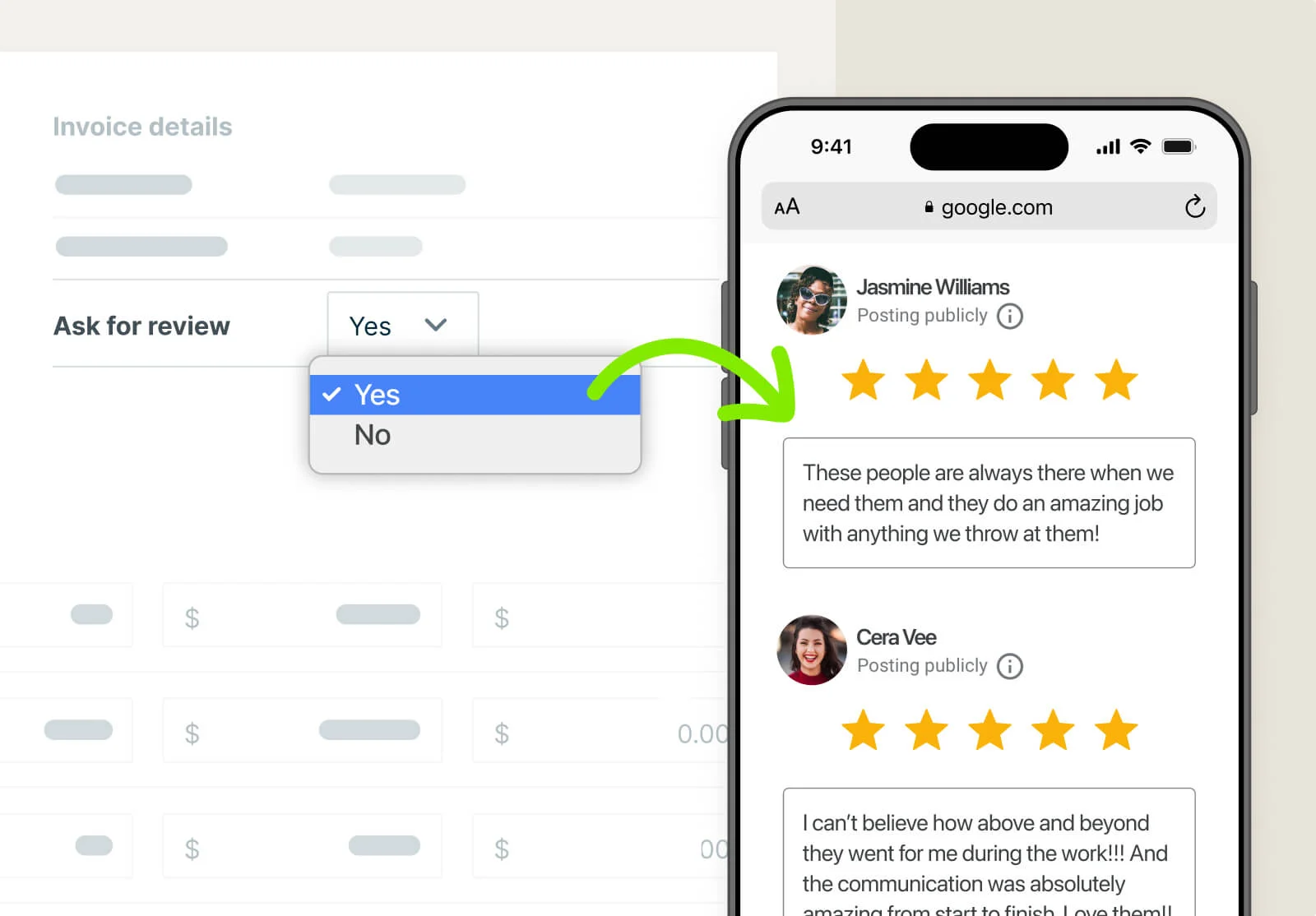
The feedback you get online can influence potential customers. Encourage happy clients to leave reviews on Google, Yelp, and social media to build credibility. Respond to those reviews, both good and bad, to show that you’re actively listening to customers and valuing their input.
To receive a steady flow of feedback, ask customers for a review after each completed job. This can be time-consuming, but you can easily set up automatic review collection in Jobber. When you make an invoice in Jobber, you can choose whether to send the customer a review request.
11. Hire landscapers and grow your business
When you’re turning away work because you’re too busy, it might be a good idea to hire your first employee. This will free up more time for you to focus on running and growing your business.
Here’s how to hire lawn care employees and landscapers:
- Write a landscaper job description and post it on social media and job search websites
- Prepare questions to ask a new employee and interview qualified applicants
- Check applicants’ references and ask them to get a police background check
- Choose the applicant you’d like to hire and offer them the position
- Schedule the landscaper’s first day of work and train them to do the job properly
FREE TOOL: Find out how much to pay your landscapers
And if you’re not great with finances, consider hiring a professional to manage them for you.
I wish when I started, I would’ve had tax planners, bookkeepers, accountants from day one. I thought I would save some money and figure it out on my own, and I made a whole bunch of mistakes.
So, get those professionals in order as fast as possible.

12. Plan for the off-season
If you live in an area with cold fall and winter months, think about how you can generate revenue and keep employees busy during those off-seasons.
You may consider adding fall and winter landscaping services, like:
- Leaf removal
- Gutter cleaning
- Snow removal
- Christmas light installation
These services can help you stay profitable from late fall to early spring. You can also use the time to:
- Update your business plan
- Market your services to new customers
- Clean or maintain your landscaping equipment
- Put new processes in place (like landscaping business software)
READ MORE: 21 best apps for lawn care business owners (free and paid)
Why should you start a landscaping business?
Starting a landscaping business lets you use your creativity to design and maintain beautiful spaces. It’s also an opportunity to be your own boss, set your own business hours, and grow a profitable business.
Originally published in May 2022. Last updated on February 12, 2026.
Frequently Asked Questions
-
Licensing requirements vary by state and the type of services you offer. Basic landscaping work like mowing and planting may not need a license. However specialized services, such as irrigation or pesticide application, often require certification. Check with your state’s contractor licensing board to make sure you’re compliant.
-
Landscaping businesses are navigating unpredictable weather, rising customer expectations, and new technology. Success often depends on adapting plant choices and schedules, offering low-maintenance solutions, and finding efficient ways to deliver consistent results.
-
Staying competitive means balancing great design with practicality. Many landscapers focus on durable materials, low-maintenance landscaping, and modern tools like smart irrigation to deliver attractive outdoor spaces without adding unnecessary upkeep for customers or crews.
-
To get started, you’ll need essential equipment (mowers, trimmers, blowers), a vehicle, and proper licenses and insurance. A business plan, pricing strategy, and marketing plan will help attract customers. Software for scheduling and invoicing can streamline operations.
-
Starting a landscaping business comes with upsides and a few tradeoffs. On the plus side, demand is strong, and many landscapers enjoy flexible schedules and the ability to scale. There’s also strong potential for recurring revenue through ongoing maintenance contracts.
On the downside, work can be seasonal, which may lead to uneven income, and the physical nature of the job can be demanding. Startup costs can also add up quickly, particularly if you invest in equipment, insurance, or a truck and trailer upfront.