
Key takeaways:
This article guides you through the must-have tools for professional landscaping, including tips on smart purchasing and saving money.
- Invest in essential landscaping tools. Start with a range of power tools (like mowers, blowers, trimmers, and saws), hand tools (such as pruners, shovels, trowels, and rakes), and specialized lawn equipment (aerators, tillers, spreaders, and wheelbarrows) to handle any job efficiently.
- Prioritize safety gear and comfort. Equip yourself and your crew with gloves, goggles, hearing protection, and steel-toe boots to prevent injuries and create a safer work environment.
- Know when to splurge and save. Invest in heavy-duty, commercial-grade tools for frequent, large-scale jobs, but opt for basic models or rentals for lighter or occasional use—bundling and buying in bulk can also help you save.
- Don’t overlook digital tools. Use Jobber’s landscaping management software and accounting tools for scheduling, invoicing, client management, and marketing to streamline operations and help grow your business.
- Plan your purchases wisely. Expect to spend between $1,570 and $4,540+ on the essential landscape equipment (excluding truck and trailer), and use free checklists to ensure nothing is missed.
Get more expert tips and run a 5-star landscaping business—sign up for the Jobber Newsletter. Join here.
Having the right equipment is essential when you’re just starting a landscaping business. Not only do these tools help you work faster, they also keep you and your team safe.
Budgeting for your first set of gear? Plan to spend $1,675–4,865+ (USD), not including a truck and trailer. In this guide, we’ll break down which tools and equipment you need, when to splurge, and how to save money when you can.
Get these essential tools and equipment for landscapers:
Landscaping power tools
Power tools make landscaping jobs fast and efficient, especially when you’re working on larger lawns and properties. Whether you’re trimming hedges, cutting through tough tree roots, or clearing debris after a storm, power tools get heavy-duty jobs done easily.
- When to pay more: Invest in high-end tools with stronger motors, longer battery life, and commercial-grade durability for frequent use. Quality brands with good warranties can save you money in the long run, since you may not have to pay for as many repairs or replacements.
- How to save money: Mid-range or corded tools work fine for occasional use. Renting larger pieces of equipment can also cut costs in this category.
| Tool | What it’s used for | Cost |
|---|---|---|
| Lawn mower | Cutting and maintaining grass at a consistent height so that lawns look neat | $750–3,000+ |
| String trimmer | Trimming grass and weeds in hard-to-reach areas and along edges where a mower can’t reach | $50–150+ |
| Leaf blower | Quickly clearing leaves, grass clippings, and debris from lawns, beds, walkways, and driveways | $50–200+ |
| Hedge trimmer | Shaping and tidying hedges, shrubs, and light branches for uniform greenery | $50–200+ |
| Pole saw | Pruning and removing higher or thicker tree branches safely from the ground | $150+ |
| Rototiller and cultivator | Breaking up compacted soil and mixing in amendments to prepare planting beds | $130+ |
| Post hole digger or auger | Digging deep, uniform holes for fence posts, signs, and other vertical structures | $50–150+ |
1. Lawn mower
A push mower keeps clients’ lawns trimmed and tidy. For clients with larger properties, use gas or electric. For smaller properties or areas with less lawn space, reel mowers work well.
If you provide lawn care for extra-large areas, like multi-acre properties, a riding mower is more effective. It costs more than a push mower but saves you time and effort on larger jobs.
Like every other buy on this list, make sure you save receipts and track business expenses. This will be a big help not only at tax time but also in calculating your overhead costs and profit margins.
Cost: $750–3,000+
2. String trimmer
A string trimmer, also known as a grass trimmer or weed whacker, helps you create clean edges along paths, sidewalks, driveways, and other flat surfaces where grass can grow over.
String trimmers are available in gas and electric varieties. Gas-powered models are noisier but good for larger jobs, while electric trimmers are quieter and better for smaller jobs and residential work.
Cost: $50–150+
3. Leaf blower
A leaf blower is a power tool that makes it fast and easy to clear leaves, grass clippings, and other debris from paths and driveways—much faster than with a rake alone.
Use a battery-powered handheld blower for residential landscaping services, or a gas-powered backpack blower for heavier debris and larger commercial jobs that require more power.
Cost: $50–200+
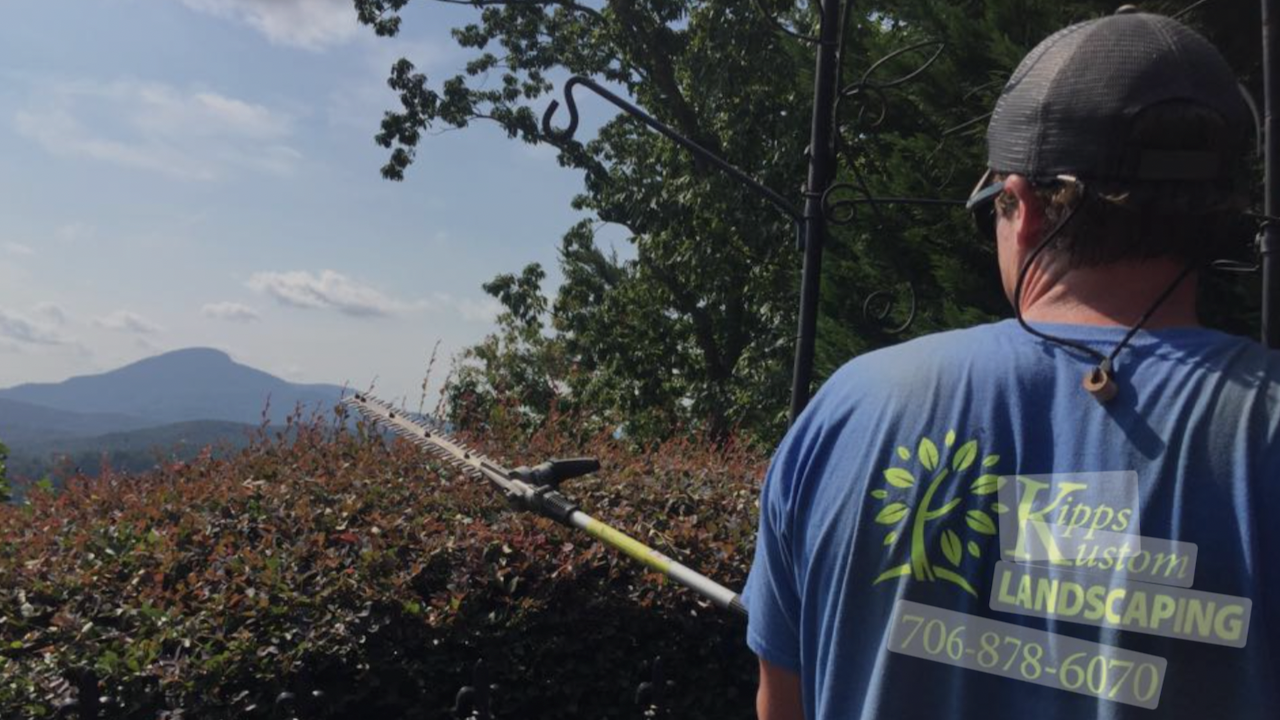
4. Hedge trimmer
An electric or gas-powered hedge trimmer helps you clean up bushes, small tree branches, and other light plant growth, giving your clients tidy and attractive greenery.
Hedge trimmers aren’t the heaviest equipment, but they’ll start to feel heavy after extended use. Get a hedge trimmer that’s comfortable to hold and as lightweight as possible.
Cost: $50–200+
5. Pole saw
Like the hedge trimmer, pole saws are designed for cutting tree branches and cleaning up foliage. However, they can easily handle bigger branches and have a longer reach than a trimmer.
Pole saws are electric or gas-powered and can take care of heavier tree limbs. You may prefer a chainsaw, but you won’t be able to cut higher branches without climbing the tree.
Cost: $150+
6. Rototiller and cultivator
A rototiller (or tiller) comes in handy for breaking up packed dirt and creating a better surface for planting.
In addition to the tiller, you may want a cultivator to help mix nutrients into loose soil. This tool is like a tiller but has much smaller tines, which are great for mixing soil rather than breaking it up.
Tillers and cultivators can be manual, electric, or gas-powered. Use manual options like a garden hoe for smaller areas, electric for small-to-medium areas, or gas for larger areas.
Cost: $130+ for combination tiller/cultivator
7. Post hole digger or auger
A post hole digger is a type of double-bladed shovel that makes it easy to manually dig round, uniform holes for fence posts and similar uses.
An electric or gas-powered auger uses a large corkscrew bit to drill holes in the ground. It does the same thing as a post hole digger, only faster—and it generally costs a bit more.
Cost: $50–150+
Landscaping hand tools
Hand tools are best for precise jobs. They easily complete tasks like digging, planting, and shaping landscapes manually. Simple landscaping tools like shovels, pruners, and rakes are just as important for wowing your clients with attention to detail.
- When to pay more: Premium tools with high-carbon steel and ergonomic designs last longer and reduce muscle strain and fatigue. Higher-quality hand tools are best for professionals who need to use them daily.
- How to save money: Basic shovels, rakes, and pruners generally work well. Buying tool sets (often from wholesale retailers) instead of individual pieces can also save money. Choosing higher-quality tools for daily drivers can also help with costs, because one good-quality tool often ends up being less expensive than many cheaper replacements.
| Tool | What it’s used for | Cost |
|---|---|---|
| Shovels and spades | Digging, planting, cutting edges, and moving soil in most day-to-day landscaping tasks | $40+ ($20+ each) |
| Rakes | Collecting leaves and debris; leveling or spreading soil, mulch, and stones | $15+ each |
| Wheelbarrow | Moving soil, mulch, plants, debris, and other materials around the job site | $50–100+ |
| Pruning shears | Making clean cuts on small branches and stems when maintaining plants | $10+ |
| Loppers | Cutting thick branches that are too large for pruning shears | $20–40+ |
| Pole pruner | Manually cutting higher branches with precision while keeping feet on the ground | $60+ |
| Trowel | Small-scale digging, planting, and edging work | $10+ |
| Edger | Cutting crisp, clean lines along sidewalks, driveways, and curbs to give lawns a sharp look | $40–120+ for manual models, $250+ for gas/battery |
| Mattock | Chopping through tough roots and breaking up hard or rocky ground | $40–90 |
| Tamper | Compacting soil or base material before installing pavers, patios, or other hard surfaces | $40+ |
| Bucket | Carrying water, soil, rocks, plants, or hand tools on the job site | $10–30 |
8. Shovels and spades
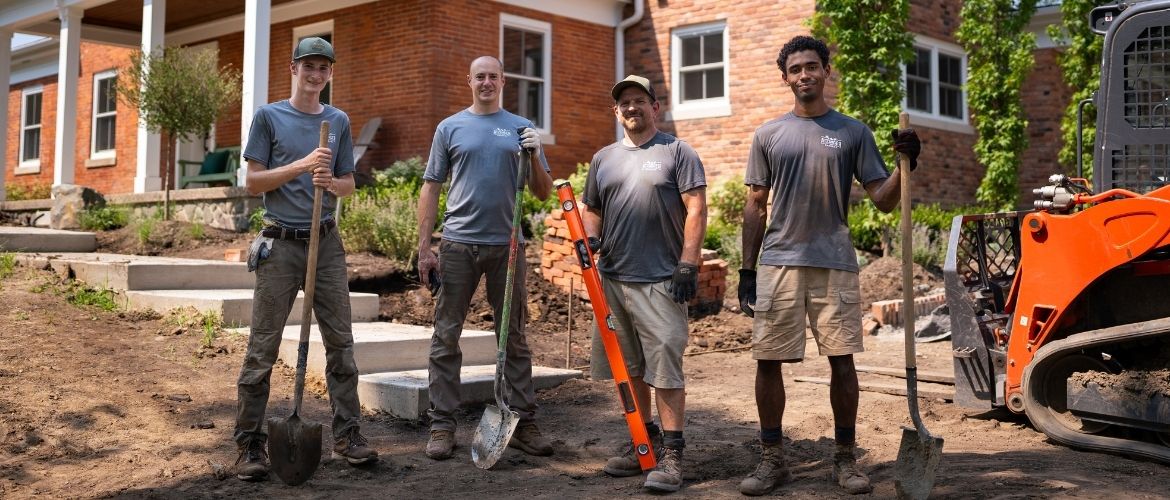
Every landscaper needs a trusty shovel (or several) to get the job done. Look for a flat-bladed spade for edging, cutting, and planting, and a round or pointed-blade shovel for digging.
You can get shovels with wood or metal shafts and with optional grips or kick plates. The best shovels have sturdy collars (aka connecting pieces) that aren’t likely to break with heavy use.
If you decide to offer winter landscaping services, get a snow shovel. Whatever shovel you choose, make sure it’s the right height for you—otherwise it won’t be as effective or ergonomic.
Cost: $40+ ($20+ each)
9. Rakes
Leaf rakes collect leaves, grass clippings, and other debris from lawns. These are broad, lightweight rakes, often with a fan-shaped plastic head attached to a wood or metal shaft.
You’ll also need a garden rake. This type of rake has a flat metal head with sharp tines, which is good for removing stones from dirt and spreading soil, mulch, stones, and other materials.
Cost: $15 each (individually)
10. Wheelbarrow
A sturdy wheelbarrow will help you transport materials across a job site more easily—for example, carrying sod to the yard, or tree branches to the dumpster.
Look for a wheelbarrow with at least 6–10 cubic feet of space. You might also prefer a two-wheeled option instead of a single wheel for more control.
Cost: $50–100+
11. Pruning shears and loppers
Pruning shears are handheld plant scissors that help you cut small branches one at a time. Loppers are similar but have much longer handles, giving you the power to cut bigger branches.
These landscaping tools are meant for quickly cleaning up small but obvious overgrowth on trees and bushes. Use them alongside your hedge trimmer and pole saw to get those cleanup jobs done right.
Cost: $10+ pruning shears, $20–40+ loppers
12. Pole pruner
Pole pruners are another way to cut branches. These manually operated tools have a longer reach than hedge trimmers and are lighter than a pole saw, making them better for detail work.
Cost: $60+
13. Trowel
Rounded or pointed-blade trowels help with digging, cutting, and edging jobs that are too small for a shovel. These hand tools are also perfect for planting flowers and small shrubs.
Trowels typically have metal blades and can come with plastic, metal, or wooden handles. Find a trowel that’s comfortable to hold and won’t snap in half if you hit a rock by accident.
Cost: $10+
14. Edger
An edger is what makes a lawn look sharp, cutting crisp lines along sidewalks, driveways, and curbs. For recurring maintenance, an edger helps lock in consistency week after week, especially on properties where the grass loves to creep.
Manual edgers work fine for small residential jobs and tight budgets, but powered edgers will save time on longer routes and commercial sites. Gas models handle thick turf and compacted edges, while battery-powered options keep noise down.
Cost: $40–120+ for manual models, $250+ for gas/battery
15. Mattock
Part axe and part pick, a mattock is old school and heavy, but effective. It’s perfect for getting through stubborn roots or rocky ground where a shovel won’t work.
You won’t swing a mattock all day, but having one on the truck saves time and frustration when the conditions are difficult. Sometimes power tools aren’t the answer—you just need leverage and steel to get the job done.
Cost: $40–90
16. Tamper
A tamper helps compact the soil before you install a patio, paving stones, or other flat surfaces. This is an essential tool to keep the soil from settling over time and undoing all your hard work.
Get a long-handled tamper to tamp down small spaces or a rolling tamper for larger areas. Only invest in an expensive gas-powered tamper if you’ll be tamping very large spaces on a regular basis.
Cost: $40+
17. Bucket
A plastic bucket always comes in handy on the job, whether you’re moving water, stones, soil, plants, or other tools for landscape design and lawn care.
It doesn’t need to be fancy—it just needs a handle and no holes in the bottom.
Cost: $10–30
READ MORE: Find the funding you need to buy tools with a lawn care grant.
Soil, seeding, and spray tools
Soil, seeding, and spray tools determine whether grass fills in evenly or treatments go on smoothly instead of blotchy.
- When to pay more: Features like durable frames, consistent spread patterns, and adjustable settings can make a big difference to application quality. Commercial-grade aerators, spreaders with sealed gearboxes, and sprayers with reliable pumps reduce rework and callbacks.
- How to save money: For smaller routes or seasonal use, tow-behind or push models often get the job done without the higher price tag. Manual spreaders and backpack sprayers are also solid options for spot treatments and residential jobs.
| Tool | What it’s used for | Cost |
|---|---|---|
| Spreader | Evenly applying grass seed and fertilizers across lawns and larger turf areas | $40–200+ |
| Lawn aerator | Punching holes in compacted turf so water, air, and nutrients can penetrate the soil | $60–150+ |
| Sprayer | Applying liquid fertilizers, herbicides, and pesticides over lawns and plant beds | $50–300+ |
18. Spreader
Spreaders help you spread seed and fertilizer over a client’s lawn. A broadcast spreader covers a wider range, while a drop spreader covers a smaller area more accurately.
Spreaders come in push-behind and tow-behind versions. Push-behind spreaders are best for smaller spaces where you’re on foot, while tow-behind spreaders connect to your truck or mower for bigger jobs.
Cost: $40–200+
19. Lawn aerator
Get an electric or gas-powered lawn aerator to help water, air, and nutrients enter the soil in the client’s lawn.
Like many tools, the electric option works well for small residential lawns, while the gas version is best for larger spaces. You may even be able to get an aerator that connects to your mower.
Avoid manual aerators. They require far too much time and effort to use, except in very small spaces.
Cost: $60–150+
20. Sprayer
You’ll need a pressure sprayer to spray fertilizer and pesticide on clients’ lawns. You can get a handheld, backpack, or tow-behind sprayer. Larger models are electric or gas-powered.
Cost varies widely depending on the type you get. Start with a less-expensive option and consider upgrading as you take on larger jobs that require more spraying power.
Cost: $50–300+
Watering and irrigation tools
Landscaping tools for watering and irrigation handle the unglamorous but critical work—reducing stress for transplants and helping seed and sod settle in. Hoses, nozzles, and temporary sprinklers also give your crew flexibility on busy days, like when plans change for an install.
- When to pay more: Heavy-duty hoses, solid brass fittings, and adjustable nozzles hold up better when they’re dragged across hardscapes and used daily. Quality sprinkler heads with consistent spray patterns make it easier to spot coverage gaps and pressure problems.
- How to save money: Mid-grade hoses and basic sprinklers work well for short-term coverage and testing. Buying common sizes in multiples often costs less than replacing failed parts in the middle of peak season.
| Tool | What it’s used for | Cost |
|---|---|---|
| Garden hose and nozzle | Delivering water where it’s needed for hand-watering, rinsing, and general cleanup around the property | $20–50 each |
| Sprinklers | Distributing water over larger lawn or bed areas automatically for even coverage | $20–80 per unit for above-ground sprinklers |
| Sprinkler heads | Serving as the fixed or pop-up outlets in an irrigation system that spray or rotate water across specific property zones | $5–35 per unit for in-ground irrigation heads |
21. Garden hose and nozzle
Your clients will likely have their own garden hose, but bringing your own means you’ll always have the hose length and nozzle type that’s right for the job.
Get a few different hose lengths for different project sizes—for example, 25, 50, and 100-foot hoses. You may also want a hose reel for each hose to keep the lines clear and kink-free.
Cost: $20–50 each
22. Sprinklers and sprinkler heads
Sprinklers and sprinkler heads earn their keep during installs, repairs, and the times when a property needs water immediately. Keeping a few impact sprinklers, oscillating heads, and adjustable rotors in the truck can be a quick fix when irrigation plans are behind schedule.
This equipment is also great for troubleshooting. Testing spray patterns or isolating pressure issues gets easier when you can run zones manually and see what’s happening on the ground.
Cost: $20–80 per unit for above-ground sprinklers, $5–35 per unit for in-ground irrigation heads
Landscaping safety gear
Safety is always important when you’re working outdoors, but you’ll want to be especially careful around machinery, sharp tools, and unpredictable conditions.
Protective gear like gloves, goggles, hearing protection, and steel-toe boots prevent injuries on the job. If you’re working with a crew, make sure everyone has the right set of gear.
- When to pay more: High-quality boots, noise-canceling ear protection, and anti-fog goggles provide better durability and comfort for daily use. Safety is always worth the investment.
- How to save money: Basic gloves, masks, and knee pads offer adequate protection without breaking the bank. Buying in bulk reduces expenses on disposable gear.
| Tool | What it’s used for | Cost |
|---|---|---|
| Steel-toe boots | Protecting feet from impacts, compression, and heavy objects | $85–200+ |
| Safety glasses | Shielding eyes from dust, flying debris, chemicals, and branches | $10–40 |
| Earmuffs | Protecting hearing from prolonged exposure to loud equipment | $10–100+ |
| Gardening gloves | Protecting hands from cuts, blisters, thorns, chemicals, and rough materials | $5–50 |
23. Steel-toe boots
Steel-toe boots or shoes protect your feet from heavy equipment and other falling hazards. They are available at a range of prices, so just look for a pair that’s lightweight enough to wear all day.
Your feet swell throughout the day, so you’ll get the best fit if you do your shopping in the evening. Make sure to wear the same type of socks you’ll be wearing on the job, too.
Cost: $85–200+
24. Safety glasses and earmuffs
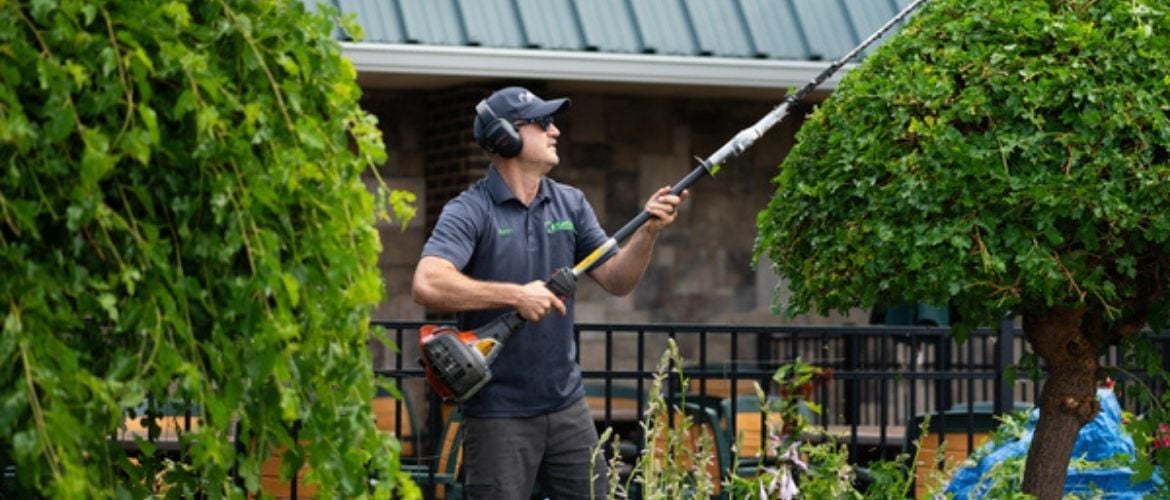
Landscaping can be a hazardous job, so protect your eyes and your hearing with equipment like safety glasses and earmuffs.
Both items come at different price points and in different styles, like noise-canceling earbuds, but even lower-end options like earplugs will do the job.
Cost: $10–40 glasses, $10–100+ earmuffs
25. Gardening gloves
Get a pair of gardening gloves to protect your hands from thorns, insect bites, cuts, hazardous plants, or even just blisters.
Gloves come in lots of different materials, like rubber or leather. Look for a pair with a good range of motion and material that fits the job at hand.
Cost: $5–50
Vehicles
Trucks and trailers move your crew, your landscaping tools and equipment, and your materials from job to job.
- When to pay more: Reliability is worth the money—solid drivetrains, higher towing capacity, and trailers built with quality axles, brakes, and welds. If your crew is running full routes or hauling heavy loads, spending more up front can mean fewer breakdowns and less downtime.
- How to save money: Buying used often makes more sense than brand new, especially early on. Skip the bells and whistles and instead focus on function. The right size with basic upgrades usually beats overspending on the biggest and best options.
| Tool | What it’s used for | Cost |
|---|---|---|
| Truck | Transporting crews, tools, and materials between job sites; towing trailers or larger loads | $18,000–40,000 used, $45,000+ new |
| Trailer | Hauling mowers, equipment, and bulk materials so the main truck bed stays organized | $2,000–4,500 for single-axle open utility trailer, $4,500–9,000 for tandem-axle open landscape trailer with ramp and racks |
26. Truck
You’ll need a truck to haul all your equipment, and sometimes half a yard of mulch. For small crews, a reliable pickup keeps jobs moving. You’re looking for something that’s simply reliable and pulls a load without problems. Nothing flashy.
Many landscapers lean toward half-ton or three-quarter-ton trucks, depending on how heavy the work gets. Add a few practical upgrades, like bed liners, toolboxes, and ladder racks, and now the truck’s working for you.
Cost: $18,000–40,000 used, $45,000+ new
27. Trailer
A trailer gives you breathing room, letting you load mowers, wheelbarrows, and bulk materials without turning the truck bed into a mess. Open utility trailers are common for maintenance routes, while enclosed trailers are ideal for when you want security and cleaner storage.
Match the size of the trailer to your work. If it’s too small, you’re shuffling gear every morning. If it’s too big, driveways get that much tighter to navigate.
Cost: $2,000–4,500 for a single-axle open utility trailer, $4,500–9,000 for a tandem-axle open landscape trailer with ramp and racks
Landscaping business software
Running a successful lawn care business isn’t just about physical labor. Digital tools like scheduling, payments, and quoting systems ensure that your daily operations are a breeze.
Use these tools to plan projects, communicate with clients, and manage day-to-day business tasks.
28. Scheduling
Creating schedules, assigning work, and tracking employee availability will quickly eat up your day.
Jobber can help you save time and avoid costly mistakes like double bookings. Here’s how it helps you manage schedules:
- Multiple calendar views to see your team’s availability
- Map views and route optimization to generate the fastest, most fuel-efficient route
- Color coding and filters to help you see job statuses, assignments, and team members
- A drag-and-drop calendar to make rescheduling quick and simple
Always have good software. Get administrative things in order so that your business can be professional and efficient. I wish when I’d started that I had tax planners, accountants, and bookkeepers from Day 1
READ MORE: How to Write A Landscaper Job Description
29. Payments
If there’s one part of the landscape company workflow that should never get held up, it’s sending invoices. Jobber automates invoicing to minimize late payments and improve cash flow. Not to mention, it’s less administrative work for you.
Then, make it easier for clients to pay via multiple payment methods, like credit cards, ACH payments (bank transfers), or mobile payments.
For regular services, set up automatic recurring payments to streamline cash flow.
30. Quoting
One of the best ways to tighten your landscape company workflow is to get your estimates out the door faster, without losing accuracy.
Start by building a services list and using an estimate template. Have your items pre-loaded into a quoting system so you don’t need to start from scratch every time someone asks how much something will cost.
With quoting software like Jobber, you can plug in job specs and generate a quote. The result is a line-itemed proposal that looks sharp and makes clients feel like they’re working with a pro.
And Jobber lets you suggest premium packages or add-ons in the quote, so your customers can choose what they want. The quote updates automatically.
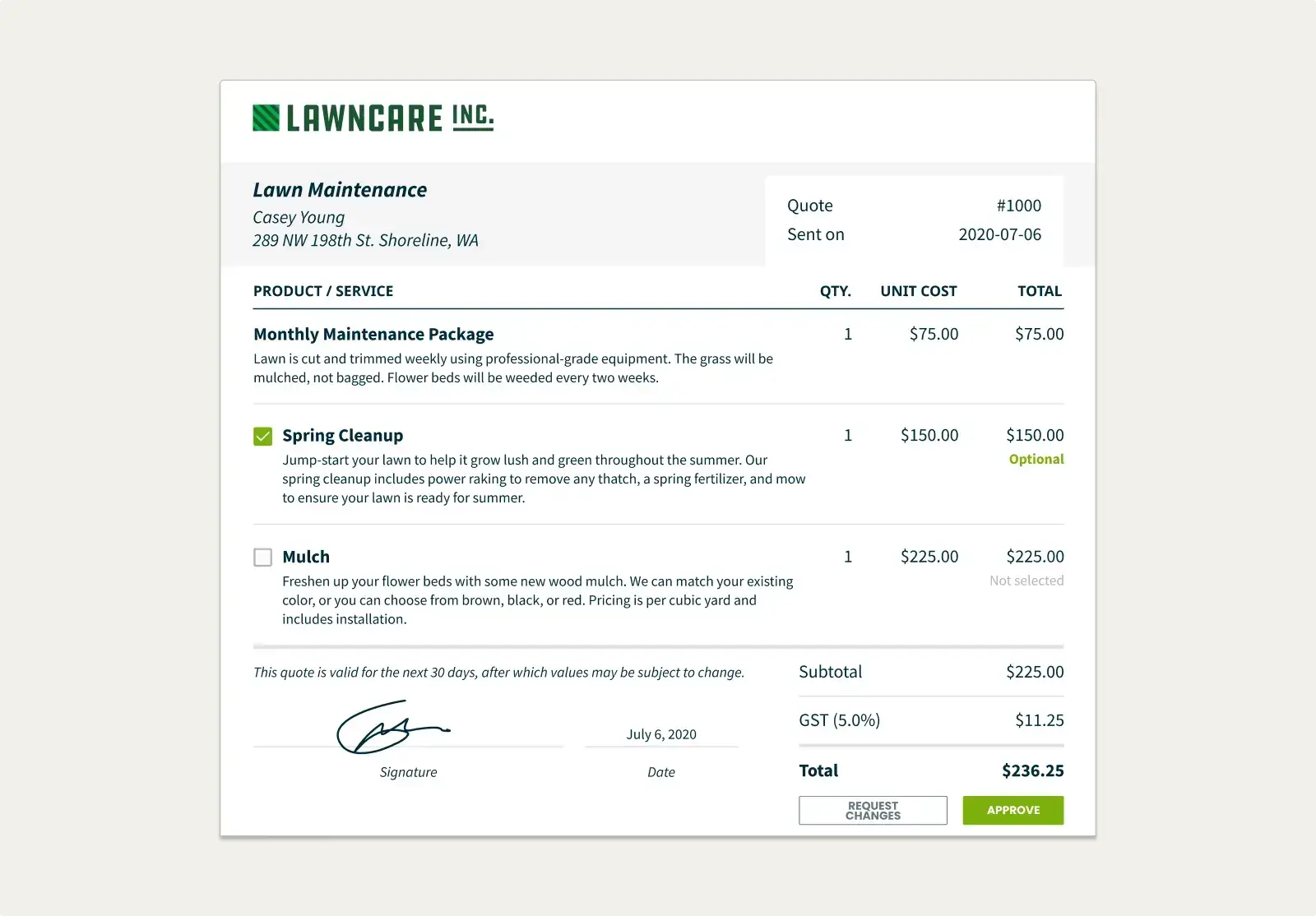
Jobber’s advanced quoting software takes things to the next level with advanced quote customization. Impress potential clients by adding images, reviews, or other relevant attachments.
Building your toolkit for success
Running a landscaping business gets easier when your tools aren’t slowing you down. The right mix of equipment helps your crew move faster and deliver results that clients love.Start with the must-have equipment that supports your day-to-day work, and then add specialized gear as your routes grow or your installs get more complex. Keep this tools list handy as a practical reference you can come back to whenever you’re budgeting or upgrading.
READ MORE: How to Grow A Landscaping Business
Originally published on May 11th, 2023. Last updated on January 22nd, 2026.
Frequently Asked Questions
-
Landscape designers use software like CAD programs for planning layouts, measuring tools for site analysis, and drafting supplies for sketching designs. They may also use drones for aerial site surveys and soil testing kits to assess ground conditions.
-
Shovels, spades, and hand trowels are essential for digging and planting, while pruners and loppers help shape plants and remove dead growth. Garden forks, rakes, and soil knives make it easier to prep and maintain garden beds.