
Key takeaways:
Winning more plumbing jobs starts with knowing how to craft bids that stand out and secure client trust. To do that, you need to consider the following:
- Understand client expectations. Gather detailed project requirements through documentation or direct communication to ensure your bid reflects the full scope of work and avoids miscommunication.
- Accurately estimate costs. Calculate all labor, materials, and overhead expenses, including a buffer for unforeseen issues to keep bids profitable and realistic.
- Highlight what makes your business unique. Use your bid to showcase certifications, awards, guarantees, testimonials, or previous successful projects to differentiate your services from competitors.
- Leverage technology for professionalism. Use digital tools to create, customize, and send clear, automated bids quickly—making it easier for clients to review, approve, and pay deposits.
- Follow best practices for winning bids. Be specific, itemize estimates, research competitive local pricing, plan for contingencies, and follow up with personalized messages to boost your chances of securing the job.
Keep growing your business with more tips and practical resources—sign up for the Jobber Newsletter. Sign up here.
Knowing how to bid plumbing jobs can help you win more clients and land bigger contracts for your business.
But simply submitting a bid to a prospective customer won’t guarantee you the work. A winning bid is one that sells your plumbing services and convinces a potential client that you’re the best service provider for the job.
In this article, we’ll break down the steps you need to follow to write bids professionally and send them at the perfect time so that you can grow your business.
How to bid plumbing jobs: A step-by-step guide:
-
Understand your client’s expectations
-
Estimate materials, labor, and other expenses
-
Make your plumbing business stand out
-
Use technology to create and send automated bids to clients
-
Submit the necessary bidding documents
-
Different kinds of plumbing job bids
-
When to submit plumbing bids
-
Best practices to write winning plumbing bids
-
How to find potential jobs to bid on
1. Understand your client’s expectations
To submit a bid that accurately reflects the full scope of plumbing work, you need a clear understanding of what the client expects.
For a commercial plumbing project, this often means reviewing an invitation for bid (IFB), request for proposal (RFP), or other formal documentation the client provides.
For a residential plumbing project, expectations are usually shared in a simpler way. Gather all the details through a client phone call, email, online form, or in-person walkthrough.
In either case, carefully review the scope of work, timelines, and submission requirements. If anything is unclear, ask the client for clarification before you start preparing your bid. This helps you avoid unnecessary back-and-forth and ensures you create an accurate bid from the start.
2. Estimate materials, labor cost, and other expenses
Once you’ve determined the project requirements, start by calculating the projected cost of materials and labor. These two factors determine whether your bid stays profitable.
Material and labor cost can change based on job type (new construction, service work, or remodeling) and your client’s specific needs. Understanding how to calculate them based on these changing factors ensures you can create an accurate plumbing estimate.
Here are some tips to help you learn how to price a plumbing job by factoring in your anticipated costs:
Labor costs
Determine how many workers you’ll need to dedicate to that job based on the anticipated scope. Then, figure out how long you expect the job to take to determine the total number of labor hours.
For example, if you need two technicians and you expect the plumbing job to take a day to complete, your total labor hours would be 16. (Two technicians x eight hours). Then, multiply that by your hourly rate to get a solid estimate.
How to estimate your labor costs
To estimate your labor costs, use this formula:
Total # of labor hours x Hourly rate
If we use the same example from above and the hourly rate of $65, your estimated labor costs would be $1,040 (16 x $65).
Think about how overtime or after-hours work affects your labor rate, especially on projects that run long or require emergency service. These hours cost your plumbing business more time and money, and your pricing needs to reflect that.
You need to be charging accordingly for that time because you are paying your person after hours.
You’re paying that additional overtime, and if you don’t build it into the price that you’re charging your customer, you’re losing.

Costs for materials and supplies
Determine the costs for materials (including taxes) that you’ll need to complete the project. Factor in any special plumbing tools and other consumables you need to purchase in advance.
For example, if you’re bidding on a bathroom remodel, some of your material costs will include:
- Standard bathroom fixtures (sink, toilet, tub, or shower)
- Cabinets
- Faucets
- Flooring
- Paint and primer
- Drywall and cement board
- Tile and grout
- Caulking gun
- Silicone sealant
Write out your materials list, price each item individually, and add them up to get your total materials cost.
Occasionally, you may need to buy materials in standard lengths or pack sizes, even if the job only uses a portion of them. In those cases, you should still include the full material cost in your bid. This prevents you from having to absorb the entire expense yourself.
If you need four-inch copper for a job and you can only buy that in a 10-foot stick, your job might only need two feet. You’re going to want to include that [cost].
Pro Tip: If any item or task is optional (and not required to complete the job), you can use Jobber’s quoting features to add optional line items. The client may choose to upgrade a portion of the work, and you can offer premium add-ons that increase your revenue.
Miscellaneous expenses
It takes more than just materials and labor to keep your business running smoothly. These additional expenses are called overhead costs, and may include:
- Licenses and permits
- Insurance payments
- Plumbing van maintenance and fuel
- Marketing costs
- Office rent payments and utilities
- Administrative software and office equipment
Add these monthly expenses to determine your recurring overhead costs. Then, use this formula to figure out your hourly overhead rate.
How to calculate your hourly overhead rate
Overhead rate per hour = total overhead costs / total billable hours
For example, if your monthly overhead costs are $4,000, and you typically bill 680 hours a month, your hourly overhead costs would be $5.88.
To calculate your overhead costs for your plumbing bid, multiply your hourly overhead rate by your estimated labor hours:
16 (labor hours) x $5.88 (hourly overhead rate) = $94.08 (total labor costs for the bid)
Once you’ve priced out the plumbing job, add 3% to your total estimate to give yourself a little wiggle room in case you run into any complications on the job.
Pro Tip: Use Jobber’s plumbing estimate template as your plumbing bid template. It’ll help you detail all job costs and send professional bids to potential clients.
READ MORE: How to price plumbing jobs: Simple formula for accurate estimates
3. Make your plumbing business stand out
Next, give your prospective client a clear reason to pick you. In your bid, specify what sets your business apart from the competition.
For instance, your technicians could have specific plumbing certifications, or your business may have earned industry awards. If you have a service guarantee or positive customer testimonials, now is the time to share them.
To successfully pitch your business, add your company’s tagline to your bid. You can also share images of completed projects that were similar in scope, or you can demonstrate your attention to detail by sharing a case study of a job you went above and beyond for.
4. Use technology to create and send automated bids to clients
Using technology to send digital copies of a bid can make your plumbing business look more professional to potential clients. This also automates your processes and makes it easier for clients to approve bids and pay deposits when ready.
With a plumbing business software like Jobber, your plumbing business can:
- Send professional quotes and bids to potential clients
- Set the right price with markups to show your estimated margin
- Suggest optional line items or premium packages
- Offer consumer financing
- Send quote follow-ups and automated reminders via email or text
- Give customers a self-serve experience with easy quote approvals
5. Submit the necessary bidding documents
There are a few pieces of “paperwork” that you’ll need to send to your clients as part of a complete professional bid (though today you can send most, if not all of these, digitally). These include:
Plumbing contract
A plumbing contract protects your business from potential disputes and ensures you’re compensated for your services. It should outline the scope of work, the services you’ll provide, and the costs associated with it.
How well the job is managed, is usually how well the job does at profit time. But also, you can estimate improperly. So if you don’t have a system for estimating, there’s a lot of trial and error.

Drawings or blueprints
Plumbing drawings and blueprints show you the exact specifications of the job. These can help you provide exact material costs and labor costs and identify any potential challenges you may face.
Pro Tip: Check with the builder or homeowner to see if they have a copy of the existing plumbing drawings.
Plumbing takeoff and pricing
A plumbing takeoff document is a detailed summary of everything you need to get the work done. It includes items like physical goods and materials, plumbers, and subcontractors.
The blueprints will be helpful when creating your plumbing takeoff sheet. For example, you can use colored pencils on your blueprints to specify pipe lengths, fittings, and fixtures to create an accurate takeoff. You can also highlight specialty fixtures, tools, or unique skills needed for installation.
Use your takeoff to create a spreadsheet that captures every quantifiable detail, like labor and materials (with pricesquantities, and lengths).
Different kinds of plumbing job bids
There are three different types of jobs you may be asked to bid on:
1. Remodel plumbing bid
This type of bid may be for residential or commercial clients. Residential clients will likely be looking to remodel a specific room, such as a bathroom, kitchen, or laundry room, while commercial clients are more likely to want to overhaul the plumbing in an entire building.
Pro Tip: If possible, schedule a pre-bid meeting with a walkthrough of the site. This will give you a better understanding of just how much labor and materials you’ll need for the plumbing project.
2. New construction plumbing bid
New construction plumbing bids will most often be requested by commercial clients or residential builders. They require the greatest amount of consideration to bid, as you’ll need to plan and install new plumbing systems to make sure the new building has running water.
3. Plumbing service bid
You may receive a request to bid on plumbing services from government agencies or property managers looking to award a service contract to the right plumbing company.
If you win this bid, you’ll be responsible for handling all plumbing services for this client for the duration of the contract.
READ MORE: The 6 main types of plumbers and the plumbing services they offer
When is the best time to bid on a plumbing job?
You should bid on a plumbing job whenever a client needs clear pricing before work begins. This is especially true for larger projects like remodels, new construction, or commercial work.
Bidding is also important when multiple contractors are competing for the same job, or when the scope is complex enough that you need to outline and research materials, labor, and timelines.
Here are a few general rules to follow:
- Smaller plumbing service calls (single-day services): You can rely more on a standard rate sheet that sets predictable prices for basic plumbing needs.
- Multi-day, complex, or commercial work: For anything that involves planning, parts ordering, or multi-day shifts, a formal bid is better. A detailed bid can also prevent surprises and give a client confidence in your work.
Best practices to write winning plumbing bids
While every job is unique, you can follow these tips to help you win more contracts—no matter what you’re bidding on and who you’re bidding for.
Be specific
Ask for as much information as possible about the job, including blueprints or specs, especially with large-scale projects. This shows your customers that you’re diligent and can help you avoid surprises in the middle of a project.
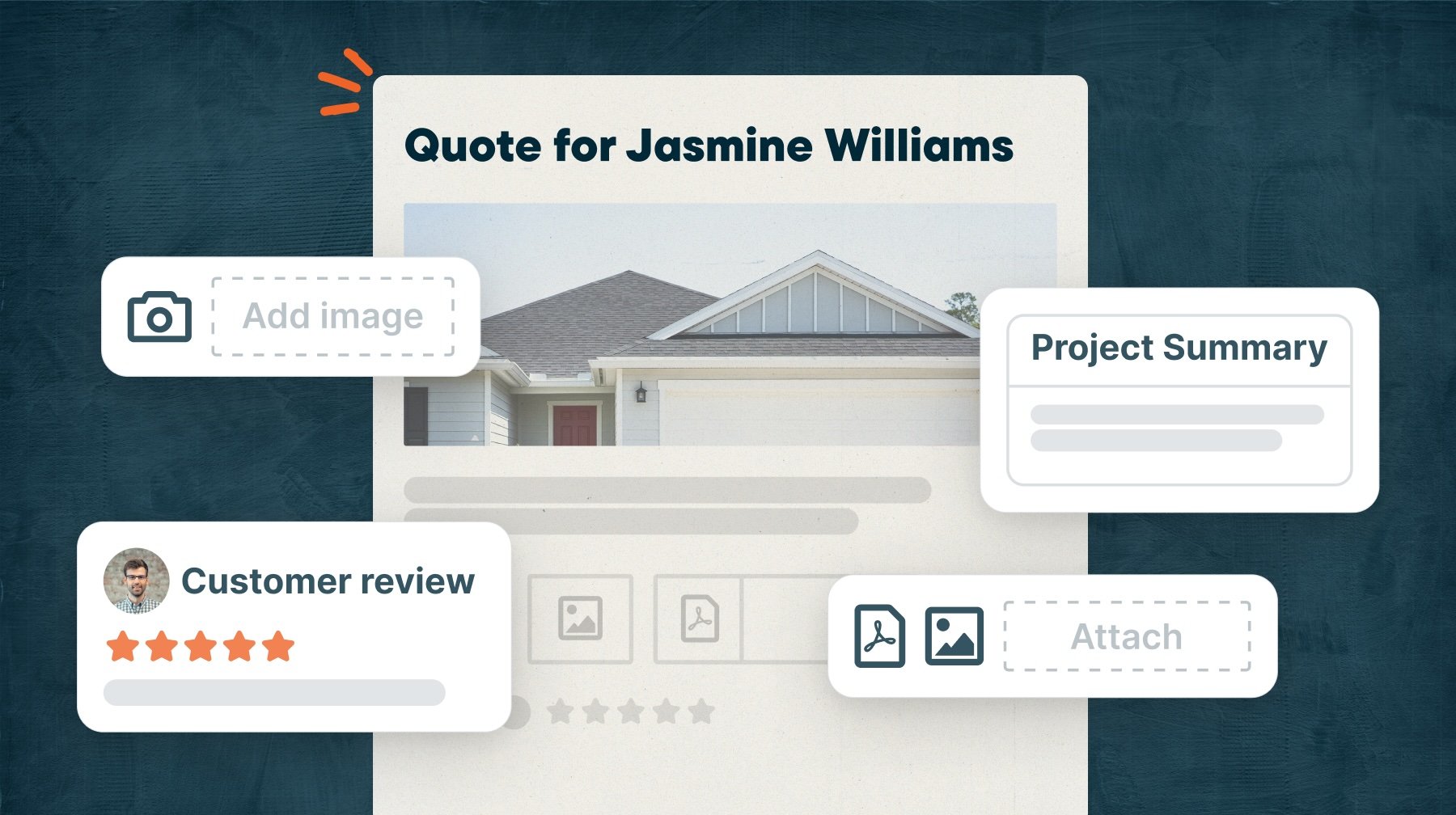
With Jobber, you can also use advanced quote customization to include images, customer reviews, and other design elements. These eye-catching details can convince your future clients that you’re the right pick for the job.
Itemize a new estimate
Many customers like to visualize where their money is going. To help, you can break down costs for labor, materials, and any extra fees. Detailed, transparent bids build trust with clients.
Know your local market
Find out more about local rates to make sure your bid is competitive. As you research competitive pricing, ensure that any estimate fully covers your costs.
Plan for unexpected issues
Experienced plumbers know that surprises often happen. Make room in your bid for unexpected problems, such as hidden leaks or outdated piping. Whenever you find an issue, communicate back to the client as soon as possible so that they can make an informed decision.
Follow up with a personalized message
After sending your bid, check in with the client. Showing that you’re engaged and serious about winning the job can mean a lot to clients, especially if they’re busy or forget to respond.
When you send quotes with Jobber, automated follow-ups help you stay in touch with more customers and remind them to take action.
How to find potential jobs to bid on
To find jobs worth bidding on, start by looking in the places where homeowners and contractors already search for plumbers. Use these sources to spot new opportunities quickly and consistently.
Here are a few reliable ways to get started:
Use your local network
Always ask your previous clients for reviews and referrals. Plus, spend time networking with local neighbors to build connections to help drum up more business.
Get active on social media
Use popular platforms like Facebook and Instagram to post tips and before-and-after job photos. Follow and interact with other local businesses in your area to spread the word.
Partner with contractors
Start networking with general contractors, local real estate agents, and property managers. Many of these professionals often need reliable plumbers for ongoing projects—and it’s great to be at the top of their list.
Use government bidding websites
As a new business, you might not know that the United States government offers contracts for public plumbing work. Head to websites like SAM.gov and state-specific portals for licensed contracting opportunities.
Join online directories
You can also register on service sites like HomeAdvisor or Angie’s List. On these sites, potential customers are actively searching for providers. This makes it easier for them to find you and request bids directly.
Send professional plumbing bids with Jobber
Whether you’re just starting your plumbing business or you’ve been in the industry for years, sending professional plumbing bids can help you win more jobs and grow your business.
With Jobber, it’s easy to send quick and professional bids, schedule plumbing jobs, and automate your invoicing to get paid faster.
Originally published on March 9th, 2022. Last updated on December 16, 2025.
Frequently Asked Questions
-
A plumbing job bid is a detailed estimate for a project. It should include labor, materials, equipment, permits, timelines, and any assumptions or exclusions so the client knows exactly what’s covered within your scope of work.
-
You need contingencies because plumbing projects often involve unknown factors—like replacing old piping or running into a snag during installation. A small buffer protects your profit and helps you handle unexpected materials, delays, or complications.
-
The core steps include reviewing the project plans, doing a site walkthrough, estimating labor and materials, and identifying any required permits. Once you have those details, you can submit a clear proposal that includes your markup, timelines, and responsibilities.
-
Account for equipment and tools by listing what you’ll use and assigning a cost. Owned tools are usually included in the overhead estimate, while rental equipment gets added as a direct line item since you only need it for a specific time.