
Key takeaways:
Implementing smart marketing strategies is key to attracting more plumbing customers and keeping your business busy year-round.
- Establish a strong online presence. Claim your Google Business Profile, create a professional website, and optimize both for local search to ensure customers can easily find and contact you when they need plumbing services.
- Leverage multiple digital marketing channels. Use Google Ads, email marketing, and social media—especially a Facebook Business page—to reach new audiences, remind past clients of your services, and share expert advice or special deals.
- Build trust and credibility through reviews and referrals. Encourage happy customers to leave detailed reviews and set up a referral program to turn great service into new business, helping you stand out from competitors.
- Expand your reach with partnerships and local awareness. Partner with local builders and HOAs, distribute flyers, use vehicle wraps, and offer branded giveaways to increase recognition and generate leads in your service area.
- Prioritize consistent branding and expert content. Create a memorable brand, use it everywhere—from uniforms to van wraps—and share valuable content, such as blogs or videos, to educate your audience and position yourself as the local go-to plumber.
Stay on top of the latest business and marketing tips for plumbers by signing up for the Jobber Newsletter. Sign up here.
The best plumbing marketing plans meet customers where they are—whether they’re scrambling to stop a burst pipe in an emergency, or calmly comparing plumbers for a new bathroom installation.
The right plumbing marketing ideas can help you connect with the customers who need you most, exactly when they need you.
Learn how to grow a plumbing business with these 15 plumbing marketing tips to connect with more customers, win more business, and build a steady flow of work.
15 plumbing marketing ideas:
-
Claim your free Google Business Profile listing
-
Build a plumbing brand your customers will recognize
-
Advertise your services with these Google Ad ideas for plumbers
-
Send service reminders and offer deals with email marketing
-
Get targeted plumbing leads through lead generation websites
-
Turn your plumbing website visitors into potential customers
-
Set up your Facebook Business page
-
Build trust with positive customer reviews
-
Win more referrals with a customer referral program
-
Create and share expert plumbing content
-
Reach out to a homeowners association (HOA)
-
Partner with a local builder
-
Use vehicle wraps for on-the-go advertising
-
Distribute flyers to local neighborhoods
-
Offer customer giveaways and freebies
1. Claim your free Google Business Profile listing
Claiming your Google Business Profile will help your plumbing business appear in local search results, which in turn will help grow your business website traffic and make it easier for potential customers to find your services. Since 84% of homeowners use Google before selecting a home-service provider or contractor, having a strong online presence is essential for plumbing businesses.
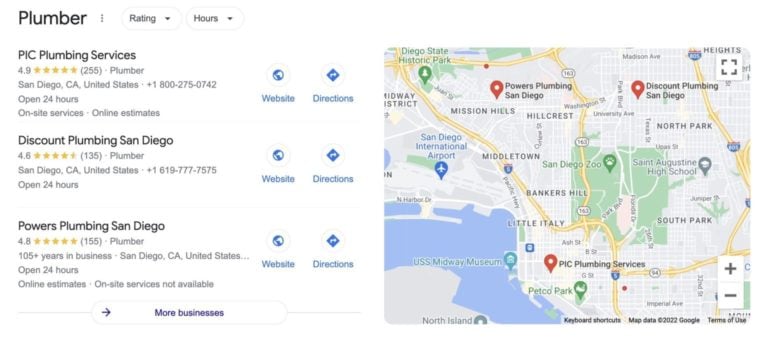
Your Google Business Profile gives visitors a snapshot of your business and services, including your contact information, logo, service area, hours, client reviews, and pictures.
Here’s what your Google Business Profile will look like when a new customer searches for a plumber in your area.
How to claim your Google Business Profile
- Go to Google Business Profile and claim or create your listing
- Add your business name, address, phone number, service area, and hours
- Upload your logo and high-quality photos of your work
- Write a clear description of your plumbing services
- Ask happy customers to leave reviews and respond to them regularly
Key performance indicators (KPIs) to track:
- Leads from Google searches
- New profile views (how many people discover you)
- Conversion rate from profile views to calls or requests
2. Build a plumbing brand your customers will recognize
Building a brand for your plumbing company is the best way to impress and attract potential customers. It’s also the easiest way to stand out from your competition.
Once you’ve decided on the visual elements of your brand (like your logo, fonts, and colors), make sure to use them consistently throughout your plumbing marketing efforts to help new and existing customers recognize your business.
According to Forbes, a recognizable brand plays a key role in establishing credibility and building trust with customers who may need your services in a pinch.
How to build your plumbing brand
- Define your brand basics: logo, colors, fonts, and overall style
- Choose a consistent tone of voice for your plumbing business (formal, fun, conversational)
- Apply your branding across your website, van wraps, uniforms, invoices, and ads
- Create simple brand guidelines so everyone follows the same look and feel
- Review your marketing materials regularly to keep branding consistent
KPIs to track:
- Leads generated from branded channels
- Cost per acquisition
- Conversion rate from branded website traffic
3. Advertise your services with these Google Ad ideas for plumbers
Investing in Google Ads puts your company in front of potential emergency or installation customers who don’t have the time to browse multiple plumbing companies before deciding.
There are two types of plumbing ads that you can use to advertise your plumbing business on Google: Local Service Ads and Search Ads.
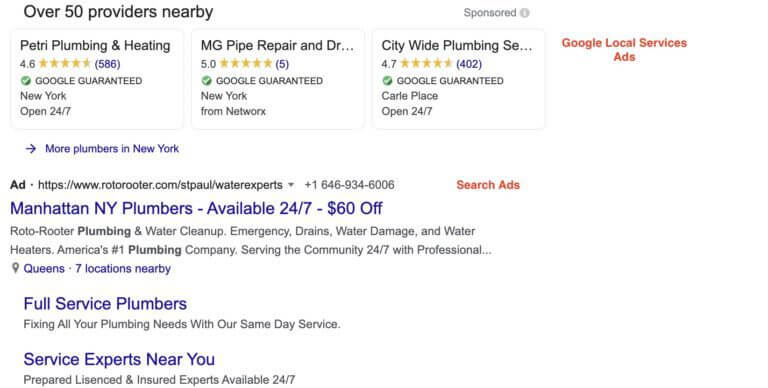
Local Service Ads
Local Services Ads appear at the top of Google’s search results page, just above the organic results. Plumbers with a defined service area can use Local Services Ads to target consumers in their specific neighborhoods.
When someone Googles your services (e.g., “emergency plumber in Brooklyn”), your ad will appear with your plumbing company name, Google rating, service hours, and a link to your website.
Search Ads
Search Ads also appear at the top of Google’s search results page and include a headline, description, and URL that sends users to your website to learn more or request a service.
How to set up Google Ads
- Decide if you’ll run Local Services Ads, Search Ads, or both
- Set your service area and choose plumbing services to advertise
- Create clear ad copy that highlights emergencies, fast response, or key services
- Link ads to a landing page or booking form that makes it easy to request service
- Set a budget and monitor performance weekly
KPIs to track:
- Leads from paid ads
- Cost per acquisition (how much you spend to get one new customer from your ads)
- Conversion rate from ad clicks to booked jobs
4. Send service reminders and offer deals with email marketing
Email marketing for plumbers can be an effective way to keep your business top of mind for customers who may need your services down the road.
To make this digital marketing strategy work for your plumbing business, think of specific topics or calls to action (CTAs) that will resonate with your audience. For example:
- Remind customers of required/recommended maintenance (e.g., preventative plumbing maintenance)
- Share helpful information or plumbing tips to build brand loyalty (e.g., how to shut off your water or signs of a failing water heater)
- Offer seasonal reminders to help customers keep their plumbing running smoothly (e.g., ways to avoid a burst pipe in the winter)
To send effective marketing emails faster, use a tool that prepares email templates and audiences for you.
When you use Jobber to create email campaigns, you can choose from premade templates, populated with your company branding, that are built for specific goals and customers.
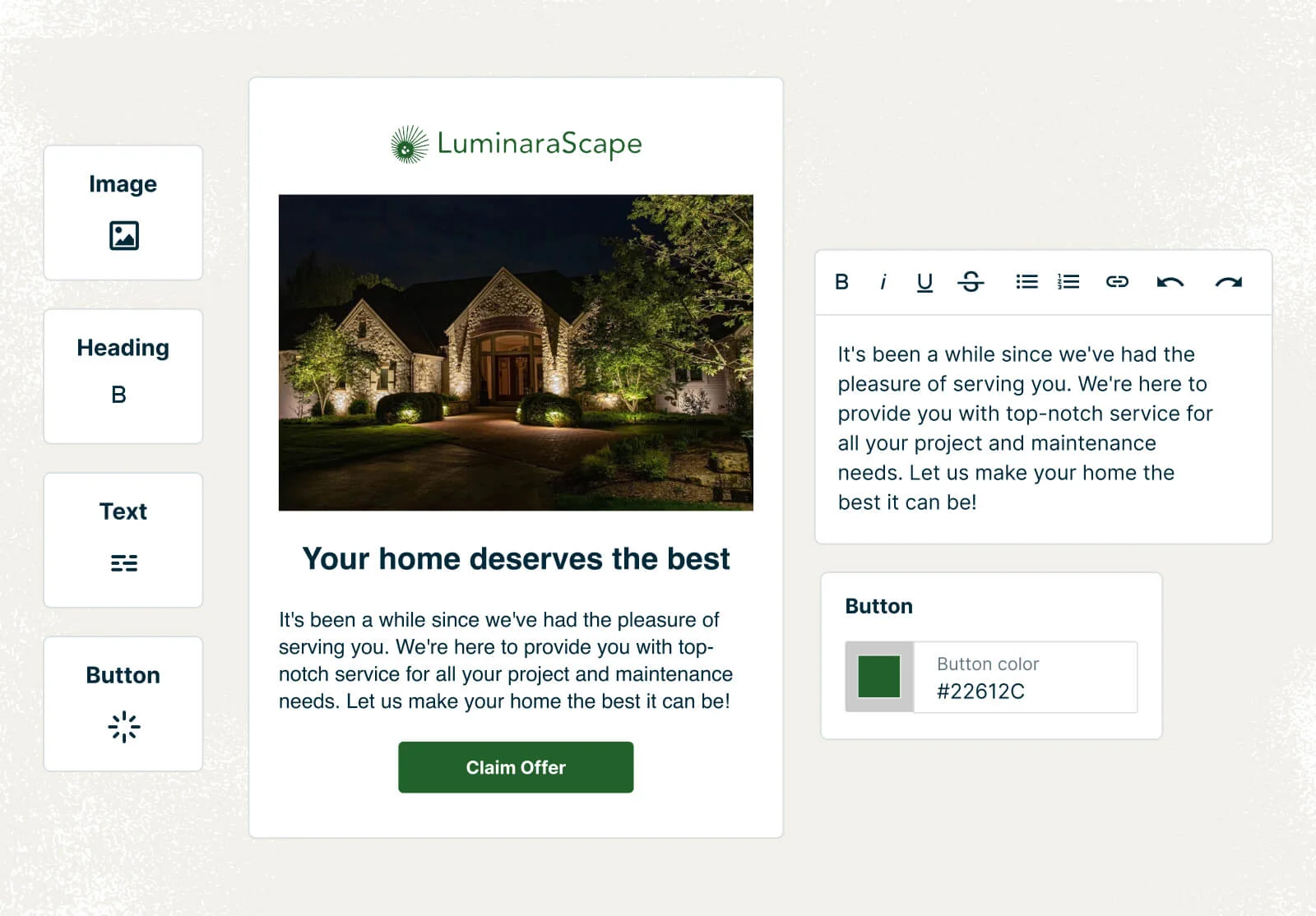
After editing the email with details on your plumbing services, you can edit your client segments. This means you can choose which group of clients you want to email, like all clients or past clients.
You can even select clients using tags, job history, or by a particular plumbing service you provided.
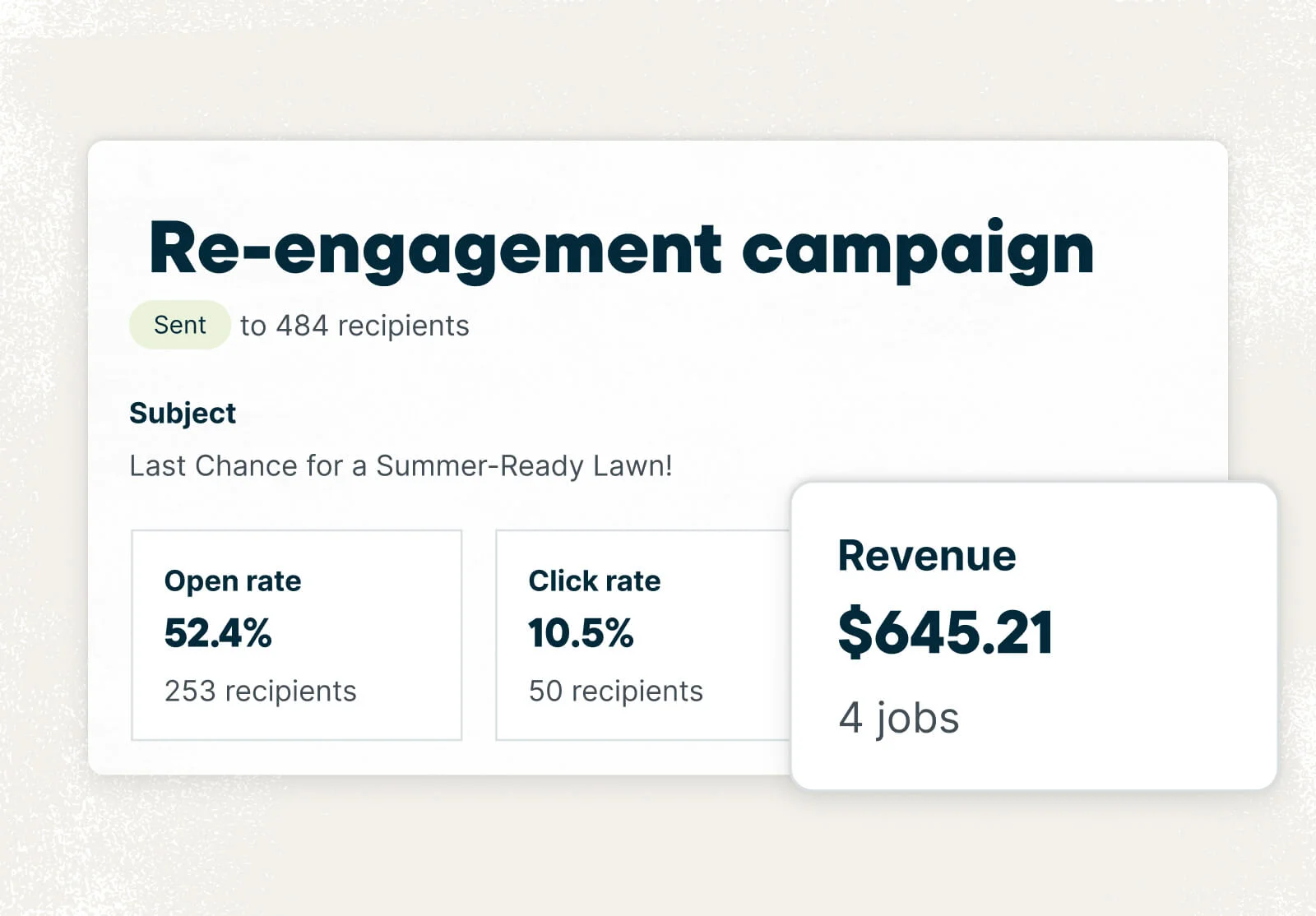
Then, track your success over time from a simple dashboard. For every email marketing campaign you send in Jobber, you’ll see the number of customers who opened the email, clicked on a link, or converted into a job.
How to set up email marketing
- Get started with Jobber for easy-to-use email templates
- Decide on your goal, such as reminders, seasonal tips, or special offers
- Write clear subject lines and simple calls to action (i.e., what you want your customer to do next, like call your business)
- Segment your audience based on job history or service type
- Schedule emails and review performance after each send
KPIs to track:
- Leads from email campaigns
- Cost per acquisition
- Conversion rate from email clicks to booked jobs
READ MORE: Best Apps for Plumbers: 12 Must-Have Tools for Better Operations
5. Get targeted plumbing leads through lead generation websites
Listing your plumbing business on lead generation websites can put you in front of consumers who are actively searching for your plumbing services—with little effort on your part.
These platforms are best if you offer maintenance services or bathroom or kitchen remodels. Just bid on the jobs you want and send quotes to prospective customers.
You can also use lead sites to collect customer reviews and improve your brand’s reputation.
Pro Tip: Many of these sites run on a pay-per-lead or subscription model, and costs can add up quickly. Make sure to set a monthly budget and define your plumbing service area and service offerings to get quality leads for your plumbing business.
READ MORE: Thumbtack for contractors: a complete guide to the lead generation platform
How to get customers through lead generation sites
- Choose reputable lead generation websites that serve your area
- Create a detailed profile with services, pricing info, and photos
- Define your service area and job types you want to receive
- Set a monthly budget and monitor cost per lead
- Respond quickly to new leads and send clear, professional quotes
KPIs to track:
- Leads from lead generation platforms
- Cost per acquisition
- Conversion rate from quotes sent to booked jobs
6. Turn your plumbing website visitors into potential customers
Your plumbing website is your digital business card and the command center of your business’s online presence.
Here’s an example of a plumbing website that includes all the necessary elements.
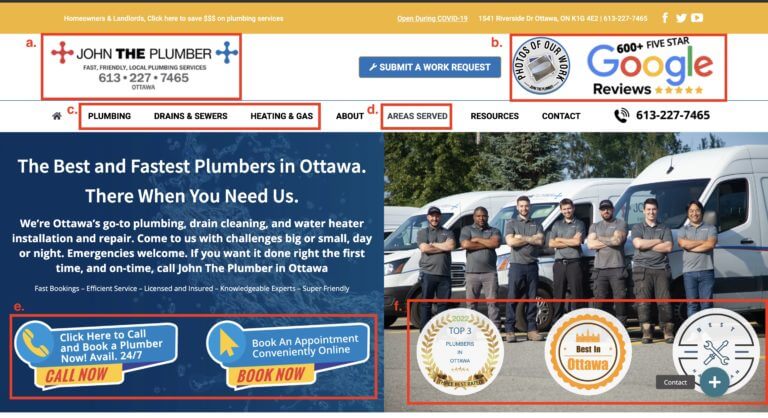
What this plumbing website example does right:
a) Company branding: Gives your business a clear, recognizable identity so customers instantly know who they are hiring.
b) Reviews and social proof: Builds trust by showing real customer experiences, star ratings, and proof that you do quality work.
c) Service offerings: Shows customers what kinds of work they can hire you for, so they can quickly confirm you handle the work they need.
d) Areas served: Helps visitors quickly determine whether you can service their area.
e) Prominent call-to-action (CTA): Encourages customers to request service or get a quote right away and helps turn website visits into booked jobs.
f) Recognition and awards: Builds credibility and trust (this is not necessary, but if you have won any local awards, be sure to showcase them!)
To get more plumbing leads through your website, make sure to include content like:
- Your business name, logo, and contact information
- Before and after photos and testimonials to vouch for your work
- The plumbing services you offer
- The locations you serve
- An easy way to request work or book services online
- What makes your business different (plumbing certifications, awards, and accreditations)
Optimize your website for search engines
Local SEO (search engine optimization) is a digital marketing strategy that small business owners use to rank higher on a search engine results page.
You can choose to optimize your website yourself or hire an agency or freelancer who specializes in SEO services.
Here’s how to add plumbing SEO to your website:
- Make your business name, contact information, and service area visible on every page of your plumbing website
- Include key terms or phrases a customer would use to search for your services, such as “residential plumbers,” “plumbing emergency services,” or “24-hour plumbers.”
- Register your website with local directories like Google My Business, Yelp, or Bing Places.
Pro Tip: Use Google Analytics to track the performance of your website, like how many visitors you’re getting and how long people are staying on your site.
How to attract customers with your plumbing website
- Make sure your website clearly lists services, service area, and contact details
- Add strong calls to action for booking or requesting work
- Upload photos, testimonials, and trust signals like certifications
- Optimize pages with local keywords and service-specific terms
- Track performance using Google Analytics and adjust as needed
KPIs to track:
- Leads from website forms and calls
- Cost per acquisition
- Conversion rate from website visitors to booked jobs
7. Set up your Facebook Business page
To market your plumbing business effectively, you need to reach potential customers where they hang out—this is where social media marketing comes into play. Facebook is one of the largest and most effective social media platforms for advertising your plumbing services.
With 2.9 billion monthly active users, using Facebook as part of your marketing strategy will put your plumbing business in front of thousands of potential customers.
If you’re just starting your plumbing business or haven’t yet created an account, start by setting up your business page.
Then optimize your Facebook business page to include information about your plumbing business, your team, images of completed jobs, and customer reviews.
Share images, videos, and other plumbing content
Use your Facebook business page to share content relevant to your plumbing business, like:
- Helpful DIY videos
- Before-and-after images of your plumbing jobs
- Blogs or plumbing industry news
- Special deals on your plumbing services
Pro Tip: Once your social media account is up and running, use Facebook’s paid ads to target your specific audience (by neighborhood, age, or income) and reach new customers faster.
How to set up your Facebook business page
- Create or claim your Facebook Business page
- Add your business details, service area, and contact information
- Upload photos of your team, completed jobs, and customer reviews
- Post helpful content like tips, before-and-after images, and promotions
- Test paid ads to reach customers in your target service area
KPIs to track:
- Leads from Facebook
- Cost per acquisition
- Conversion rate from page visits or ads to booked jobs
8. Build trust with positive customer reviews
Before customers invest in your services, they need to trust your business. This sense of trust is especially key because, as a plumber, you’re likely entering a customer’s home in unpleasant or stressful situations. The way you build this trust is through testimonials from existing customers.
You can boost your reputation by asking for positive online reviews from happy customers. Once you have a good number, you can promote these reviews with tools like:
- A review or testimonials page on your website
- Posts on your social media platforms
- Marketing materials like van wraps or flyers
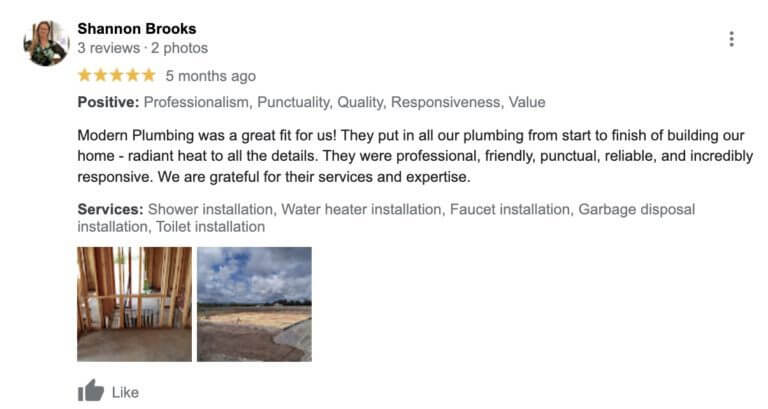
Take Modern Plumbing, for example. Within a short three-year span, they racked up more than 250 glowing reviews, helping them rank above their competitors on search results.
If you want to grow your business fast, reviews are the way to market.
By the time someone’s read our reviews, they’ve made up their minds. It’s led to growth that doesn’t cost us anything.
To ensure you ask every satisfied customer for a review, set up automatic review collection in Jobber. Jobber automatically sends a text to the customers you want reviews from.
When you make an invoice in Jobber, you can choose if you want to send the customer a review request.
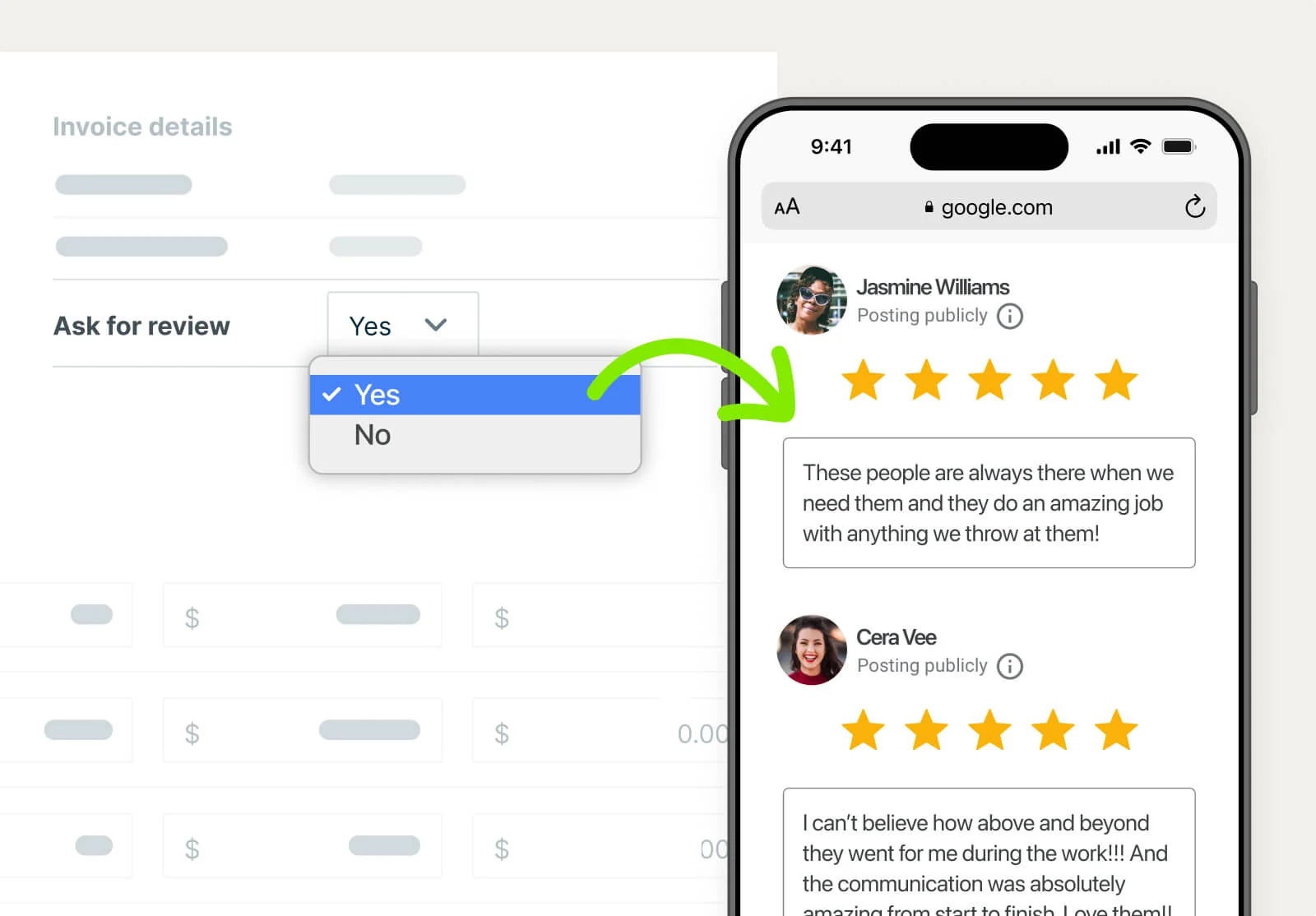
After paying their invoice, those customers will automatically get a direct link to leave a review on your Google Business Profile.
From your reviews dashboard in Jobber, you can keep an eye on your average Google rating. You’ll also see your latest reviews and resources on how to manage your business’s reputation.
When customers are leaving reviews, you want them to be as descriptive as possible
“Instead of saying, ‘These guys did a great job,’ you want them to be able to say: ‘Tom’s plumbing company in Tampa really did an amazing job with my new toilet installation.’
That is going to boost local ranking factors to Google.”
How to start requesting positive reviews
- Enable automatic review requests in Jobber
- Choose which customers should receive review texts after invoicing
- Monitor reviews and ratings from your Jobber reviews dashboard
- Respond to reviews to strengthen trust and credibility
KPIs to track:
- Leads influenced by online reviews
- Number of new reviews earned each month
- Conversion rate from review views to booked jobs
9. Win more referrals with a customer referral program
Your best customers can also be your plumbing business’s best advocates. Start a customer referral program to turn great customer service into a plumbing marketing strategy for your plumbing company. Here’s how:
Provide exceptional customer service
Give your clients something to talk about when referring potential customers to your business by providing a high level of customer service.
As a business owner, plumbing software can help you respond quickly to emergency calls, impress your customers, and streamline your business. It can also help you:
- Notify your customers of your ETA with on-my-way text messages
- Get feedback from an existing customer on your services with follow-up emails
- Use a CRM for plumbers to track important client details to deliver personalized service
- Let customers request work, approve estimates, and pay invoices 24/7 through your client hub
Know who and how to ask for a referral
Be selective with who you ask for a customer referral. If you received complaints from the client or had pushback on your pricing, you’re better off thanking them for their business and moving on.
A good rule of thumb—only ask customers who have offered positive feedback or thanked you for a job well done. Happy customers are far more likely to refer friends and family members to your plumbing business.
You can ask customers for a referral in person when the job is done, in a follow-up email, or even with a note on your plumbing invoice.
READ MORE: How to start a referral program—4 simple steps to success
Offer incentives to sweeten the deal
Encourage customers to refer family and friends by offering small rewards, like discounts on future services, branded products, or gift cards for every successful referral.
Pro Tip: Don’t limit yourself to referrals from your customer base. For example, try getting referrals from other plumbers in the area. Reach out to plumbers who offer services you don’t, and agree to refer customers who are not a good fit for your business. They can do the same for you. This creates a win-win partnership that keeps more work in your local network and helps businesses grow.
How to set up a customer referral program
- Identify happy customers who gave positive feedback
- Ask for referrals in person, in follow-up emails, or on invoices
- Offer a simple incentive like a discount or small reward
- Use Jobber to send follow-up messages and track customer history
- Keep a record of referrals and thank customers for successful leads
KPIs to track:
- Leads from referrals
- Cost per acquisition
- Conversion rate from referred leads to booked jobs
10. Create and share expert plumbing content
Create interesting, educational, and shareable content that positions you as an industry expert and keeps your services top of mind for prospective customers.
Start by writing a list of topics for what you know best. Then choose whether you want to write a blog post or film a video to address the subject matter.
Plumbing blogs
A blog post allows you to go into greater detail about a plumbing topic—for example, “common DIY plumbing mistakes and how to fix them.”
Create a blog webpage on your plumbing website and update it regularly with new content to educate and empower your customers.
Pro Tip: Get more content inspiration by checking out the best plumbing blogs and resources.
Let’s say you do plumbing installation, plumbing repair, faucet installation, toilet installation. Instead of just having one web page dedicated for all your services, you want to make sure that each service that you offer has a dedicated landing page
Plumbing videos
Video marketing can help your plumbing business reach a wider audience and demonstrate the solution to a plumbing issue—like “how to light a water heater pilot light.”
You don’t need a full camera crew to create an effective plumbing video. Use the camera on your smartphone to:
- Livestream an installation or repair on Instagram or Facebook
- Record demonstrations or product reviews
- Answer frequently asked questions
Then share your videos on your social media platforms, your plumbing company’s YouTube channel, and your website.
How to set up content marketing
- List common plumbing questions and problems your customers ask about
- Choose whether to create a blog post or a short video
- Keep content simple, helpful, and easy to understand
- Share it on your website, social media, and Google Business Profile
- Post consistently to stay visible and build authority
KPIs to track:
- Leads from content channels
- Cost per acquisition
- Conversion rate from content visitors to booked jobs
11. Reach out to a homeowners association (HOA)
Get in touch with HOAs in your service area and tell them about your business and plumbing services. If they’re not already partnered with a plumbing company, ask them to call you first the next time a plumbing emergency arises.
Pro Tip: To find homeowners associations in your area, search “HOAs in [town/county]”.
How to connect with local HOAs
- Search for local HOAs in your service area
- Contact board members or property managers directly
- Introduce your plumbing services and emergency availability
- Provide your contact details, service list, and credentials
- Follow up periodically to stay top of mind
KPIs to track:
- Leads from HOA partnerships
- Cost per acquisition
- Conversion rate from HOA inquiries to booked jobs
12. Partner with a local builder
Connect with local builders to see if they have any upcoming projects that will need the design or installation of water systems.
Share your knowledge, experience, and pricing to see if your plumbing company will be a good fit.
How to partner with local builders
- Identify local builders and construction companies in your area
- Reach out with a short introduction and overview of your services
- Share your experience, pricing approach, and availability
- Ask about upcoming residential or commercial projects
- Stay in touch to build long-term partnerships
KPIs to track:
- Leads from builder partnerships
- Cost per acquisition
- Conversion rate from project inquiries to signed jobs
13. Use vehicle wraps for on-the-go advertising
Van wraps are like mobile billboards—promoting your business to new customers in your service area as you and your technicians drive from job to job.
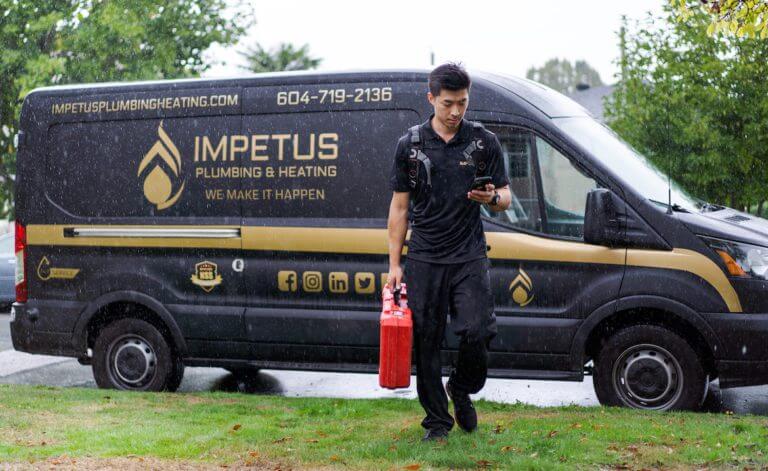
A well-designed van wrap helps increase name recognition, reinforces professionalism, and makes it easier for potential customers to remember who to call when a plumbing issue comes up.
How to add a wrap or decal to your vehicle
- Design a wrap that clearly shows your logo, phone number, and services
- Use bold colors and easy-to-read fonts for visibility
- Hire a professional installer for a clean, durable finish
- Apply the wrap to all service vehicles for consistent branding
- Track where and when customers mention seeing your van
KPIs to track:
- Leads from direct phone calls or inquiries
- Cost per acquisition
- Conversion rate from brand impressions to booked jobs
14. Distribute flyers to local neighborhoods
Flyers are a simple and effective way to introduce your plumbing business to new neighborhoods or promote a limited-time offer. If you’re just getting started or expanding into a new area, distributing flyers door-to-door can help you quickly build local awareness.
Flyers are also useful for highlighting seasonal services or special promotions, giving homeowners a clear reason to take action and contact you.
How to get started with flyers
- Design clear, branded flyers with your services and contact details or QR codes
- Highlight a specific offer or seasonal service
- Choose targeted neighborhoods in your service area
- Distribute flyers door-to-door or at community boards
- Add a unique phone number or code to track responses
KPIs to track:
- Leads from flyers
- Cost per acquisition
- Conversion rate from flyer responses to booked jobs
15. Offer customer giveaways and freebies
Customer giveaways can keep your business top of mind long after the plumbing job is over. Items like fridge magnets or branded stickers can act like convenient reminders of who to call for future repairs or routine maintenance.
- Leave behind fridge magnets with your name, logo, and contact details so customers can easily find you again.
- Place branded stickers on installed or repaired plumbing equipment to reinforce your business identity and make it easy for customers to reach you quickly.
Pro Tip: Always include your logo and branding, contact details, a list of plumbing services, and what makes your business different from the competition. The easier you make it for customers to recognize and contact you, the more effective your marketing will be.
How to offer giveaways and freebies
- Choose useful items (at a good price) like fridge magnets or branded stickers
- Design them with your logo, contact details, and key services
- Leave giveaways behind after every completed job
- Place stickers on installed or serviced equipment
- Keep designs consistent with your overall branding
KPIs to track:
- Leads from repeat customers
- Cost per acquisition
- Conversion rate from returning customers to booked jobs
READ MORE: Plumbing business cards: your guide to design, printing, and distribution
Grow your plumbing business with Jobber
Jobber’s Marketing Tools help you strengthen your reputation and bring in more work, so you can focus on running your business. Here are a few ways to level up with Jobber:
- Get more customer reviews: Give your online reputation a boost by collecting more Google reviews through automated review requests.
- Create a better customer referral program: Simplify the referral process with a fully automated referral program, making it easier for customers to send new business your way.
- Drive repeat business with targeted email campaigns: Increase sales with a user-friendly email marketing tool that turns old customers into new revenue.
Attract customers and get more work with less effort
Whether you’re just starting your plumbing business or you’re already the local go-to plumber in your target market, online marketing (and a few alternatives) can help you get new leads fast.
And for many prospective customers, time is of the essence.
With plumbing software like Jobber, it’s quick and easy to send plumbing estimates, convert them to jobs, schedule service appointments, and invoice for a job well done—all with just a few clicks.
Originally published March 2019. Last updated on December 5, 2025.
Frequently Asked Questions
-
You can track success by monitoring metrics like leads, cost per acquisition, and conversion rate. Tools like Google Analytics and Jobber’s reporting dashboard help you see which channels bring in the most jobs.
-
Digital marketing strategies for plumbers include optimizing a Google Business page, local SEO, Google Ads, and customer reviews. Email marketing and social media also help keep your business top of mind for repeat customers. The best approach is often a mix of strategies that target emergency and maintenance needs.
-
A plumbing website helps potential customers find your services and contact you quickly. When your website is optimized for search engines, new customers can find you at times when they need your services most. Additionally, having a reliable and user-friendly site makes it easy for visitors to request work, helping you secure more business and establish your clients’ trust.