
Key takeaways:
Starting an HVAC business can be rewarding and profitable if you follow a clear, step-by-step process to set up your company, win clients, and manage operations.
- Get qualified and licensed. Start with the right certifications, apprenticeships, and any required contractor licenses for your area to legally perform HVAC work.
- Build a solid foundation. Decide on the services you’ll offer, create a thorough business plan, secure funding, choose your business structure, and register your company name.
- Handle legal and financial requirements. Obtain all necessary business licenses and insurance, set up business banking and accounting systems, and track every dollar coming in and going out.
- Assemble your toolkit. Invest in essential tools and safety gear for HVAC work, and use software to stay organized as your business grows.
- Set smart pricing. Price your services to cover your costs and generate profit, factoring in overhead, competitors’ rates, and value-added services for clients.
- Promote and grow the business. Use a mix of branding, online presence, advertising, and word-of-mouth to attract clients. Manage your reputation and leads with CRM tools, and hire technicians as the company expands.
- Avoid common mistakes. Maintain insurance, stay on top of cash flow and invoicing, price correctly, market consistently, and provide excellent customer service to build a thriving company.
Level up your HVAC business knowledge and get helpful tips delivered monthly—sign up for the Jobber Newsletter. Sign up here.
It’s a great time to start an HVAC business if you’re a certified HVAC technician who’s ready to be an entrepreneur. You just need to learn how to set up your company and win your first HVAC customers.
Follow our 12 steps to launch your business and start making a living doing the work you love.
Learn how to start an HVAC company in 12 steps:
-
Get your HVAC certification and license
-
Create your HVAC services list
-
Write an HVAC business plan
-
Get funding for your HVAC business
-
Choose and register your business name
-
Get your small business license
-
Invest in HVAC business insurance
-
Set up your business banking and accounting
-
Buy HVAC tools and equipment
-
Price your HVAC services
-
Promote your HVAC business to get clients
-
Hire HVAC technicians
1. Get your HVAC certification and license
To become an HVAC technician in most places, you need an HVAC certification. If you plan to run your own business, you’ll also need an HVAC contractor license. These qualifications are proof that you’re trained to do safe, high-quality work and follow regional trade standards.
Follow this guide to learn what qualifications you need to start a heating and air conditioning business based on where you live.
Take an HVAC certification program
Before working as an HVAC technician, you need certification from an accredited school or program. Most areas only require you to have a high school diploma before enrolling.
Here’s what HVAC certification looks like, depending on your location:
- United States: All HVAC technicians in the U.S. who service AC and refrigeration equipment need Environmental Protection Agency (EPA) certification, according to the Clean Air Act. You can get certified to service small appliances, high-pressure systems, low-pressure systems, or all types of HVAC equipment.
- Canada: In most provinces, refrigeration and air conditioning mechanics are required to get trade certification from a provincial government regulatory authority.
- UK: You need to complete a college course and apprenticeship before working as an HVAC contractor. There are many courses you can take to help you find a job as a trainee.
- Australia: You also need to complete a certificate course and apprenticeship before getting an air conditioning service license from the Australian Refrigeration Council (ARC).
Many countries require you to complete an HVAC apprenticeship before receiving your certification. This is a paid position under the supervision of a certified technician. You can become an apprentice through a trade school or through an HVAC company.
Optional certificates from organizations like North American Technician Excellence (NATE) or HVAC Excellence can also give you extra qualifications and make HVAC customers more confident in your skills.
Become a licensed HVAC contractor
While HVAC certification proves you have the knowledge and skills to work in the industry, an HVAC contractor license is the legal document that lets you service HVAC systems.
No matter where you live, you’ll likely need an HVAC trade license to operate legally and avoid penalties and fines. However, the process of getting your license varies from country to country:
- In the United States, each state has its own HVAC license requirements. This means you need official HVAC certification, a few years of apprenticeship experience, and a specific class of license.
- The UK and Canada don’t require HVAC contractor licenses, but Canadian technicians who work in AC and refrigeration need to be certified by a government-approved program.
- In Australia, anyone working with AC or refrigeration equipment needs a Refrigerant Handling Licence. See which type of refrigerant handling license you should apply for.
2. Create your HVAC services list
Decide what HVAC services you want to provide so you can prepare an accurate business plan—especially if you plan to offer a service that your competitors don’t.
Here are the most common HVAC installation, repair, and maintenance services you can offer to residential or commercial clients:
- Furnace repair
- Furnace tune-up and maintenance
- Furnace installation
- Heat pump installation
- Air conditioning repair
- Air conditioning tune-up and maintenance
- Air conditioning installation
- Air duct cleaning
- Indoor air quality testing
- Tankless water heater installation
- Energy efficiency upgrades
- Emergency HVAC service
To make your work more rewarding, offer services that you’re good at and enjoy doing. If you specialized in one type of service in trade school, that’s the service you should focus on.
READ MORE: HVAC technology trends that might impact your service offerings
3. Create an HVAC business plan
Your HVAC business plan is a roadmap outlining the big decisions that go into starting a business—for example, where you’ll operate, who your competitors are, and how you’ll reach ideal customers.
The business plan will also outline how much money you need to launch a successful HVAC business. Many investors and banks want to see a business plan as part of your business loan application, so it’s an essential step for getting financing.
Your business plan should include:
- Cover page with contact details
- Executive summary that outlines the basics of your business plan
- Business overview that explains what your HVAC business is and how/why it started
- Management summary introducing yourself and your qualifications (as well as any business partners)
- Financial plan you can show to potential investors, including your HVAC business startup cost, service pricing, and projected sales
- List of services you plan to offer
- Market research on your service area and competitors
- Customer analysis outlining your ideal customers and their HVAC needs
- Your business operations in more detail, like your workflow and equipment suppliers
- Marketing plan that shows how you’ll get customers (e.g., branding, advertising, social media, website)
4. Get funding for your HVAC business
HVAC business startup costs range from roughly $5,700 to $11,000 USD, depending on what equipment you need to purchase upfront.
Make a detailed list of every startup expense you’ll need to make, with estimated costs for each one. Your budget should include common HVAC startup expenses like:
- Everyday tools for HVAC work like a hammer, a step ladder, screwdrivers, tape measures, electrical testers, pliers, wire strippers, and cordless drills ($200–300)
- Air conditioning and refrigeration tools ($400–700)
- Personal protective equipment (PPE) and other safety equipment ($35–50 per person)
- Vehicle decals or wraps with your company branding ($1,500–5,000)
- Business license and insurance ($600–2,000)
- HVAC apps and other business software ($3,000+)
That cost will be higher if you also need to purchase a van or truck with enough room to transport equipment. A vehicle can cost anywhere from $15,000 to $40,000.
If you can’t use personal savings for startup costs, apply for a business loan from your bank. You can also look into government-funded programs like Small Business Administration Grants, Canada’s Small Business Financing Program, or UK Start Up Loans.
Consider meeting with a financial advisor during this process. They can help you identify startup costs, apply for a business loan, and make long-term financial decisions for your business.
Pro Tip: Sign up for a business bank account to keep all your personal funds separate from your business funds. This is a simple but essential step for building a profitable HVAC business.
5. Choose and register your business name
Pick an HVAC company name that’s professional, unique, and easy to remember. Then, register the name with your regional government.
Pro Tip: To check if your business name is available, Google “NAME + LOCATION” or run a quick search using your country’s trademark database.
Next, decide what business structure to operate your business under. These are your typical options for small HVAC businesses:
- As a sole proprietorship (U.S., CA) or sole trader (UK, AU), you have complete control over your business. This is the most common option for business owners working alone.
- If you’re starting an HVAC business with two or more partners, register your business as a partnership (U.S., CA, UK), or as a joint venture or co-operative (AU).
- If you’re worried about liability, incorporate your business as a limited liability company or LLC (U.S.), corporation (CA), limited company or limited partnership (UK), or company (AU). This protects your personal assets if you run into legal issues.
If you operate alone and your business name is different from your personal name, you can file your name as a DBA (a.k.a. assumed business name or fictitious business name).
Remember, each type of business is taxed differently, so do your research to figure out which type is best for you.
6. Get your small business license
Every business owner needs to have a business license and keep it renewed, usually on an annual basis. This ensures you’re operating within local laws and regulations.
Use these resources to find out what kind of business permit or license you need in your region:
- United States: U.S. Small Business Administration
- Canada: BizPaL
- UK: Licence Finder
- AU: ABLIS
Once you have a small business license, you can get your business tax number, which helps you keep your business above board and avoid issues if you’re ever audited.
7. Invest in HVAC business insurance
HVAC work can be dangerous—not just for you, but also for your customers and their homes. Insurance protects your business in case of injury, property damage, lawsuits, or other legal situations.
The right type of business insurance will protect your company and your customers. Talk to your insurance provider to see what coverage you’ll need for the HVAC services you offer.
Your HVAC business insurance will likely need to include:
- Property insurance for company assets, like office space
- General liability insurance in case of property damage or non-employee injuries
- Workers’ compensation insurance to cover medical and payroll expenses for injured employees
- Commercial automobile insurance to protect company vehicles on the road
- Professional liability insurance in case of company mistakes or contract issues
- Equipment insurance covering your tools in case of damage or theft
8. Set up your business banking and accounting
Set up a business bank account to keep your company’s cash separate from your personal money. This saves headaches down the road, and not just at tax time. It helps you see whether the business is making money and builds financial credibility if you ever need a loan.
With a business account in place, you can:
- Get clean numbers when tax season rolls around
- Start building credit under the business name (not just yours)
- Watch cash flow in real time, especially during slow seasons
- Keep bookkeeping from eating up your evenings
Next comes budgeting. Map out your monthly expenses, which should include your paycheck, insurance, overhead, supplies, and marketing. You can always adjust this budget later.
You’ll also want a system for tracking every dollar that comes in and goes out. Income from installs, emergency repairs, maintenance contracts—it all counts. Staying organized throughout the year makes filing taxes less stressful, no matter who you report to:
- Internal Revenue Service (U.S.)
- Canada Revenue Agency (Canada)
- Companies House (UK)
- Australian Taxation Office (Australia)
READ MORE: 30 small business tax deductions to save money when filing
Accounting software like QuickBooks helps too. Track expenses, view income at a glance, run payroll, and sync with field service apps to stay even more organized.
QuickBooks Online also integrates seamlessly with tools such as Jobber, to enhance its accounting features.
With Jobber’s QuickBooks Online integration, you can easily sync your customer information, timesheets, invoices, and more automatically from Jobber to QuickBooks, making it easy to manage your business from one place.
9. Buy HVAC tools and equipment
Now that you know what services you want to offer, you can narrow down what equipment to buy. Here are the most common HVAC tools you’ll need in your bag:
- Basic hand tools like screwdrivers, wrenches, pliers, hammers, drills, gauges, metal and tubing cutters, staple guns, extension cords, and flashlights
- Safety tools and PPE like gloves, boots, masks, goggles, and earplugs
- Advanced HVAC tools like core removal tools, multimeters, thermal imaging tools, leak detectors, megohmmeters, phase testers, nitrogen regulators, and refrigerant scales
New HVAC contractors typically spend $200–300 on basic HVAC tools and safety equipment. The amount you spend on advanced tools depends on what kinds of services you provide.The most important tool in your toolbox is HVAC software. Jobber helps you dispatch estimates faster and keep track of every repair and installation, all in one place.
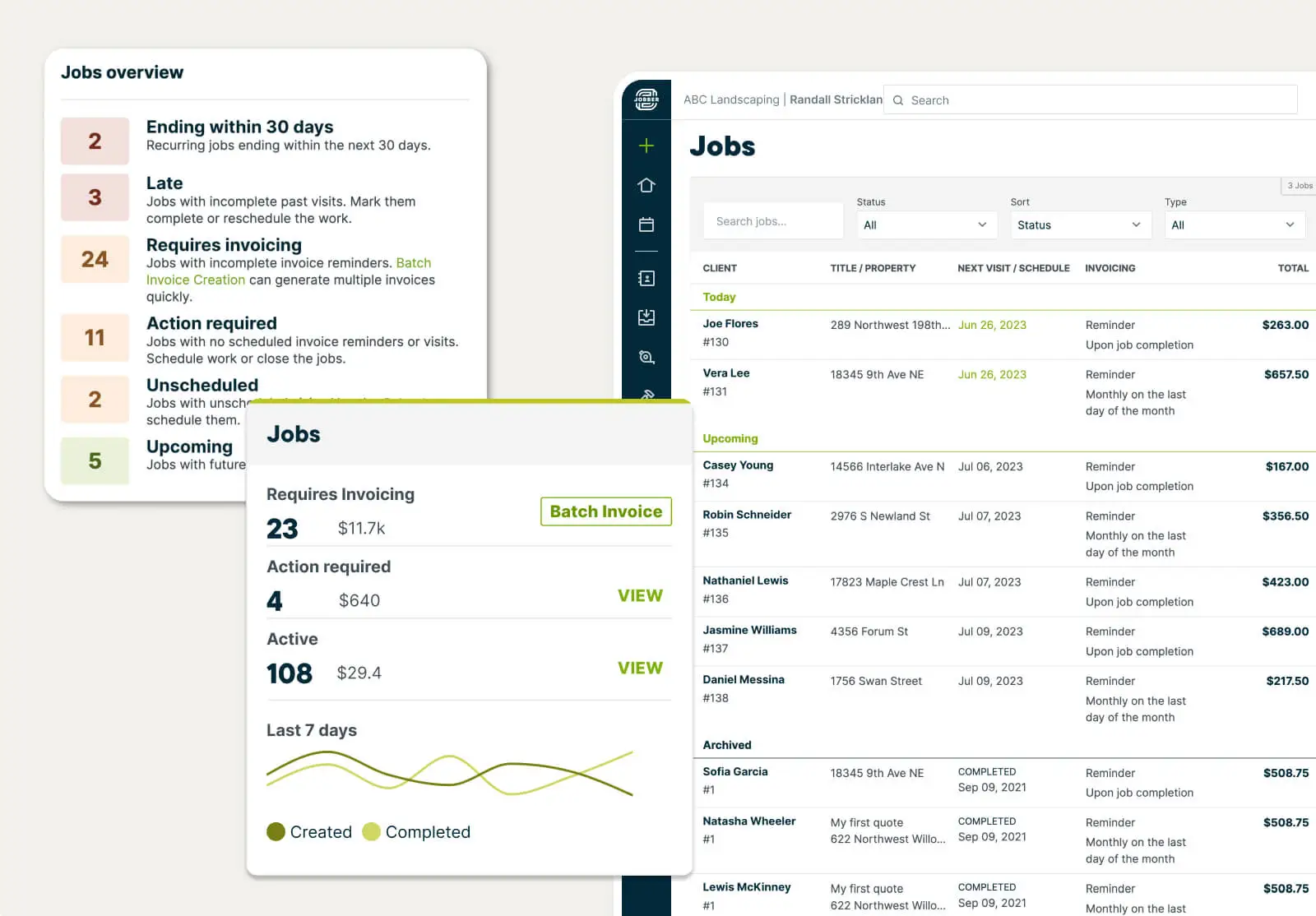
[With Jobber], you can do everything on your phone in your van. Because you’re gonna be on the go 24/7.

10. Price your HVAC services
To run a successful HVAC business, you need to set prices that cover your expenses and make your business profitable. Here are some common pricing strategies you can use for HVAC jobs:
- Hourly rate: Hourly rate pricing is based on how long it takes you to finish a project, plus material costs. This pricing structure can help you profit more on time-intensive or commercial HVAC contracts. They’re also useful when you’re unsure how long a job will take.
- Flat rate: Flat rate pricing lets you set one predictable cost for the entire job. This type of pricing works well when you know how much time the job will take (e.g., $325 for a two-hour air conditioning repair job). Flat rates can be reassuring for customers who want a firm price.
- Labor and materials pricing: You can break out labor and materials on your HVAC estimate so customers know how costs are distributed. This can be helpful for some customers who want to see how much the materials cost.
Flat rate pricing is one of the most commonly used methods for HVAC businesses. It ensures technicians work faster and smarter while removing the risk of customers trying to negotiate a lower price.
When you’re pricing HVAC jobs, remember to:
- Research your competitors to find out average prices in your area
- Determine what markup you need for a healthy HVAC business profit margin
- Figure out what optional services you can offer to increase your total quote prices
Once you’ve decided on your service prices, create an HVAC pricing chart that lists your service costs. This will help you easily provide accurate and consistent HVAC estimates to clients. When you’re ready to send estimates, you can package them up into a professional HVAC proposal.
Pro Tip: HVAC service pro Adrian Garcia advises new business owners to build their van stock by charging enough on repairs to cover consumables like gases and cleaners, and to start stocking spare parts. For example, when replacing a motor or thermostat, buy an extra to keep on hand. Use the first jobs to cover these costs, which will help you operate more efficiently and profitably over time.
FREE TOOL: Price your HVAC services for profit with our free service price calculator
The tech doesn’t have to waste time looking up a price.
[With Jobber] we were able to customize our invoices exactly how we wanted to. I can already have it pre-loaded with all the common prices.
11. Promote your HVAC business to get clients
A solid marketing strategy is essential to winning your first customers and running a successful HVAC company. Try these HVAC marketing strategies and start reaching new customers right away:
- Brand your business. Building a brand gives your business its own personality—and it tells every potential customer you’re a pro. Create a logo and choose company colors for your business cards, your employee uniforms, and all your marketing materials.
- Set up an online presence. When you build an HVAC website and Google Business Profile and optimize them both with HVAC SEO (search engine optimization), your business will show up in searches for HVAC services. You can also set up profiles on the social media platforms where your ideal customers spend time, like Facebook and Instagram.
- Run eye-catching ads. By running HVAC ads on Google and social media, you can reach ideal customers in the places where they spend time online. You can also reach customers at their homes by sending out flyers, postcards, and other print ads.
- Do email marketing. Promote special offers, referral programs, and new services. Email campaigns keep your company top of mind. Always offer something that potential clients may find valuable, like a discount on their first tune-up.
- Go door-knocking. New HVAC entrepreneurs typically rely on word of mouth to promote their businesses. Try getting your first few HVAC leads by knocking on doors and leaving tearaway flyers around your neighborhood.
- Manage your online reputation. On the internet, your reputation is everything. Encourage satisfied customers to leave reviews on platforms like Google, Yelp, and Facebook. Respond to reviews—both positive and negative—to build trust. Reply to comments on your social posts to show you care.
When potential customers start to contact you about your HVAC services, use an HVAC CRM to store all of your customer information in one place.
It’s much easier to manage and grow your HVAC business when you can quickly find the customer and job details you need.
Jobber’s Marketing Suite helps you build a strong reputation that attracts more customers and secures more work with less effort. Here’s what’s included:
- Reviews: Give your online reputation a boost by collecting more Google reviews through automated review requests.
- Referrals: Simplify the referral process with a fully automated referral program, making it easier for customers to send new business your way.
- Campaigns: Increase sales with a user-friendly email marketing tool that turns old customers into new revenue.
12. Hire HVAC technicians
When you have more business than you can handle alone, it’s time to find HVAC professionals and grow your team.
Hiring HVAC technicians to take on field work will give you more time to focus on sales, marketing, scheduling, and everything involved in running and growing your business.
Start by getting an employer identification number (EIN) for your business if you’re in the U.S. Then follow this process to find and hire qualified HVAC technicians:
- Decide if you want to hire dispatchers or handle HVAC dispatching yourself
- Understand what salary range you’ll need to pay your technicians
- Write an HVAC technician job description and share it on job search websites like Indeed
- Prepare a list of HVAC interview questions to ask before you hire them
- Check their references and ask for a police background check
- Prepare to train your employees once they’re hired (or make sure they already have the training and licensing required to provide your company’s services)
- Pay your team competitive wages and offer a great work environment
READ MORE: Hiring your first employee: when and how to do it successfully
How profitable is an HVAC business?
HVAC businesses can be quite profitable, with profit margins often ranging between 10-20%. The national industry average is 12%, and that percentage can vary depending on the company, region, and target market.
Small- to mid-sized HVAC businesses can generate annual revenues of anywhere between $50,000 to $500,000+. Profitability depends on factors like:
- How effectively you manage your overhead expenses and pricing strategies
- Whether you provide ongoing maintenance contracts
- If you’re willing to sell energy-efficient products at a premium
- How well you deliver on top-rated customer service
Is starting an HVAC business worth it?
If you have the right skills, knowledge, and drive, it’s worth starting an HVAC business. You can set your own hours, choose your own customers, and make an average salary of $57,767 a year as an HVAC business owner. Some business owners even earn over $100,000 annually.
You can also look at these success stories:
- Trust Home Comfort increased revenue by $200k in one year
- VMech Mechanical Contractors grew to a $1.5 million HVAC business from the ground up
Common mistakes to avoid when starting an HVAC business
While running your own HVAC business can be incredibly rewarding, it also comes with risk. Try to avoid these pitfalls to give yourself the best chance of success:
- Forgoing insurance. It’s tempting to put this off to save money early on. But one accident or injured worker can erase months (or even years) of hard work.
- Not managing cash flow. You can be booked solid and still broke if money goes out faster than it comes in. This happens when invoices lag behind payroll, fuel, and runs for parts.
- Underpricing your services. Charging too little might keep the phone ringing. But it’ll drain your energy and bank account, especially when the cost of materials goes up or a small job turns into a full day.
- Letting estimates and invoices go cold. Not following up on quotes and overdue invoices quietly bleeds revenue, even though the work is already done. This is where HVAC invoicing software can help.
- Not marketing the business. Only relying on word of mouth won’t work in the long run. You won’t be visible online during slower seasons when homeowners stop calling.
- Bad customer service. Missed calls, vague arrival times, and a lack of explanations will make customers uneasy. And those customers won’t leave positive reviews or refer their friends to you.
- Targeting the wrong customers. For example, focusing on residential calls when your area has more steady demand for light commercial or maintenance contracts.
- Marketing in the wrong place. Posting everywhere instead of where your ideal customers are (local Facebook groups, Google search results, truck signage, etc.).
- Failing to explain what makes you different. If you offer things like indoor air quality testing or duct sealing, but never mention it, customers probably won’t figure it out.
Start your HVAC company today
We hope we’ve given you the foundation to start your business. And when you’re ready, we’ve got the recommendations on how to run your HVAC business, too!
If you need a little extra support while you’re getting started, come back to this HVAC business startup checklist—and check out our other HVAC business resources.
Frequently Asked Questions
-
To become an HVAC technician and start your own HVAC business, you need:
• A high school diploma
• Completed apprenticeship and certification through an accredited trade school/program
• Certification from the Environmental Protection Agency (U.S.), provincial government regulatory authority (CA), or Australian Refrigeration Council (AU)
You can also choose to get certified through North American Technician Excellence or HVAC Excellence to add extra qualifications to your HVAC resume. -
Requirements vary by location, but most areas call for formal HVAC training through a trade program or apprenticeship. In the United States, EPA certification is required for refrigerant work, and states often mandate an HVAC contractor license. Canada, Australia, and other regions have their own trade and refrigerant credentials. Optional certifications like NATE or HVAC Excellence can help build trust.
-
Start by confirming your local HVAC certification and licensing rules and completing those steps before taking jobs. Then:
• Register the business
• Choose a legal structure
• Secure a business license and tax ID
• Double-check permit requirements using official resources like the SBA, BizPaL, Licence Finder, or ABLIS -
You’ll need proper HVAC training and certification, any required contractor license, and a clear idea of the services you’ll offer. From there, it’s the business basics:
• A simple plan
• Startup cash
• Business registration and licensing
• Insurance
• Tools and safety gear
• A pricing setup
• Simple marketing, like a logo and a website
• Basic outreach -
It costs roughly $5,700 to $11,000 USD to start an HVAC business. That cost could be higher if you need to purchase a company vehicle or if you need to buy more specialized equipment.
-
How long it takes to start an HVAC business will depend on your experience level and how quickly paperwork and funding move. Here’s an estimated breakdown:
• HVAC training and certification: Six months to four years, depending on whether you’re in a trade program, apprenticeship, or already certified
• Contractor licensing and permits: 2-12 weeks, depending on state or regional approval timelines
• Business registration and insurance: 1-3 weeks
• Funding and tools: 2-6 weeks, and potentially longer if financing is involved
• Pricing and operations setup: 2-4 weeks
For already-certified technicians, the full startup process may only take 1-3 months from planning to taking your first paid job. If you’re starting from scratch, the timeline can be up to four years, with most of that time spent on training and credentials.
-
Begin with the basics, like consistent branding, a clean website, and a Google Business Profile. Add simple outreach like flyers, business cards, and door knocking. Then expand into Google ads or social platforms as needed, using an HVAC CRM to track leads and follow-ups.
-
HVAC business software like Jobber makes it easy to dispatch estimates faster and keep track of every repair and installation, all in one place. Here’s how Jobber can help your business:
• Streamlined estimates & work orders: Get your estimators on the ground doing what they do best: closing. With Jobber you can quickly convert approved quotes into jobs to be dispatched immediately or scheduled for a future date.
• Simple dispatching: Easily view team availability and location. Dispatch them to the right place with a crystal-clear work order.
• Rapid invoicing & payments: View, track, and send invoices in just a couple of clicks, and make it easy for customers to pay you online.
“Before using Jobber, we used paper invoices. It was taking a long time for us to get paid. Now, using Jobber, it’s all in one app, and we invoice and bill a lot quicker. And that means we get paid a lot quicker.”
—Adrian Garcia, Reliable Kitchen Services
Originally published in May 2019. Last updated on January 15, 2026. This article was reviewed by HVAC pro and Jobber Brand Ambassador Adrian Garcia of Reliable Kitchen Services. He was compensated for his time and contributions to this article. You can follow him on Instagram and YouTube.