
Key takeaways:
Running a successful electrical business involves combining strong operational strategies with great customer service and smart marketing.
- Build a solid business foundation. Regularly update your business plan, understand industry profit margins, and focus on profitable services to ensure sustainable growth and profitability.
- Invest in team and process growth. Hire skilled electricians as your workload increases, develop clear operational systems, and use technology to streamline scheduling, quoting, and invoicing.
- Use effective marketing to attract ideal clients. Create a strong online presence with a professional website and Google Business Profile, leverage local SEO, and implement referral and email marketing programs to generate steady leads.
- Keep your pricing competitive yet profitable. Use a mix of hourly, flat-rate, and tiered pricing, accounting for all expenses to ensure healthy profit margins, and know when to raise prices based on demand and rising costs.
- Deliver excellent customer service. Use a CRM to track client details, offer convenient self-serve portals, automate reminders, and collect reviews to enhance client trust and satisfaction, leading to repeat and referral business.
Want more tips to grow your electrical business? Sign up for the Jobber Newsletter.
Your electrical business is up and running—now it’s time to scale and make it successful. That means marketing to more ideal customers, making jobs more profitable, and growing your team.
In this guide, we’ll share tips from electrical industry experts for how to grow your electrical business, including proven ways to manage and organize your operations.
Everything you need to know about how to run a successful electrical business:
-
Is running an electrical business profitable?
-
How to create an electrical business plan
-
How to grow a small electrical business
-
Marketing your electrical business
-
Pricing strategies for electrical contractors
-
Delivering exceptional customer service
-
Invoicing and getting paid faster
-
Hiring and building your electrical team
-
Staying current with industry trends
Is running an electrical business profitable?
Yes, running an electrical business can be profitable if you manage your money properly.
But a profitable electrical business isn’t just about how much money you make. It’s about your pricing strategy, your expenses, and the quality of your work. While it would be great to generate $1 million in revenue, it wouldn’t mean much if your expenses are $950,000.
Running a truly profitable business means having a healthy client base, competitive pricing, and conservative overhead costs. This model protects your cash flow and allows you to comfortably navigate seasonal dips and delayed invoice payments.
Average electrical contractor profit margins
The average electrical contractor profit margins are 45%–65% for gross profit and 8%–20% for net profit.
Gross profit is the total profit after subtracting direct costs like equipment, labor, materials, and subcontractors. Net profit is the total profit after subtracting total expenses like tools, insurance, vehicles, administration, and office space.
Smaller and newer electrical businesses are likely to be on the lower end of the net profit margin at 2–8%, while more established and successful businesses are hitting more than 20%.
Here’s a look at the electrical industry average for gross and net profit margin.
| Type of profit margin | Low | Medium | High |
|---|---|---|---|
| Gross profit margin | Under 45% | 52–65% | Above 65% |
| Net profit margin | Under 8% | 12–20% | Above 20% |
Want to make your business more profitable? Jobber’s AI-powered business insights analyze your operations and recommend specific changes, like raising prices on underpriced services or following up on unconverted quotes.
How much do electrical business owners make?
Electrician business owners make $60,000–$150,000, depending on how much money the company makes.
As an electrical business owner, your earnings are tied directly to the success of the business. The more revenue you make, the stronger your profit margins. The stronger your profit margins, the more you can afford to pay yourself. For example:
- For new businesses where the owner is likely still taking on tasks at the job site, they’ll earn similar to an employed electrical contractor—between $60,000–$90,000.
- As a business grows and takes on a fleet of vehicles (three or more trucks) and employees, the owner can expect to bring home between $100,000–$150,000.
- Once an electrical business scales up into commercial contracts, there’s an opportunity for the owner to make more than $200,000 per year.
Most profitable electrical services
The most profitable electrical services are residential service and repair jobs, like emergency calls, panel upgrades, and EV charger installations. These are often simple jobs that mean a lot to the client, so they’re willing to pay for their immediate electrical needs.
Let’s look at the average gross profit margins for our residential examples (and a few extras):
| Residential service | Gross profit margin | Reason |
|---|---|---|
| Emergency service call | 45–55% | High urgency service with higher labor costs but fewer materials |
| Panel upgrade | 40–50% | More material costs and higher demand |
| EV charger installation | 40–50% | Growing demand and necessary equipment |
| Generator installation | 40–50% | Bigger contract price with high equipment costs |
| Smart home wiring | 40–50% | Specialized skills required, with potential for post-installation support |
| Whole-home rewiring | 30–40% | Labor intensive and complex construction |
For residential electrical work, you can earn more by charging a flat rate instead of working hourly. That’s because the demand for this work outweighs the time it will take to complete. You want to price each job fairly, but also make it worth your time and effort.
Track your profit margins in real time with Jobber’s built-in reporting. See which services are most profitable, which customers generate the most revenue, and where you’re losing money. You can also calculate your profit margins using Jobber’s free tool.
How to create an electrical business plan
A business plan is your guiding document to running a successful electrical company. This blueprint tells your team and investors who you are and how you operate.
Whether you’re a new entrepreneur or an established electrical business looking to scale your team, you need a solid business plan. It helps you keep track of your services, pricing, marketing strategies, operations plan, sales projections, and more.
Include each of these key components of an electrical business plan:
1. Executive summary
An executive summary is the elevator pitch for your business. This section should highlight who you are, what you do, and why you can thrive in the electrical industry.
Your executive summary should also highlight your current or projected team size, your service area and potential plans for expansion, and business goals over the next three to five years.
2. Company description
Your company description is the mission statement for your business, as well as the legal and operational structure.
This section gives you the opportunity to shed more light on the makeup of your business, your licenses and certification, insurance coverage, and unique offerings that separate you from competition.
3. Market analysis
Market analysis helps explain how you’ll run a successful electrical business in your service area. It identifies who your competition is, the demographics of your potential clients, and the overall demand for electrical services.
It also helps you establish a baseline that can be adjusted over time. For example, are there any new competitors in your service area? Are younger families moving into the neighborhood? Has the average salary changed?
It’s a good idea to study your competitors and take note of what they do well. If they’re using electrician software to send invoices and get paid faster, you should, too.
4. Electrical services
Your business plan should include a detailed list of all the electrical services you offer—and even ones you don’t offer.
Group the type of work you provide into categories to present more versatility where you can. For example, you can list emergency troubleshooting, panel replacements, and EV charger install under “residential services” and standby generator install under “specialty installs.”
Look for opportunities to add, remove, or change any of your current electrical services to better meet your customers’ needs. You should also clearly state electrical work you don’t do, so that you aren’t taking on jobs that don’t fit your objectives or the capabilities of your team.
5. Marketing strategy
Based on your market analysis, you should have an active marketing strategy to keep up with your target customers. You might be targeting a new ideal customer, or needing to reach current customers in new ways to get more electrical leads.
Figure out where your ideal customer spends time and identify ways to reach them. If your audience is now spending time in community spaces and Facebook groups, these could be good places to advertise.
Break down your strategy into two areas: inbound emergency leads and outbound relationship leads.
- Inbound emergency leads are for people who need electrical services right away. This means they’ll find you through your Google Business Profile or Local Service Ads when they’re searching for emergency electrical services.
- Outbound relationship leads are for your other non-emergency work. Getting found means building a community on social media or partnering with property managers to get consistent contract opportunities.
6. Operations plan
Your operations plan is the detail that outlines how leads turn into jobs and money in the bank. It should explain your business processes that keep the company running smoothly, like scheduling, dispatching, quoting, and invoicing.
It should also describe how you deploy your team, manage your inventory, and stay up to date with safety and National Electric Code (NEC) compliance.
7. Financial planning
A financial plan is a complete view of your finances over a period of time—anywhere from 12 to 36 months. In this section you want to include your budget, expenses, and sales targets.
A clear breakdown of your business finances includes:
- Electrical contractor burdened labor rate to understand the complete cost of an employee (e.g., wages, taxes, insurance, vehicle expenses, etc.)
- Pricing strategy to understand where you use hourly or flat rate for services, with numbers reviewed regularly for changes in your services area and electrical industry updates
- Marketing budget to show where you plan to invest in brand awareness and lead generation opportunities to drive more business
- Cost of goods sold, such as employee labor and electrical material (e.g., copper wire, conduits, panels)
- Operating overhead, such as insurance, shop rent, administration, electrician software subscriptions, vehicle payments
- Sales forecast to project how much work you expect to do and how much revenue and profit you expect to make
SWOT analysis for electrical contractors
Another great exercise to add to your business plan is a SWOT analysis (strengths, weaknesses, opportunities, and threats). This can go in the market research section.
A SWOT analysis is a helpful way to identify obstacles and uncover opportunities for your electrical company.
- When you analyze strengths and weaknesses, take note of internal considerations like revenue, equipment and inventory, employees, and any processes or policies that are helping your business stand out.
- For opportunities and threats, look for external factors that may affect your business either positively or negatively, like industry trends, new technologies, competitors, or legislative regulations.
Pro Tip: Involve your electricians in your SWOT analysis. They can talk about the obstacles they face on the job, as well as any opportunities to add services, invest in new electrical equipment, or introduce new policies.
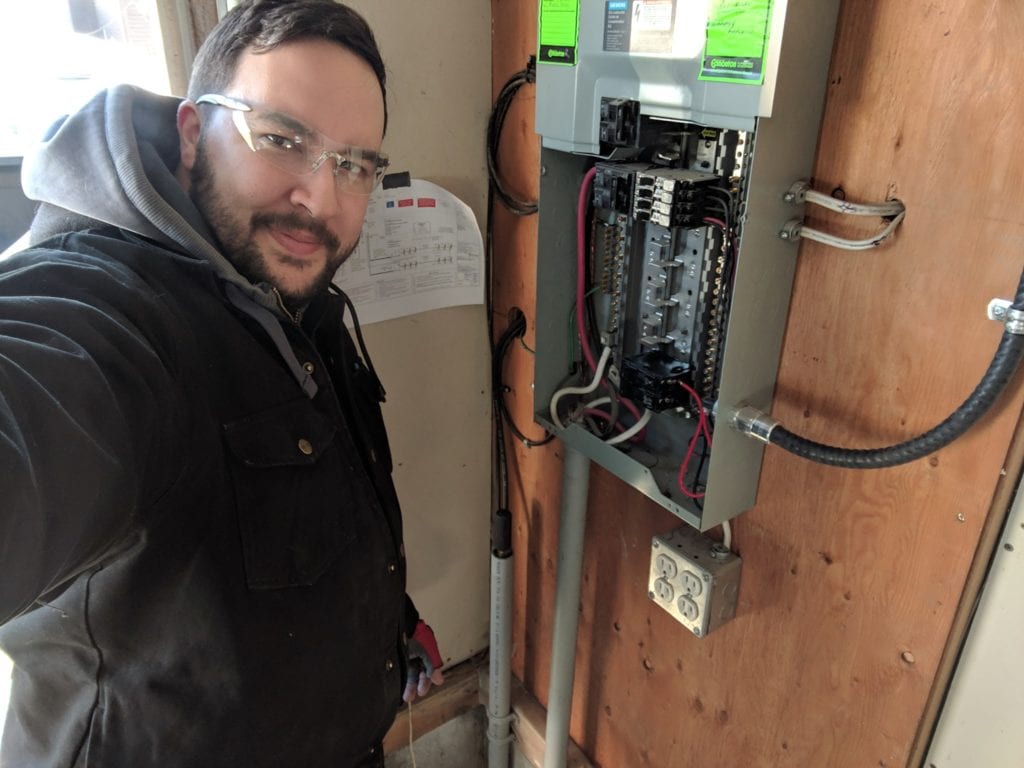
We’re not going to win because we’ve got the cheaper price.
We’re going to win because we were there first and because we do everything we can to win their trust and look more professional.
How to grow a small electrical business
Electrical business growth requires you to think bigger and go outside your comfort zone. Here’s how to move beyond day-to-day electrical work and scale your operations:
Expand your service offerings
The demand for electrical services is evolving and electricity consumption in the U.S. is expected to increase 2% every year until 2030. This means there is an opportunity for you to venture into new territory for your clients.
Handling emergency service calls and other standard electrical work like panel upgrades is great, but ignoring the new wave of technology could mean leaving money on the table.
Consider adding these newer types of electrical work you to your service offerings:
- EV charging infrastructure: As electric vehicles gain more popularity and market share, with a 26.7% increase in registered EVs in the U.S. in 2025, more people need charging infrastructure installed in their homes. You can start with single-home installs and work your way up to commercial fleet charging stations.
- Whole-home standby generators: With major power outages increasing 29% between 2018 and 2024, customers are in need of backup power to handle severe weather events and grid instability. Adding generator install to your service offerings is profitable and popular in many areas across the country.
- Solar panel installation: Your customers can reduce their energy bills when they improve their energy consumption and power supply. Solar panels equipped with battery backup systems are a great way for your business to stay on the cutting edge of clean energy.
- Smart home automation: Go beyond the standard smart lights and help your tech-focused clients install whole-home automation—from appliance controls to security systems.
Build recurring revenue with maintenance agreements
Recurring revenue provides peace of mind and a strong foundation for your business to grow. It’s great to have a busy calendar of one-off jobs, but you want more commitment for your business to maintain healthy cash flow.
Maintenance agreements are a great way to secure work long-term and build lasting bonds with residential and commercial clients.
- For residential clients, you can offer annual inspections and scans, discounts on additional services, and priority booking for a low monthly fee.
- For commercial clients, you can build a relationship with property managers and offer preventative maintenance contracts for all of their projects. This includes end-to-end coverage of panel testing, compliance and safety checks, and annual maintenance on properties like offices, apartment complexes, retail locations, and more.
Scale from solo to crew-based operations
Scaling from a one-person show to a multi-crew electrical business is exciting, but it can also be a slippery slope if you move too quickly and bypass important steps. Follow these tips for scaling:
- Know when it’s the right time to hire new employees. You should look to hire when you’re consistently turning down profitable work or when you’re booked out anywhere between two weeks to a month.
- Get electrician business software. Jobber’s scheduling and dispatching features make it easy to add a second truck without adding chaos. Your team sees their daily schedule, gets automated job reminders, and can access all job details from the Jobber app. As you scale from solo to a team, Jobber’s route optimization and GPS tracking help you run efficient routes and keep tabs on your crew’s progress throughout the day.
- Get off the truck. With a strong team coupled with an even stronger process, you can begin to step away from the job site and into the office. Your new focus is running the business, including marketing strategy, operational efficiency, and making sure your teams have what they need to succeed.
Start a strategic geographic expansion
Once your original service area is running smoothly and generating strong profit margins, you can begin to look into other areas to expand your small electrical business. Here are a few ways to get started:
- Assign an employee or small team to start canvassing a new location for leads and service contracts. As you get work and build relationships with a new client base, you’ll have a better idea whether expansion is possible.
- Keep your current location. Expansion into new territory takes time and patience, so continue to run all of your business operations out of your primary location to keep overhead costs low.
- Use relationships with property owners and builders to venture into new service areas. These strategic partnerships will help you secure long-term commitments while you service properties in other regions.
Moving into a new service area isn’t always about running your crews from afar. If your business is stable and your operations are running smoothly, you can look to set up franchises and license your brand to other electrical business owners.
To franchise properly, you’ll need to build a franchise development strategy that defines how you recruit new business owners, protect your brand standards, and provide the blueprint needed to replicate your success in new markets.
Marketing your electrical business
Business growth depends on effective marketing to reach more clients. Use these tips for your electrician marketing plan to promote your business and get new leads:
Build your online presence
- Create an electrician website that includes your service area, the services you offer, and an easy way for customers to request work or book services.
- Use electrician SEO and Google’s Local Services Ads to help local clients find your business on Google.
- Run electrician ads to reach customers as they’re browsing online.
- Get more electrical leads by setting up a profile for your business on lead generation websites.
- If you haven’t already, create profiles on social media platforms where your ideal clients spend time, like Facebook, Instagram, X, and TikTok.
Pro Tip: Use Google Analytics to see which marketing strategies are working the best and track how new leads are finding your business.
Local SEO and Google Business Profile
Make it easier for customers in your service area to find you in search engines with local SEO and a Google Business Profile.
Local SEO
By including the right keywords and consistent business information across the internet, you give yourself a better opportunity to be found in relevant searches by customers in your area.
- On-page keywords: Your website should include keywords and pages that users are looking for in their search for electrical services. Using terms like “emergency electrician” or “commercial electrician” throughout your website helps search engines understand the services you provide and how you help customers. You can go one step further by adding your service location to your keywords (e.g., “emergency electrician Austin”), so search results can focus on your service area.
- Local citations and NAP: Your business name, address, and phone number (NAP) need to be consistent across the internet. This includes your website, local business listings, lead generation sites, and any other references to your business. Consistency builds trust within search results and makes it more likely that customers will choose your business.
Google Business Profile
Your Google Business profile is a custom profile that helps you show up in search results and on Google Maps when people are looking for electricians in their area. Your profile should include:
- Company website URL
- Phone number
- Business hours
- Business address
- Business category (should be “electrician” or “electrical engineer”)
- Description of your business
- The electrical services you offer
- A profile image
- Customer reviews
With a strong profile, customers can easily find and contact your business through their local search results. Whether they use your profile or click through to your website, they’re one step closer to scheduling work with you.
Jobber’s online booking feature lets customers request electrical work directly from your website or Google Business Profile—no phone call needed. This captures leads 24/7, even when you’re on a job site.
Customer referral programs
Build a customer referral program to find new customers through your current happy customers. This kind of program rewards loyalty and word of mouth so customers tell others about your business.
A referral program is an incentive for existing customers to let their communities know about your services. For example, if an existing customer refers a new client, you can offer them 25% off their next job with you.
Referred customers are up to four times more likely to convert over colder leads. They also last as customers up to 37% longer and have a lifetime value up to 16% higher than non-referred leads.
There are a number of perks you can provide to existing and new customers as part of a referral. Try one of these customer referral program ideas:
- Double-sided incentives: This is a type of referral program that offers discounts to the existing client for making a referral and the new customer for opting to hire you. For example, an existing customer gets a free thermal scan and a new customer gets 15% off a panel upgrade.
- Referral contests: Let your existing clients get their name into a prize pool by bringing in new customers. You can give out discounts based on the number of referrals a client brings in, or the type of referral work you get, or by a random draw.
- Holiday and seasonal referral programs: Help your community prepare for seasonal changes by offering referral discounts for specific types of electrical work throughout the year.
Referrals are a massive part of our incoming leads.
The minute a referral or any other lead comes in, we enter it into Jobber as a request. That way, we can use Jobber as a kind of pipeline for new business.
Email marketing campaigns
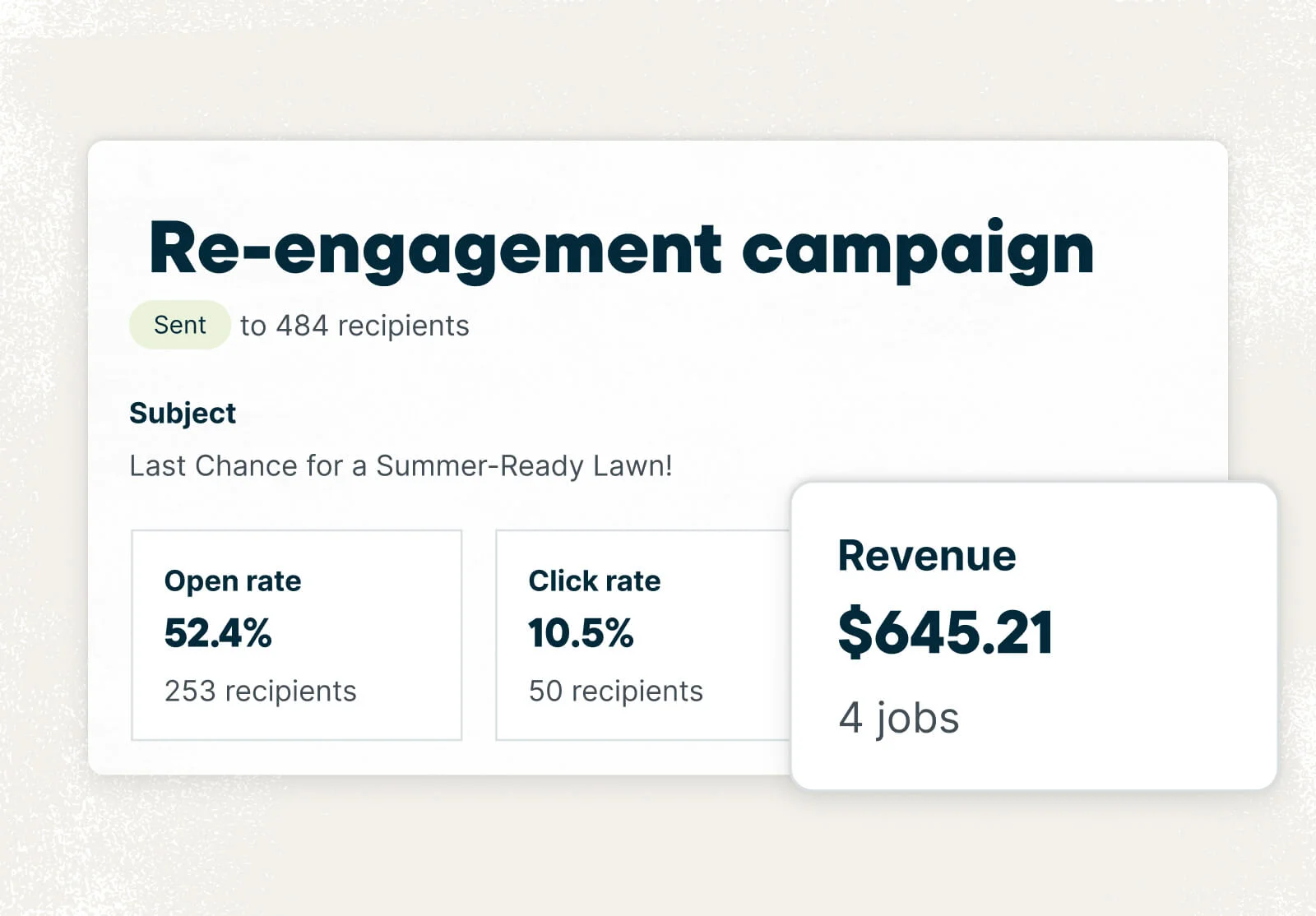
Send effective marketing emails faster with pre-made email templates and audiences using a marketing tool like Jobber. You can choose from premade branded templates built for specific goals and customers.

First, edit the email with details about your electrical services. Then edit your client segments to choose what group of clients you want to email—for example, past clients, all clients, or clients who received a specific electrical service.
Track your success over time from a simple dashboard. Every campaign sent in Jobber shows the number of customers who opened the email, clicked on a link, or converted into an electrical job.
Collect and manage online reviews
Having lots of positive reviews on your Google Business Profile makes it easy for potential customers to find you online. Get more reviews by setting up automatic review collection in Jobber.
When you make an invoice in Jobber, you can choose whether you want to send the customer a review request.
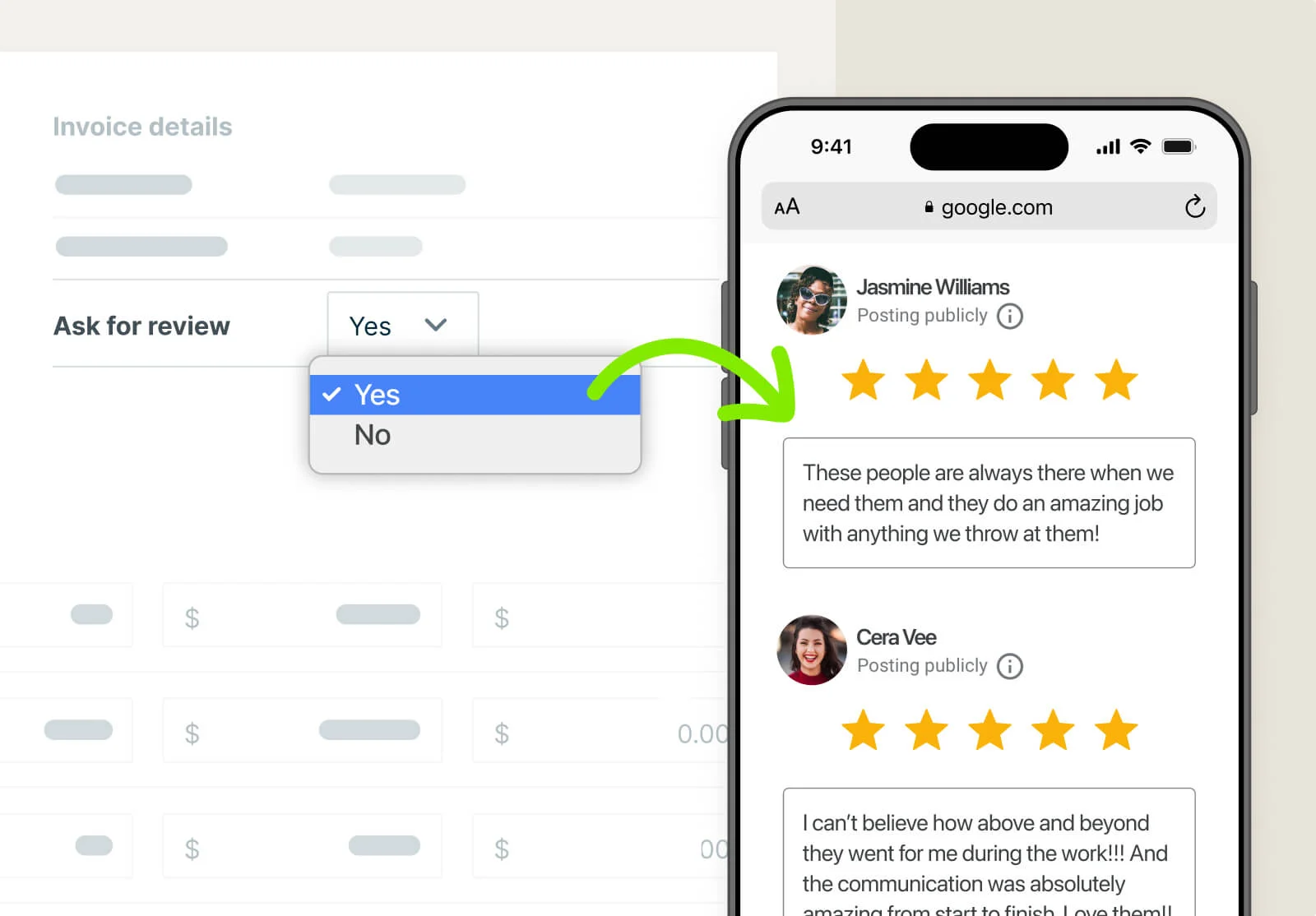
After paying their invoice, those customers automatically get a direct link to leave a review on your Google Business Profile.
Keep an eye on your average Google rating in the reviews dashboard in Jobber. You can also see your latest reviews and access resources for managing your business’s reputation.
Pricing strategies for electrical contractors
Pricing your electrical services is a balance between covering your costs, generating a healthy profit margin, and staying competitive within your service area.
The two primary methods of pricing are hourly and flat rate:
- Hourly is a combination of time and materials. This is best applied for jobs where the scope of the work is not completely clear prior to starting the job. In this case, the troubleshooting and repairs can take longer and you want to make sure you’re paid for the entire project.
- Flat rate is a consistent price for specific services, such as ceiling fan installation. This pricing is fixed and more focused on the outcome instead of the time it takes to complete the work.
Your electrical services pricing directly affects your business’s cash flow. When your prices are right, you have the cash flow you need to invest back into your business.
How to price electrical work for profit
Estimating electrical work for profit comes down to knowing your numbers. You need to understand your total overhead costs and expenses to run your business, as well as your target profit margin. Here are a few examples of what overhead costs and expenses can include:
- Employee wages
- Insurance coverage
- Electrician tools and equipment
- Electrician software subscriptions
- Office space
Your profit margin is what’s left over from a completed invoice once all your expenses are taken out. A healthy target net profit margin for an electrical business is 12%–20%.
Use this formula to calculate how much you need to charge for your services:
(Overhead costs + expenses) / remaining % of target profit margin
For example, let’s look at a 200amp panel upgrade with $270 of overhead costs, $980 in expenses, and a target profit margin of 15%.
($270 + $980) / 0.85 = $1,562.50
To cover your overhead costs and secure a 15% profit margin, you need to charge $1,562.50 for this panel upgrade.
READ MORE: How to write a price increase letter for customers
Good, better, best pricing for electricians
It’s also a great pricing strategy to offer good, better, and best packages for your clients to choose from. These tiers give you the opportunity to upsell your services and give clients more options without the added sales pressure.
- The “Good” package is your basic service offering that solves the customers immediate problem. It’s the most cost-effective option and doesn’t include any additional products or services.
- The “Better” package is a more appetizing bundle that combines your initial services with enhancements like extended warranties or more premium brands. This package is the most bang for the customer’s buck as it combines service with quality products.
- The “Best” package is a premium product and service offering with the most protection and convenience. These packages often come with top-of-the-line brands, lifetime warranties, and other features like a complimentary inspection after one year. Even if this package isn’t your best seller, it helps make the “better” package more affordable by comparison.
I send quotes with a good, better, best option.
It helps me upsell jobs to clients. They appreciate it, and they can choose what’s the best option for them.
When to raise your prices
Competitive pricing is essential for a growing business. It’s critically important to know when you should review and raise your prices to keep your electrical business profitable.
There are many factors that determine when it’s time to raise your prices. Some of these triggers are entirely within your control, while others are driven by shifting market trends and demand that happens outside your business.
Here’s a few indicators of when you should raise your prices:
- Your schedule is too busy. This is a good problem to have, but a calendar that’s booked out too far may signal that you’re underpricing your services. By raising your rates, you can focus more on high-margin jobs while keeping a manageable schedule.
- Material costs are rising. The cost of materials has a direct effect on your bottom line and profit margin. Raise your prices to offset the rising cost of materials like wire, conduits, panels, and more.
- You offer specialty services. Premium services like commercial EV charging installation, smart home automation, or whole-home generator installation require specialized technical skills. This level of experience should be reflected in your pricing.
Quoting electrical work
The faster you quote a prospective client, the better your chances are of winning their business. Here are three ways to speed up your quoting process:
- Use an electrical estimate template to send out estimates fast. Simply fill in your customer’s information and job details to create a professional-looking estimate in just a few clicks.
- Send quotes by email so customers can view and approve them from anywhere. You can also do this using a self-serve customer portal like Jobber’s client hub.
- Send quote follow-up emails reminding customers to approve their quotes. It’s easy for customers to forget they have an outstanding quote, and you may not always remember to follow up. That’s why Jobber automates your quote follow-ups for you.
Pro Tip: When you don’t win a job, find out why. Did competitors send quotes faster? Did they provide the client with multiple pricing options? Learn why they won and try to do the same—if it’s a good move for your business.
Delivering exceptional customer service
Build customer loyalty and get positive online reviews by offering exceptional customer service. The better your service, the more customers will stick around and spread the word about you.
Using electrician contractor software like Jobber can help you create a better customer experience, before, during, and after the job is done. Here’s how:
Use a CRM to keep track of client details
An electrical CRM makes it easy to manage information about your customers, from past jobs and estimates to property and personal details. It’s even faster to access this info on the go.
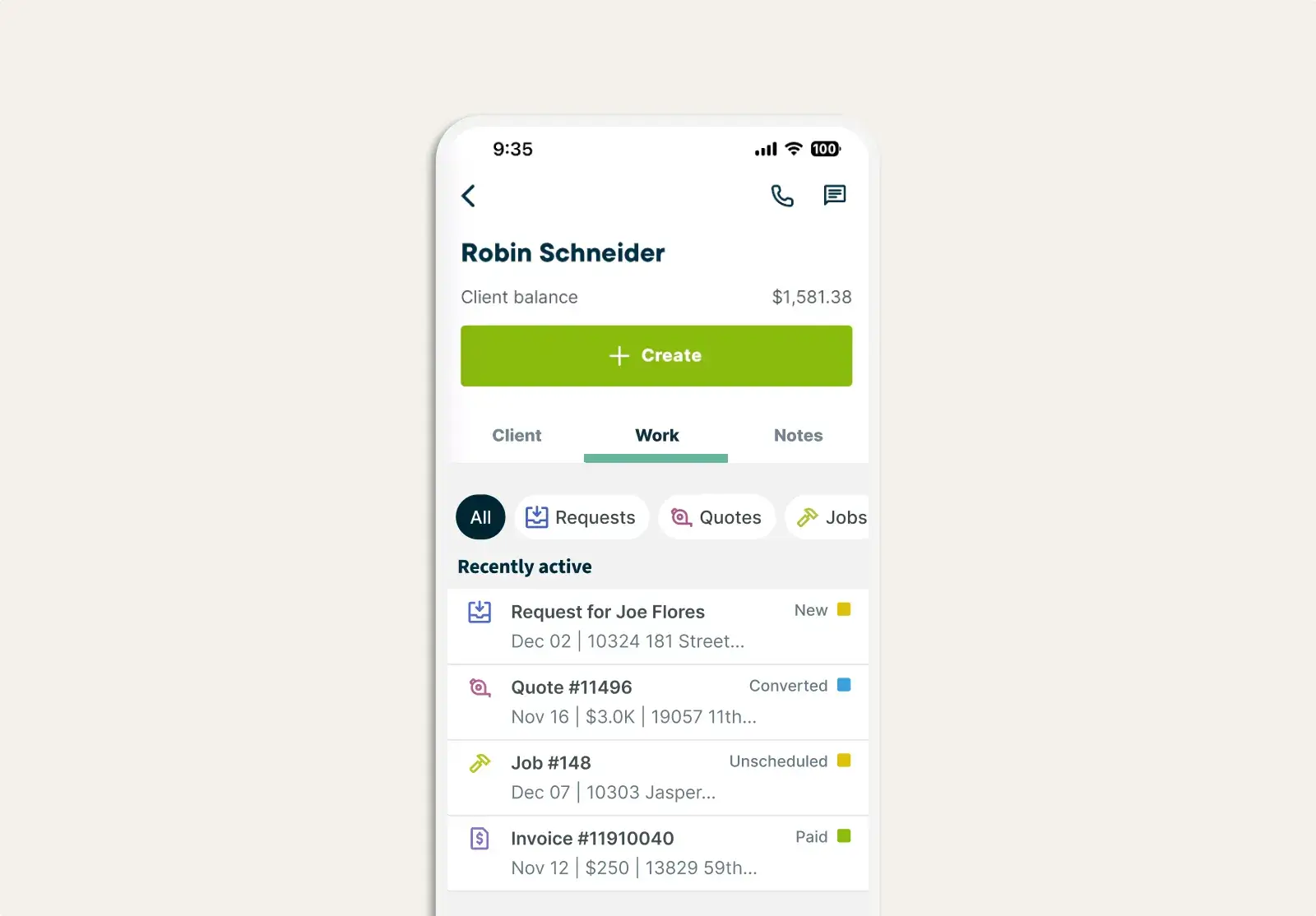
You can also impress the customer with your knowledge of their needs. For example, you can walk into their home—even years later—and already know where their electrical panel is.
Give clients a self-serve portal
Let clients request work, approve quotes, confirm appointments, and pay their electrical invoices on their own time. This is easy to do when you use electrical software like Jobber.
Jobber’s self-serve client portal lets clients view upcoming appointments, request changes to scheduled services, and pay their invoices online.
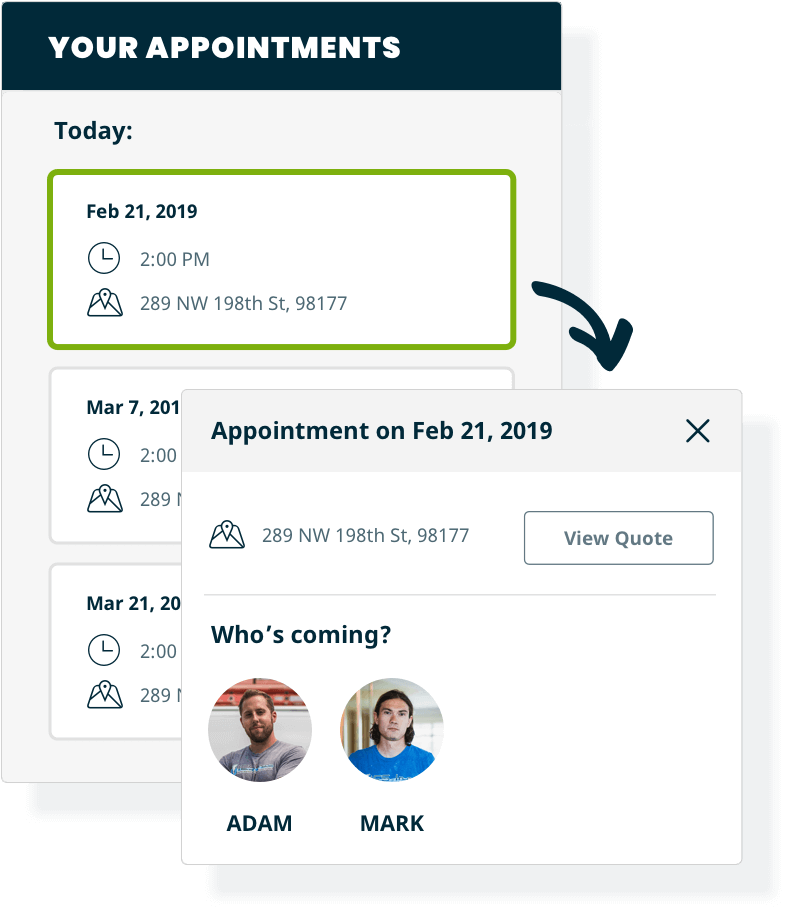
The client facing image is incredibly important to me.
I need the client to feel comfortable that they’re making the right decision, that they’re hiring a professional.
Set up automated reminders
Keep clients informed before, during, and after the job with appointment reminder emails, on-my-way text messages, and automated follow-ups.
Your customers will appreciate the reminders and updates, and they’ll see you as a more professional business—all without any effort on your part.
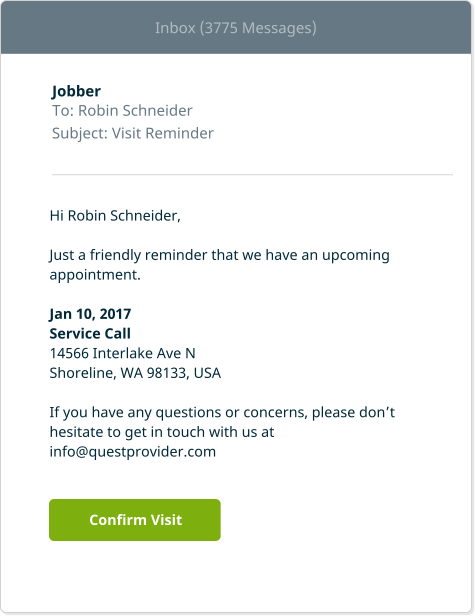
We’re able to communicate more efficiently with our customers.
The follow up texts and calls from Jobber [are] passive communication that we don’t have to be on top of. Jobber handles that for us.
Create job forms and checklists
Deliver consistent service on every job with custom job forms and checklists. You can be confident that your electricians did the job right, because every step is checked off for your records.
When the job is finished, you can share the completed checklist with your customers so they know what services were completed during your visit.
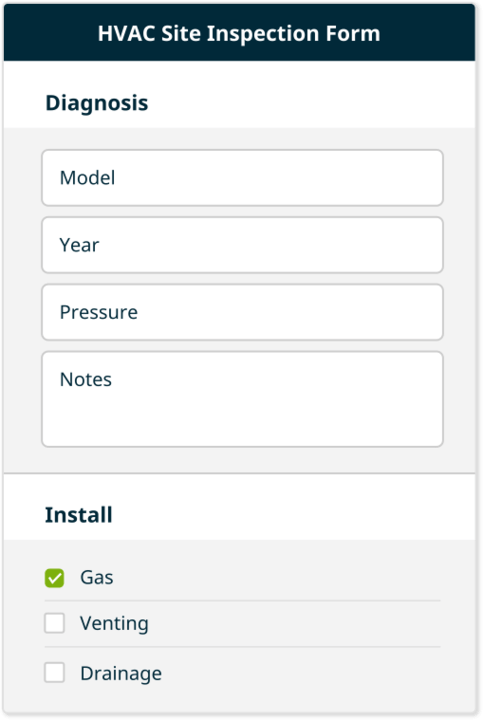
Pro Tip: Use job forms in Jobber to create electrical inspection checklists. Safety checklists help keep customers and employees safe throughout even the most dangerous jobs.
I get great feedback on client hub, the invoice reminders, and the customization.
That’s one of the biggest things that I tell people about Jobber. The client experience really is number one.
Invoicing and getting paid faster
Don’t wait to invoice customers. Unpaid invoices can hurt your cash flow, which can make it harder to pay your electricians and limits how much you can reinvest in your business. Paid invoices, on the other hand, speed up cash flow so your business can grow.
Using invoicing software helps you send professional invoices fast. When you’ve finished a job, just click a button to automatically invoice the customer for your services. Then sit back and wait for payment to arrive.
At the end of every site visit, I have everything I need to invoice the client right now.
I mounted lights just the other day and sent the client his invoice before I left his driveway.
Jobber also makes it easy to keep track of who’s paid and who hasn’t. You can easily see which invoices are outstanding and what jobs you still have to request payment for.
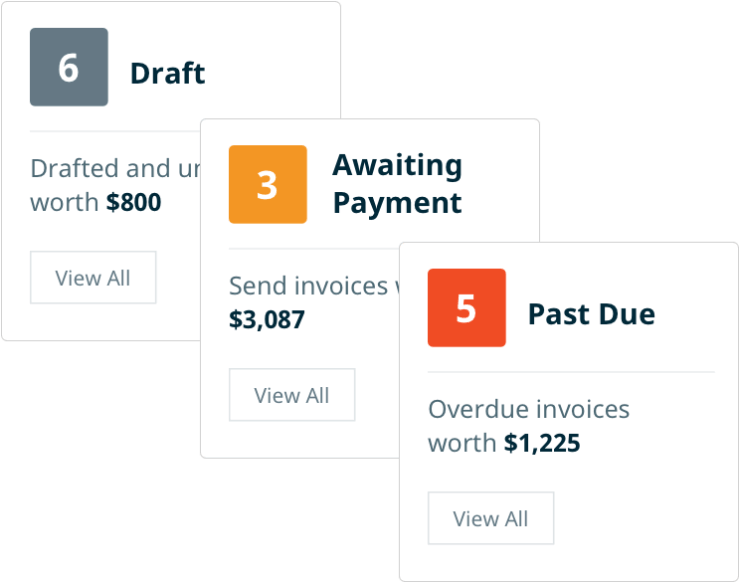
You can send automated invoice reminders to follow up with customers about overdue invoices. No more worrying about what to say to each customer—just send a templated request.

Finally, make it easier for customers to pay their invoices with credit card processing. It’s simple, it’s convenient, and it makes your business look even more professional.
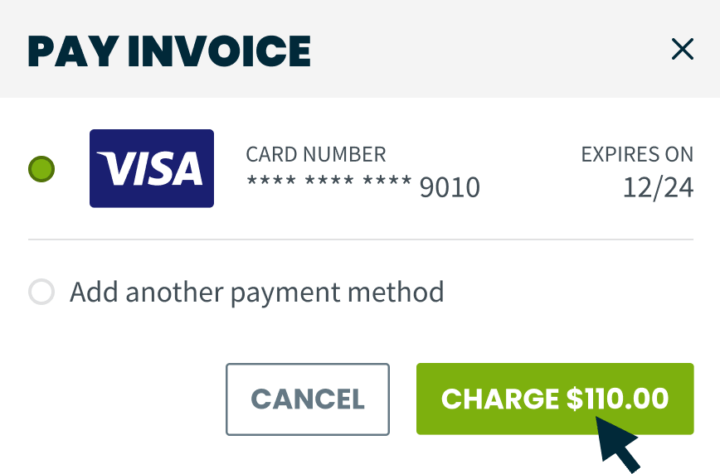
We use Jobber for processing all of our payments.
It’s made our life a lot easier. The girls in the office don’t have to trace back, call customers, try to get checks sent in, try to use other payment processing systems.
Hiring and building your electrical team
If you’re struggling to keep up with quotes, falling behind on paperwork, or in need of an electrical contractor with a specific skill set—it’s time to hire a qualified electrician.
Here’s how to find the best electrical contractors to grow your business:
- Write an electrician job description that includes a job title, list of responsibilities, list of required skills and experience, and any licensing requirements.
- Advertise your job posting through online job boards like Indeed or Monster, or on your business’s social media pages.
- Offer a competitive electrician salary that attracts workers with the right level of experience and dedication to the job.
- Schedule interviews and ask electrician interview questions that cover your ideal candidate’s skills, experience, and values.
Pro Tip: Talk to local trade schools or community colleges about apprenticeships and internships you can offer to students looking to become skilled electricians.
Staying current with industry trends
Keeping up with industry trends like pricing, marketing, safety, and licensing will help you beat the competition and win more electrical jobs.
Online electrical contractor resources and electrician blogs can offer a variety of tips and tricks on how to run a successful electrical business.
You can also network with other electrical professionals and business owners to get inspired by their successes and learn from their failures. The Jobber Entrepreneurship Group on Facebook is a great place to do that.
Run a better electrical business with Jobber
Whether you’re just learning how to start your electrical business or you’ve been operating for years, improving your processes can help you build a business that thrives.
The right electrical contractor software can help. Count on Jobber to improve your customer service, maintain cash flow, and simplify your operations.
Originally published in August 2022. Last updated on June 3, 2026.
Frequently Asked Questions
-
Running an electrical business can be highly profitable if you manage your money properly. Industry benchmarks show average gross profit margins are 45–65%, yielding a sustainable net profit margin of 8–20% after all expenses are subtracted. While newer electrical businesses typically start on the lower end at 2–8% net profit, more established and successful operations routinely achieve net profit margins above 20%.
A solid pricing strategy and manageable overhead costs and expenses will help you protect your cash flow from seasonal dips. -
Yes, you can make $100,000 as an electrician. Journeyman electricians in the top 3% make up to $105,500 per year, while the top 10% of master electricians make $104,000–$124,000 per year. The national average salary for an electrician in the United States is $61,391, but that can reach over $100,000 with experience, licensing and certifications, and specialized training.
-
Electrician business owners typically make between $60,000 and $150,000 per year, with their total earnings tied directly to the revenue and profit margins of the company.
While new solo owners working on the job site earn closer to $60,000–$90,000, growing the business into a multi-truck fleet allows owners to clear the $100,000 mark and bring home up to $150,000.
For operations that grow into large-scale commercial contracts, the annual payout for an owner can be more than $200,000. -
Starting an electrical business is a great idea because the trade is in high demand and the startup costs are relatively low. In addition to growing electrical consumption across the country and the surge in new technology like EV chargers and smart home tech, the demand for electrical services is only going up. For comparison, the number of registered EVs in the U.S. increased by almost 1 million vehicles between 2024 and 2025.
However, running an electrician business also comes with its own challenges. You have to manage strict licensing laws, insurance coverage and liability risks, all the administrative and financial responsibilities, and the physical toll of the work on you and your crews. -
Growing a small electrical business requires moving from a field technician to a business owner by implementing standard systems that expand your reach and secure predictable revenue. You can successfully grow your electrical business by focusing on these areas:
• Expand your service offerings. Offer high-demand, modern technologies like EV charging station installation, standby generator installation, solar and battery pack installations, and smart home automation to capture higher-paying clients.
• Earn more recurring revenue. Lock in consistent monthly cash flow and long-term customer loyalty by selling annual safety inspection memberships to homeowners and preventative maintenance contracts to commercial property managers.
• Expand your team and fleet. Move off the job site and into a management role by hiring your first employees when you are consistently booked out two to four weeks. Use field management software like Jobber to dispatch and track multiple trucks without the chaos.
• Expand your service area. Grow your footprint safely by assigning a small, mobile team to canvas a neighboring territory before committing to a physical office. Run all logistics out of your primary hub to keep overhead low.